

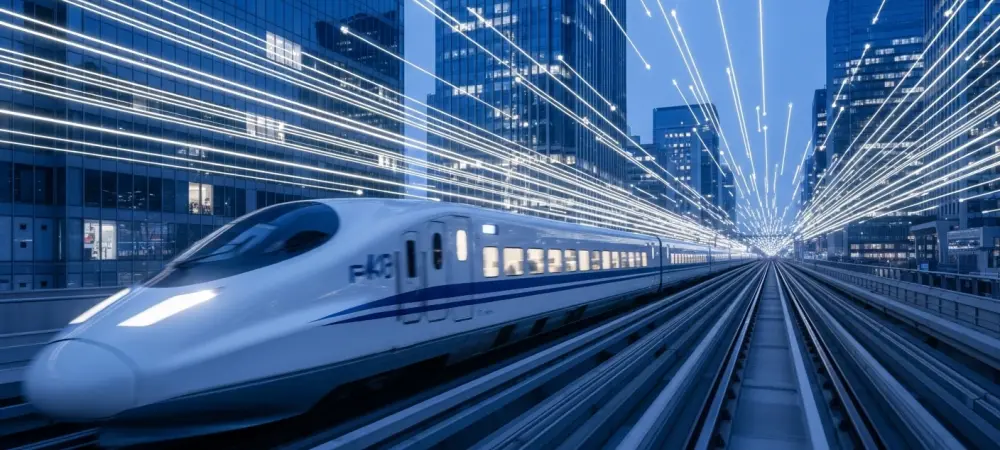
The familiar rhythm of steel wheels on track is increasingly being orchestrated by the silent, predictive power of artificial intelligence, heralding the most profound transformation in the industry’s history. For generations, railways have stood as monuments to industrial-age engineering, but today they face a confluence of pressures that demand a fundamental reinvention. Aging infrastructure, coupled with a growing demand for greater efficiency and heightened passenger expectations for impeccable safety and reliability, has created a critical inflection point. This new era calls for a shift from a reactive to a proactive operational model.
This analysis explores the central role of Artificial Intelligence in this transformation, examining how it is becoming the foundational operating system for a modern, intelligent railway. By moving beyond isolated applications, AI is fostering a data-driven ecosystem capable of predictive maintenance, dynamic operational optimization, and enhanced passenger services. The discussion will cover its current applications, its future potential to create a truly autonomous network, and the significant challenges, particularly in cybersecurity and governance, that must be navigated for this vision to be realized.
The Current Trajectory: AI as the New Foundational Operating System
Market Adoption and Growth Statistics
A clear indicator of this paradigm shift is the surge in capital investment flowing into AI technologies within the global rail sector. Recent industry reports document a marked increase in spending, signaling a strong market confidence in AI’s capacity to deliver tangible returns. This financial commitment is fueling the most significant trend in the industry: the evolution of AI from a collection of discrete, specialized tools into a distributed and foundational intelligence layer. This new “operating system” is being embedded directly into infrastructure, rolling stock, and operational command centers.
The market’s trajectory points toward accelerated adoption, with growth projections for AI in the rail sector showing a steep upward curve through 2027 and beyond. This growth is not uniform; it is predominantly driven by the expanding implementation of predictive analytics and machine learning platforms. Operators are moving past pilot programs and are now integrating these technologies at scale, recognizing them as essential for achieving the next level of operational excellence and competitive advantage in a rapidly modernizing transportation landscape.
AI in Action: From Theory to Trackside Reality
The most immediate impact of this trend is the industry-wide pivot from a “fail and fix” maintenance culture to a “predict and prevent” model. Rail operators are leveraging a vast network of sensors—including high-definition cameras, LiDAR scanners, and vibration monitors—to generate continuous streams of data from tracks, signals, and rolling stock. Machine learning algorithms analyze this data to detect subtle patterns of degradation, allowing them to forecast potential equipment failures months in advance. This foresight dramatically reduces unplanned downtime and emergency call-outs, ensuring greater service continuity.
Beyond maintenance, AI is delivering substantial gains in operational efficiency and network capacity. Advanced traffic management systems now use AI to process real-time and historical data, including train positions, speeds, and weather conditions, to anticipate bottlenecks and dynamically adjust train flow. This optimization can increase overall network capacity without the massive capital expenditure of building new physical tracks. Furthermore, driver advisory systems powered by AI algorithms provide real-time guidance on optimal acceleration and braking, leading to energy consumption reductions of 10-15%, which translates into significant cost savings across an entire network.
The benefits of AI extend directly to the passenger experience and public safety. Machine vision systems, for instance, are being deployed to enhance safety by detecting obstacles on the track far beyond the range of human visibility, even in adverse weather conditions. Simultaneously, AI-driven demand-forecasting analyzes ticketing data, public event schedules, and other variables to optimize timetables and adjust fleet deployment, effectively reducing overcrowding and improving journey comfort. In stations, intelligent video analytics monitor for security threats, such as unattended luggage or unusual crowd behavior, creating a safer environment for travelers.
Expert Insights: Augmenting the Human Element in Rail Operations
Industry leaders consistently emphasize that the primary role of AI in rail is not to replace human expertise but to augment it. AI systems excel at processing immense datasets to identify critical anomalies and patterns that would be impossible for a human to detect. This allows experienced engineers and operators to direct their focus where it is most needed, transforming them from data gatherers into strategic decision-makers. The technology acts as a powerful diagnostic partner, equipping personnel with the foresight needed to act preemptively.
Successfully integrating this technology, however, requires more than just a technical implementation; it demands a profound cultural and operational shift. For a legacy industry built on generations of established practices, adopting data-driven decision-making is a significant challenge. Experts note that success hinges on fostering a culture that trusts data and empowers employees to act on AI-generated insights. This involves extensive training, transparent communication about the technology’s role, and redesigning workflows to incorporate a new, collaborative relationship between human and machine.
Consequently, AI is reshaping the very definition of a railway professional. The next generation of rail engineers and operational staff will require a hybrid skill set that blends traditional domain knowledge with competencies in data science, systems analysis, and cybersecurity. Thought leaders in the field predict a growing demand for professionals who can not only operate and maintain the physical railway but also interpret, manage, and leverage the data it produces. This evolution in required skills is essential for unlocking the full potential of an AI-driven rail network.
The Path Forward: Future Developments, Benefits, and Challenges
The Next Frontier: A Fully Integrated and Autonomous Network
Looking ahead, the long-term vision is a fully integrated, self-optimizing rail network. This future system will dynamically respond to disruptions in real time, automatically rerouting trains, adjusting schedules, and reallocating resources to maintain service fluidity with minimal human intervention. Such a network would extend beyond the tracks to offer passengers a seamless journey, integrating with other transit modes to provide a complete, end-to-end travel solution orchestrated by intelligent platforms. A primary benefit of this technological progression is the ability to unlock significant new network capacity without the prohibitive cost and environmental impact of building new physical infrastructure. By continuously optimizing train movements and minimizing headway between services, AI can effectively make existing tracks work harder and more efficiently. This advancement promises to deliver unprecedented levels of safety, reliability, and energy efficiency, fundamentally altering the economic and operational models of the entire industry.
Navigating the Risks: Cybersecurity and Governance in the AI Era
This digital transformation is not without its risks. The convergence of modern Information Technology (IT) systems with legacy Operational Technology (OT) creates a complex and expanded attack surface, introducing new cybersecurity vulnerabilities. As rail systems become more interconnected and reliant on data, they also become more attractive targets for malicious actors seeking to cause disruption or harm. A core finding from recent analyses is that future governance frameworks must treat cyber resilience as inseparable from physical safety. A successful cyberattack on a rail network’s control systems could have catastrophic real-world consequences, making it a primary operational risk. Therefore, protecting these intelligent systems must become a foundational element of the industry’s safety culture, demanding robust security protocols, continuous monitoring, and proactive threat mitigation strategies.
Overcoming these challenges requires more than just technological solutions; it necessitates a significant organizational effort. Rail operators must dismantle internal data silos to create a unified data ecosystem that can effectively fuel AI initiatives. Establishing a robust data governance framework is paramount to ensure data quality, security, and accessibility. Without this foundational work, even the most advanced AI models will fail to deliver on their promise, leaving operators unable to capitalize on the transformative potential of this new era.
Conclusion: A Proactive Transformation or a Reactive Scramble?
This analysis has shown that artificial intelligence is fundamentally reshaping the rail industry. Its integration has moved beyond theory and into practice, driving a definitive shift toward predictive maintenance, optimized operational efficiency, and a new standard of passenger safety and experience. The evidence confirmed that AI is not a peripheral add-on but is becoming the central nervous system of the modern railway.
The integration of these intelligent systems was no longer a question of “if” but a matter of “how and when.” The momentum is irreversible, as the competitive and operational advantages offered by a data-driven approach have become too significant to ignore. The market’s investment and the accelerating pace of adoption have solidified AI’s role as a cornerstone of future rail operations. Ultimately, this technological evolution has presented rail operators with a clear choice. They could either proactively lead this transformation by investing in the necessary technology, skills, and governance frameworks to shape their digital future, or they could risk being forced into a reactive scramble, struggling to manage the unmanaged complexity and disruptive forces of a technology they failed to control.