

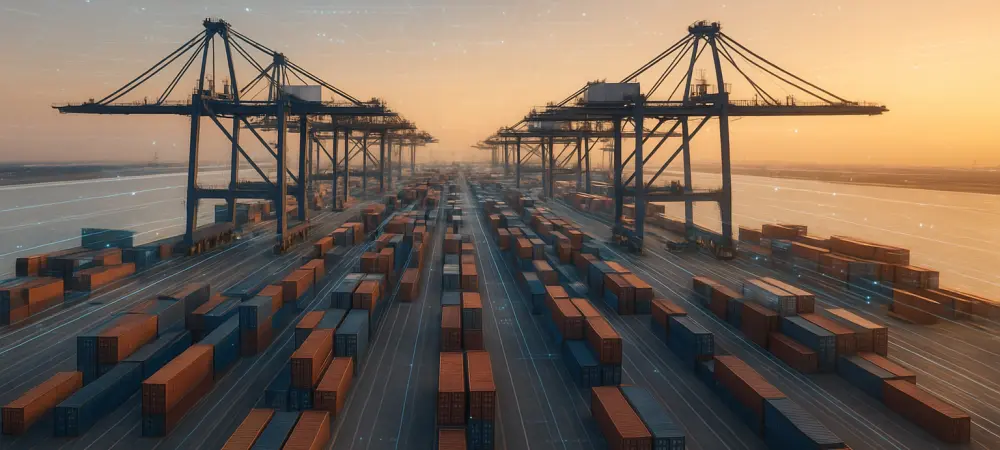
Global shipping lanes are no longer just physical conduits for goods but have transformed into complex data streams where split-second algorithmic decisions determine the survival of multi-billion dollar retail empires. The transition of artificial intelligence from speculative hype to a critical operational necessity has fundamentally reshaped global trade dynamics. As organizations grapple with persistent supply chain volatility and rising fuel costs, AI-driven optimization provides a vital framework for maintaining resilience. The industry currently focuses on deploying production-ready tools that offer tangible performance metrics. This strategic shift prioritizes holistic cost-to-serve modeling over traditional, siloed logistics management, ensuring that every movement within the supply chain is accounted for in terms of both financial and environmental impact.
The Shift From Theory to Production: Market Growth and Real-World Impact
Data-Driven Evolution and Adoption Statistics
Market growth trends indicate that logistics enterprises are rapidly moving from experimental trials to full-scale deployment to capture immediate returns on investment. Recent performance indicators reveal that firms successfully implementing these technologies achieved a 15–20% reduction in fuel consumption alongside a 35% improvement in planning accuracy. Such metrics are not merely marginal gains; they represent a fundamental change in the financial viability of modern shipping. With capital payback periods now as short as three to six months, the economic argument for deep algorithmic integration has become indisputable for competitive firms.
Real-World Applications: MG Ship and Predictive Analytics
A prominent example of this evolution is the new module introduced by MG Ship, which utilizes automated algorithms to streamline international trade corridors. By synthesizing real-time telemetry with historical data, the platform addresses challenges such as port congestion, weather patterns, and shifting customs risks. Furthermore, the automation of freight documentation has reduced manual labor requirements by 85%. This administrative efficiency allows logistics teams to pivot from tedious data entry toward high-level strategic oversight, effectively mitigating the risks associated with human error in complex international filings.
Expert Perspectives on Operational Efficiency and Carrier Selection
Industry leaders, including Suki Cheung, emphasize that the financial gains provided by current applications are transformative rather than incremental. There is a noticeable shift in how carriers are evaluated, moving away from simple spot pricing toward a sophisticated cost-to-serve model. This method involves carrier scoring based on specific metrics like on-time performance, claim rates, and transit consistency. By viewing carriers through this multi-dimensional lens, shippers can ensure that the lowest initial quote does not lead to higher long-term expenses due to delays or damaged cargo.
The Future of AI in Logistics: Long-Term Implications and Risk Mitigation
Looking toward the five-year cycle from 2026 to 2031, enterprise adopters are expected to record operational expense reductions of up to 25% through consistent system refinement. The evolution of simulation tools now allows logistics teams to model various lead times and risk exposures well before peak seasons begin. This predictive capability is essential for navigating a market defined by sudden shifts in global trade policy. However, the long-term success of these initiatives depends heavily on data quality and the seamless integration of live telemetry with broader trade intelligence systems to maintain stability.
Conclusion: Stabilizing the Global Supply Chain
The widespread integration of dynamic route planning and administrative automation stabilized the global supply chain during a period of intense market volatility. Organizations that prioritized data-backed decision-making defined the new standards for logistics excellence and secured immediate profitability through reduced overhead. This shift toward predictive forecasting moved the industry beyond speculative trials into a reality where operational efficiency functioned as the primary driver of commercial growth. Strategic leaders expanded their focus to include socio-political sentiment analysis alongside live telemetry to anticipate shifts in trade policy. Ultimately, the adoption of these sophisticated tools provided the necessary resilience to withstand fluctuations while fostering a more transparent and reliable global trading environment.