

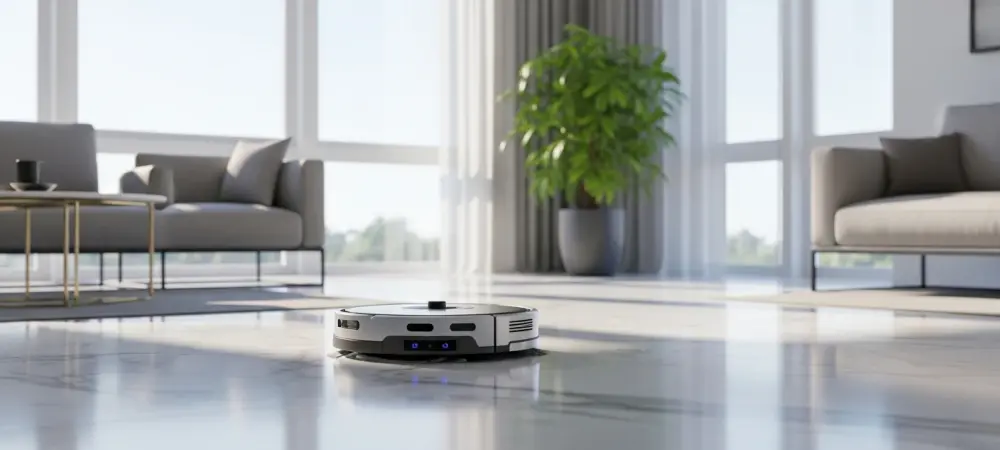
The persistent transition from manual household labor toward fully autonomous living environments has fundamentally reshaped the way modern families interact with their physical surroundings on a daily basis. This evolution is no longer merely about mechanical convenience but represents a profound integration of sophisticated computer vision systems and artificial intelligence into the sanctuary of the home. As domestic spaces become increasingly data-rich, the role of robotics has shifted from passive assistance to active environmental management, creating a world where the floor is always clean and the air is perpetually filtered without human thought. This analysis explores the trajectory of this shift, examining how current market data and technological breakthroughs are setting the stage for a decade defined by high-level autonomous maintenance and humanoid potential.
The integration of artificial intelligence into the modern home has become the defining characteristic of high-end consumer technology, moving the focus away from raw mechanical power toward cognitive capability. Households are increasingly becoming ecosystems of interconnected sensors that anticipate needs rather than simply reacting to commands. This shift toward a “thinking home” necessitates a deep dive into the practical implementations of current hardware, the expert opinions shaping the regulatory future, and the long-term socio-economic effects of removing physical chores from the human to-do list.
Market Evolution and Practical Implementation
Statistical Trends and Consumer Adoption Patterns
The modern consumer has fundamentally abandoned the search for traditional high-suction mechanical tools in favor of software-driven intelligent appliances that prioritize autonomous decision-making. Recent data indicates a significant growth in the “wet and dry” robot category, which has seen a substantial increase in adoption since the current market cycle began. This trend highlights a pivot in consumer expectations; users are no longer satisfied with a machine that simply vacuums dry debris but instead demand robots capable of scrubbing floors and managing various surface types with zero intervention.
Market leaders are currently navigating the complex balance between premium pricing and the inclusion of expensive computer vision modules. While the initial cost of AI-enhanced navigation remains high, the rising adoption rates suggest that households are willing to invest in machines that provide superior spatial awareness and obstacle avoidance. The integration of machine learning has allowed these robots to adapt to specific room layouts, reducing the time spent stuck in corners or tangling with loose cables. Consequently, the industry is witnessing a transition where the perceived value of a domestic robot is measured by its “IQ” rather than its motor wattage.
Moreover, the shift toward these intelligent systems is driving a new standard for navigation and mapping. Unlike the rudimentary systems of the past, contemporary robots utilize high-definition cameras and depth sensors to build complex 3D models of living spaces. As the market moves from 2026 toward the end of the decade, this reliance on software intelligence over mechanical force is expected to become the baseline for all competitive domestic appliances.
Case Studies in High-Intelligence Cleaning Systems
The emergence of the Dyson Spot+Scrub Ai has served as a benchmark for the industry’s pivot toward AI-driven stain detection and autonomous self-maintenance. By utilizing a sophisticated system of green illumination to reveal microscopic debris and an HD camera paired with a stain-identifying algorithm, this device represents the shift from “dumb” vacuuming to “smart” surface restoration. The machine determines the necessary intensity of a scrub based on the visual profile of the spill, ensuring that it only uses maximum power when a stubborn mark is detected, thereby preserving battery life and mechanical longevity.
In contrast, competitors like Roborock and Dreame have focused heavily on the perfection of spatial awareness through advanced LIDAR and object recognition systems. These platforms allow for a transparent user experience where the robot communicates its logic through intuitive mobile applications, showing exactly why it chose a specific path or skipped a particular area. The industry-wide pivot toward these sensor-heavy robotic platforms has necessitated a change in engineering philosophy; the focus has moved away from the size of the dust bin and toward the efficiency of the underlying neural network that governs movement and task prioritization.
This shift has not been without its trade-offs, as some technical reviews suggest that the emphasis on software intelligence has occasionally led to a reduction in raw suction power. For example, some flagship models have moved away from proprietary motor designs to accommodate the power demands of high-level processors and sensor arrays. This indicates a strategic gamble by manufacturers: they believe the modern user values a robot that never gets lost and handles mopping autonomously more than one that offers the extreme debris pickup previously associated with high-end manual vacuums.
Expert Insights on Technical and Regulatory Horizons
Industry leaders, including Chief Engineer Jake Dyson, have identified the “Humanoid Horizon” as the next major boundary for domestic robotics. While technical readiness for bipedal assistants is projected to align with consumer demand within the next three years, experts warn of a significant regulatory gap. There is a concern that while the hardware may be ready to navigate stairs and fold laundry by 2029, the safety frameworks and legal standards required to operate these large machines around children and pets may lag behind by at least a decade.
The debate over energy efficiency remains a focal point for experts comparing specialized low-profile robots with generalized humanoid assistants. A humanoid robot requires immense power just to maintain balance and manipulate objects, making it a highly inefficient choice for simple tasks like floor cleaning. Jake Dyson argues that the domestic ecosystem will likely remain a hybrid environment where specialized, energy-efficient robots handle specific chores, while the expensive humanoid acts more as a high-level manager for tasks requiring manual dexterity, such as loading a dishwasher or organizing a pantry.
Reviewers and tech analysts continue to emphasize the friction between “raw power” and “software intelligence.” While many consumers are attracted to the idea of an all-in-one robotic helper, the current engineering constraints suggest that specialized machines still offer the best performance for their cost. Experts believe that the future of domestic maintenance lies in a multi-bot strategy, where different form factors work in tandem under a single AI-driven home operating system, rather than a single, expensive bipedal unit attempting to do everything at a lower efficiency rate.
Long-Term Projections for the Domestic Ecosystem
Looking toward the future, the concept of the “Hybrid Home” will likely dominate the domestic landscape, characterized by a coexistence of manual high-performance tools and fully autonomous robotic fleets. In this scenario, manual cordless vacuums are used for quick, high-precision tasks while autonomous robots maintain the baseline hygiene of the home. This allows for maximum efficiency, as humans still prefer the tactile control and speed of a manual tool for sudden spills, whereas robots excel at the repetitive, time-consuming labor of maintaining large surface areas. As robots become capable of manipulating objects like laundry baskets and dish racks, the physical layout of homes may begin to evolve to accommodate robotic movement, such as wider doorways or specialized charging zones. However, the physical constraints of navigating stairs and architectural nuances remain a significant hurdle. Until energy storage technology and battery life significantly improve, the vision of a robot that operates for an entire day without docking remains an aspirational goal rather than a current reality.
Broader socio-economic implications will also emerge as human intervention in domestic maintenance decreases. The reduction of household labor could lead to a shift in how personal time is valued, potentially increasing the demand for leisure and wellness services. However, this shift also raises questions about the long-term durability and repairability of such complex machines. As homes become more reliant on these autonomous systems, the importance of robust hardware and accessible maintenance will become a critical factor in determining which brands dominate the market in the coming years.
Concluding Analysis: Navigating the Robotic Shift
The analysis of the domestic robotics sector demonstrated that the intersection of artificial intelligence and mechanical engineering reached a critical tipping point. Stakeholders recognized that the value of home automation was no longer tied to the strength of a vacuum motor but was instead defined by the sophistication of the vision systems and the reliability of the software. This transition reflected a broader societal move toward a hands-off approach to home maintenance, where the cognitive burden of cleaning was successfully offloaded to intelligent machines.
It was observed that specialized automation remained the most effective strategy for overcoming the inherent physical and energy constraints of the domestic environment. While the allure of humanoid assistants captured public imagination, the practical realities of energy efficiency and regulatory safety suggested that a multi-device approach was more sustainable. Manufacturers that prioritized hygienic design and self-maintenance features found the greatest success in meeting consumer expectations for a truly autonomous experience.
Ultimately, the past decade of innovation redefined the relationship between humans and their living spaces. The shift away from manual chores allowed for a more seamless integration of technology into daily life, turning the home into an active partner in maintaining health and comfort. As the industry moved forward, the focus narrowed on battery density and legislative clarity, ensuring that the next generation of robotic assistants could operate safely and effectively in the complex, unpredictable environments of the modern household.