

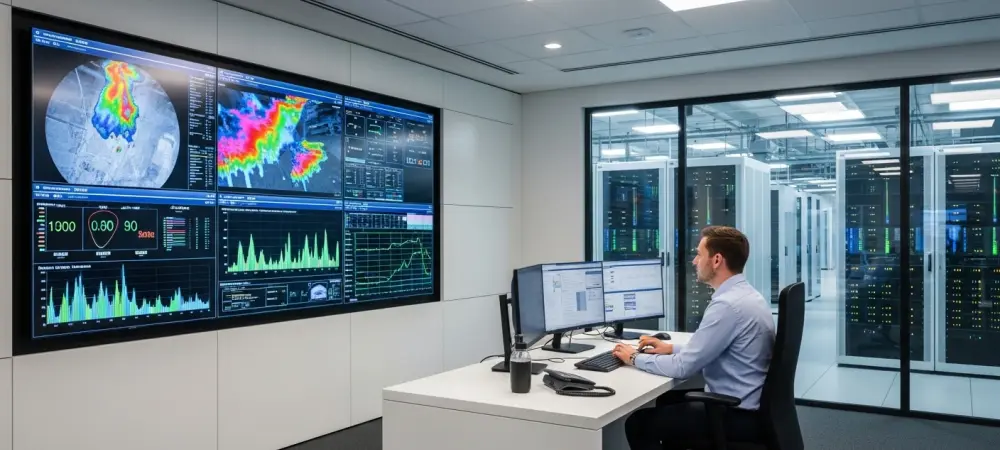
Beyond the algorithms and digital assistants capturing the public’s imagination, a far more tangible revolution is underway, fundamentally reshaping the physical backbone of our intelligent world. While artificial intelligence software consistently captures headlines, a silent and profound transformation is occurring within the data center, the engine of this new era. The immense power and density requirements of modern AI workloads are rendering traditional data center models obsolete, forcing a complete rethinking of how digital infrastructure is designed, built, and operated. This analysis examines the unprecedented energy demands, the critical architectural shift toward modularity, the emergence of the “adaptive facility,” and the future trajectory of the infrastructure that will power our intelligent future.
The Paradigm Shift: Why Traditional Data Centers Cannot Support the AI Era
The Unprecedented Surge: Quantifying AI’s Energy and Density Demands
The scale of AI’s physical footprint is staggering, primarily measured in its voracious appetite for energy. Credible industry reports project that energy demand from US data centers dedicated to AI will triple between 2026 and 2030, placing an immense strain on an already fragile power grid. This surge is a direct consequence of the hardware required to train and run complex models. The shift in power density at the rack level starkly illustrates this challenge. A traditional server rack historically consumed a manageable 5 to 10 kilowatts (kW) of power. In stark contrast, a modern rack filled with high-performance GPUs essential for AI can now consume upwards of 130 kW.
This dramatic escalation in power consumption creates a cascade of secondary challenges, most notably in thermal management. Dissipating the heat generated by such dense computational clusters requires sophisticated cooling architectures that were simply not a consideration in facilities built just a few years ago. The problem is compounded by the age of existing infrastructure. Approximately one-third of US data centers are over a decade old, built for a different technological era and fundamentally ill-equipped to handle today’s thermal and electrical loads. This reality presents a dual challenge: retrofitting legacy sites where possible and accelerating the build-out of new, future-proofed facilities.
From Static Blueprints to Dynamic Modules: A New Architectural Approach
In response to these pressures, the industry is rapidly moving away from rigid, monolithic construction methods toward more agile and adaptive architectural strategies. The traditional approach of building a data center around a fixed blueprint and predictable workload is no longer viable in an environment where AI chip technology evolves every 18 to 24 months. The consensus has shifted decisively toward modular, reference-based designs that prioritize flexibility and speed of deployment.
This new paradigm involves using pre-assembled, standardized, and pre-validated components for critical systems like power, cooling, and IT infrastructure. These modules are manufactured off-site and delivered ready for installation, a process that dramatically compresses construction timelines. More importantly, this strategy builds in the agility necessary to accommodate rapid technological change. A modular design allows developers to make mid-construction updates to layouts and specifications, enabling them to integrate the latest, most powerful AI hardware without requiring a complete and costly redesign. This capability provides a crucial competitive advantage in the race to deploy AI capacity.
Industry Voices: Expert Insights on Building for Agility and Intelligence
The shift in design philosophy is echoed by leaders across the sector. A data center design engineer might emphasize this evolution, stating that the focus is no longer on building static structures but on creating dynamic, adaptive ecosystems. These facilities must be capable of responding in real time to shifting computational demands, reallocating resources as needed. This requires an intricate fusion of hardware and software to create a truly responsive environment.
From a sustainability perspective, this transformation is not just beneficial but essential. An energy expert would highlight how intelligent grid integration is becoming non-negotiable. Modern AI data centers cannot afford to be passive energy consumers; they must become active partners in maintaining grid stability. By aligning high-intensity workloads with periods of high renewable energy availability and participating in demand-response programs, these facilities can mitigate their environmental impact and even support the broader transition to clean energy.
This strategic shift also carries significant business implications. An infrastructure strategist or chief technology officer would explain that modular designs fundamentally de-risk massive capital investments. By shortening the time from initial investment to revenue generation, this approach accelerates time-to-market. In the highly competitive AI landscape, the ability to deploy compute capacity faster and more efficiently than rivals can be the defining factor between leading the market and falling behind.
The Next Frontier: Envisioning the Future-Proof Adaptive Facility
The culmination of these trends points toward the development of the “adaptive facility,” a truly intelligent ecosystem where every component is interconnected and optimized. In this model, software-enabled platforms provide granular, real-time control over power distribution, cooling systems, and workload management. This allows the facility to operate not as a collection of siloed systems but as a single, cohesive organism engineered for peak performance and efficiency.
The benefits of such a facility are manifold. Predictive analytics can forecast potential equipment failures, enabling proactive maintenance that prevents costly downtime. By precisely matching cooling and power delivery to the instantaneous needs of the IT load, the adaptive facility can dramatically reduce energy waste. Furthermore, this intelligent layer allows for sophisticated energy management, aligning consumption with the availability of renewable sources and shifting non-critical processes to off-peak hours, thereby lowering both operational costs and carbon footprint.
However, realizing this vision is not without significant hurdles. The high capital cost of retrofitting legacy sites with the necessary sensors, control systems, and upgraded infrastructure is a major barrier. There is also a growing shortage of skilled operators who possess the hybrid expertise in facilities management and software engineering required to run these complex environments. Perhaps the most daunting challenge is securing sufficient power from an already strained grid, a bottleneck that could slow the deployment of next-generation AI infrastructure.
Conclusion: Embracing Agility, Intelligence, and Sustainability
The analysis of the AI-driven data center trend reveals a fundamental and necessary evolution. The era of AI demands a new breed of data center, one defined not merely by its computational speed but by its agility, intelligence, and commitment to sustainability. The investigation confirmed that the industry’s pivot toward modular designs and adaptive architectures is a critical response to the challenges of managing high-density workloads and unprecedented rates of technological change. The evidence leads to a clear forward-looking imperative: the industry’s capacity to create these fully integrated, flexible environments will directly determine the efficiency, resilience, and environmental impact of the infrastructure powering the future.