

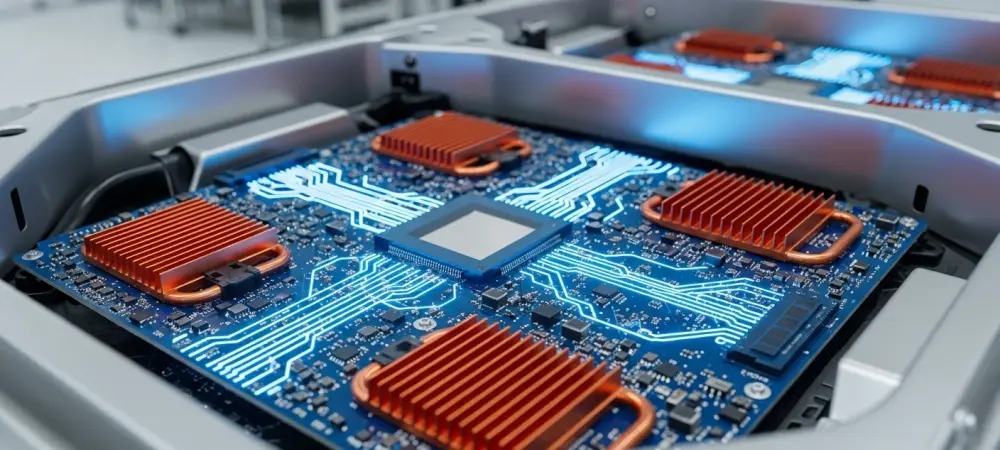
The modern vehicle has transformed from a mere mechanical transport vessel into a sophisticated, high-performance mobile data center where silicon intelligence now dictates the primary value of the machine. This shift marks the most radical departure from traditional automotive engineering since the early twentieth century. As vehicles evolve into semi-autonomous entities, the demand for specialized automotive semiconductors has moved from the periphery to the very core of industrial strategy. These chips no longer just manage fuel injection or basic entertainment; they function as the centralized nervous system that governs every action, perception, and user interaction within the cabin.
Market Evolution and Data-Driven Growth
The Shift Toward High-Performance AI Architectures
The global automotive semiconductor market is currently navigating a period of decoupling where traditional hardware cycles no longer dictate the pace of innovation. While standard microcontrollers continue to see modest annual growth of approximately 11%, the demand for high-performance AI-centric platforms is accelerating at a rate of 35% or higher. This divergence reflects a fundamental pivot toward heterogeneous compute architectures. Instead of relying on a multitude of isolated processors, modern manufacturers are consolidating power into unified systems that integrate neural processing units capable of handling massive data streams in real-time.
This evolution is particularly evident in the way data is processed within the vehicle. Current systems are being designed to handle the massive throughput required for sophisticated machine learning algorithms. The transition from legacy silicon to these advanced platforms represents a move away from static software to dynamic systems that can be updated over the air. Consequently, the semiconductor has become the defining factor in a vehicle’s longevity and capability, as the hardware must now be powerful enough to support future software enhancements that have not even been conceived yet.
Real-World Implementation and Sector Integration
These theoretical advancements have moved rapidly into production lines, as evidenced by the widespread adoption of standardized digital chassis systems. Current data indicates that over one million vehicles are now utilizing advanced AI-driven software stacks to manage complex driving tasks. The partnership between major silicon providers and legacy automakers like BMW demonstrates this trend in action, with production models such as the iX3 now hitting the roads with integrated ADAS capabilities. These are not isolated experiments but represent dozens of design wins that signal a permanent move away from fragmented hardware toward a unified, scalable digital experience for the consumer.
Furthermore, the integration of these solutions is creating a standardized ecosystem where software developers can build applications that work across multiple vehicle brands. This level of sector integration was previously impossible due to the proprietary and closed nature of automotive hardware. Now, with a common silicon foundation, the industry is seeing a surge in innovation ranging from immersive in-car gaming to sophisticated safety features that can predict and avoid collisions with unprecedented accuracy. This real-world deployment proves that the AI-driven vehicle is no longer a distant vision but a present reality.
Industry Expert Insights and Strategic Leadership
Industry strategists are now looking beyond the software-defined label, arguing that the market has entered the age of the AI-native vehicle. This distinction is critical because it prioritizes the ability of a vehicle to learn and adapt to its environment rather than merely following pre-programmed instructions. Experts like Nakul Duggal and his team emphasize that the competitive landscape is no longer defined by traditional mechanical metrics. Instead, success depends on a synthesis of telematics, infotainment, and sophisticated driver assistance systems, all operating under a single, cohesive architecture that optimizes performance without draining battery life. The leadership in this space is focusing heavily on Edge AI Optimization, which ensures that the vehicle can process complex neural networks locally rather than relying on a distant cloud server. This strategy addresses the vital need for low latency in safety-critical situations. By achieving high processing density and power efficiency, tech-first firms are effectively outmaneuvering traditional industrial giants. This strategic pivot ensures that the car remains responsive and secure, providing a foundation for trust that is essential for the eventual transition to higher levels of vehicle autonomy.
Future Projections and Broader Implications
Looking toward the horizon of the next few years, the technological roadmap suggests a dramatic escalation in onboard processing capabilities. The industry is preparing for a transition where CPU and GPU throughput will likely triple, while the performance of neural processing units is expected to increase twelvefold. This massive leap in silicon horsepower is the catalyst required for Level 4 and Level 5 autonomy, allowing vehicles to navigate complex urban environments without any human intervention. Such a trajectory suggests that the car will eventually become an office or living space on wheels, creating entirely new revenue streams for manufacturers through digital services.
However, the path forward is not without its hurdles. The industry must find ways to standardize software ecosystems while managing the astronomical costs of ongoing research and development. Despite these challenges, the current blueprint for AI integration is already being viewed as a template for other sectors. The innovations occurring in automotive silicon are expected to spill over into robotics and industrial automation. This cross-pollination indicates that the car is merely the first major application of ubiquitous edge computing that will soon define the broader landscape of modern technology and human-machine interaction.
Summary and Concluding Outlook
The ascent of AI-driven semiconductors fundamentally altered the trajectory of the automotive industry. Manufacturers prioritized the development of integrated digital platforms that unified connectivity and autonomous control, successfully replacing the outdated model of fragmented electronic control units. This transformation necessitated a new approach to supply chain management and technical partnerships, as the silicon itself became the most valuable component of the modern fleet. The focus on local processing power ensured that vehicles remained safe and responsive, even as the complexity of their internal software grew exponentially.
Moving forward, the industry leaned into the standardization of these high-performance architectures to reduce development timelines. Stakeholders recognized that the future of mobility relied on the ability to scale these AI solutions across diverse vehicle segments. By investing in scalable NPU performance and power-efficient designs, companies secured their positions in a market that demanded constant digital evolution. This shift ultimately paved the way for the broader application of automotive technology in other fields, proving that the digital chassis was the essential foundation for a new era of intelligent machines.