

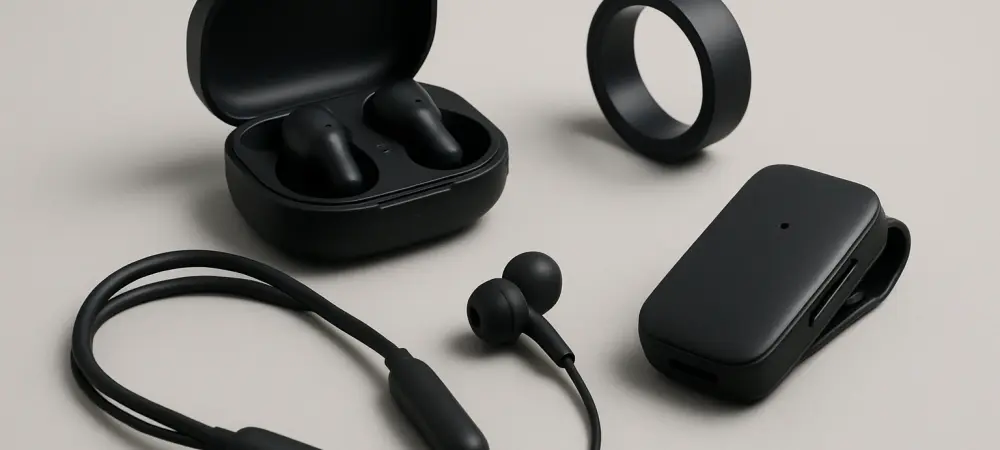
Imagine stepping into a bustling city street, where instead of glancing at a screen for directions or notifications, a subtle voice in your ear guides you effortlessly, interpreting your surroundings in real time. This is the promise of AI-driven audio wearables, an emerging trend that sidesteps the visual overload of traditional augmented reality (AR) and virtual reality (VR) devices. As technology continues to permeate daily life, audio-focused wearables are carving out a niche, offering a minimalist yet powerful way to interact with the digital world without the constant pull of a display.
The Rise of AI in Wearable Technology
Market Trends and Adoption of Smart Wearables
The wearable technology market has witnessed remarkable growth in recent years, with AI integration becoming a cornerstone of innovation. According to Statista, the global wearable device market is projected to expand significantly from this year to 2027, driven by consumer demand for smart earbuds, watches, and glasses. A notable portion of this growth stems from AI enhancements that enable devices to offer personalized, context-aware experiences, pushing wearables beyond mere fitness tracking into realms of daily utility.
Audio-based wearables, in particular, are gaining momentum as a less intrusive alternative to visual-heavy AR and VR gear. Unlike headsets that demand visual focus, audio wearables blend into routines, providing hands-free solutions for navigation, communication, and productivity. This shift reflects a broader consumer preference for technology that integrates seamlessly without overwhelming the senses, highlighting a move toward practicality in tech adoption.
The demand for such solutions is evident in the rising popularity of smart earbuds and hearables equipped with virtual assistants. These devices cater to multitasking lifestyles, allowing users to receive updates or instructions without diverting attention from their surroundings. As AI capabilities advance, the market is poised to see audio wearables play a larger role, challenging the dominance of screen-centric designs.
Case Study: The Copilot Veja Concept
Amidst this evolving landscape, a striking example of audio-first innovation emerges with the Copilot Veja, an unofficial design by Microsoft designer Braz de Pina. Unlike conventional AR or VR headsets, this concept forgoes visual displays entirely, focusing instead on auditory feedback as the primary mode of interaction. Shaped as ear-worn stems, the device reimagines how AI can deliver information in a conversational, portable format.
The Copilot Veja boasts unique features, including dual cameras for stereoscopic vision, built-in microphones, and interactive buttons for power, volume, AI triggering, and camera control. These elements enable the device to capture and analyze the user’s environment, providing real-time contextual guidance through sound rather than visuals. This design prioritizes a screen-free experience, betting on AI’s ability to interpret surroundings and communicate effectively via audio cues.
What sets this concept apart is its challenge to the status quo of wearable tech. By excluding a display, it argues that existing screens on phones and smartwatches are sufficient, focusing instead on comfort and simplicity. This minimalist approach positions the Copilot Veja as a potential game-changer, offering a glimpse into how audio wearables could redefine user interaction in a cluttered digital age.
Industry Perspectives on Audio-Centric AI Wearables
The potential of audio-first wearables to transform tech interaction has sparked interest among industry thought leaders and designers. Many see these devices as a counterpoint to the visual immersion of smart glasses, such as those developed by Meta, which prioritize displays over auditory engagement. Audio wearables, by contrast, aim to reduce sensory overload, delivering information in a discreet, intuitive manner that complements rather than competes with the user’s focus.
Braz de Pina’s rationale for the Copilot Veja underscores this philosophy, emphasizing that additional screens are unnecessary when AI can convey critical information through sound. Comfort and ease of use are central to this vision, with the ear-worn design crafted to fit naturally into daily life. This perspective highlights a growing sentiment in the industry that simplicity could be key to widespread adoption of wearable tech, especially for users wary of bulky or distracting gear.
A broader debate within the sector centers on balancing immersion with practicality. While visual AR and VR devices offer rich, interactive experiences, they often raise concerns about privacy and sensory fatigue. Audio wearables, on the other hand, present a solution that minimizes intrusion while addressing real-world needs, though they must navigate challenges like ensuring user trust in AI interpretations and safeguarding data collected via onboard cameras.
Future Outlook for AI-Driven Audio Wearables
Looking ahead, the evolution of audio wearables could be shaped by advancements in agentic AI, enabling devices to become even more intuitive and responsive to individual needs. Imagine a future where a wearable like the Copilot Veja not only guides navigation but anticipates user preferences, adapting responses based on learned behavior. Such progress could elevate audio devices from mere tools to indispensable personal assistants. Significant benefits lie in accessibility, particularly for visually impaired individuals who could rely on audio wearables for enhanced environmental awareness and independence. Additionally, seamless integration into multitasking lifestyles offers appeal for professionals and casual users alike. However, hurdles remain, including achieving clear audio output in noisy settings and extending battery life to support continuous use without frequent recharging.
Beyond technical considerations, the rise of audio-first AI wearables could reshape societal norms around technology interaction. Reducing dependency on screens might foster more present, engaged experiences, yet it also prompts questions about data privacy and over-reliance on AI decision-making. As these devices become more prevalent, their impact on how information is consumed and processed will likely spark deeper discussions about ethics and responsibility in tech design.
Reimagining Wearables with AI and Audio
Reflecting on the journey through AI-driven audio wearables, the exploration of concepts like the Copilot Veja reveals a compelling alternative to screen-dominated devices. The trend toward AI integration in wearables showcases a market ripe for innovation, while the unique promise of audio-centric designs offers a refreshing take on functionality and minimalism. Industry insights further illuminate the potential for these devices to address real user needs in a landscape often focused on visual immersion. Moving forward, stakeholders in wearable technology are encouraged to invest in research that prioritizes user comfort and contextual intelligence, ensuring audio wearables meet diverse demands. Addressing challenges like privacy and performance in varied environments emerges as critical next steps to build consumer trust. As AI continues to advance, the push for audio-driven solutions hints at a transformative shift, inviting the industry to listen closely to this evolving conversation.