

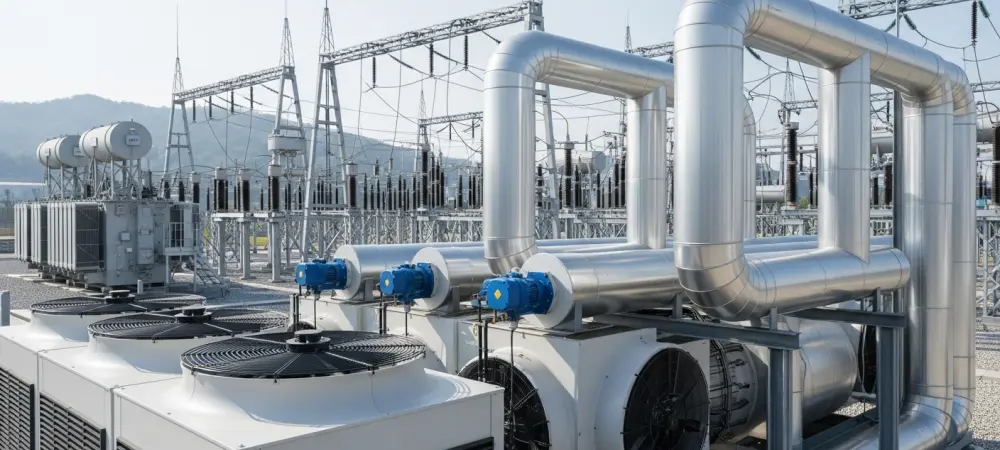
The global electrical infrastructure is currently colliding with the unprecedented and relentless hunger for power generated by artificial intelligence as it evolves into an industrial backbone. As artificial intelligence transforms from a digital novelty into a core economic driver, it faces a physical reality where the existing power grid was never designed for the sheer magnitude of this processing load. This analysis explores a critical inflection point where data center consumption threatens to outpace regional energy production, creating a high-stakes environment where access to electricity—not just sophisticated code—determines the pace of global innovation. This examination covers explosive growth statistics, the financial penalties of infrastructure delays, and the industry’s decisive pivot toward sovereign power and nuclear energy solutions to maintain operational viability.
Mapping the Surge: Statistical Trends and Practical Implementation
1. Data-Driven Growth and Global Electricity Projections
Statistical findings from the International Data Center Authority reveal a staggering 50 percent growth in artificial intelligence electricity consumption over the previous year alone. Currently, the global demand threshold has reached 67.7 gigawatts, an amount that accounts for nearly 2 percent of total global electricity generation. This upward trajectory is predicted to continue, with the International Energy Agency projecting demand to reach 945 terawatt-hours by 2030. This expansion suggests that data centers are no longer mere support facilities but have become major industrial energy consumers that rival traditional manufacturing sectors in their total power requirements. Moreover, the geographic concentration of these facilities often places an unsustainable burden on localized distribution networks, necessitating a radical rethink of grid management.
2. Real-World Applications: The Shift Toward Onsite Power Solutions
To mitigate reliance on an overextended public grid, industry leaders including Google, Microsoft, and Amazon are aggressively pursuing sovereign power models. This transition involves significant investments in Small Modular Reactors and the restoration of dormant nuclear power plants to ensure a dedicated, carbon-neutral energy supply. Furthermore, the implementation of “bring your own power” policies in regions like Ireland serves as a global template for future development. These regulations mandate that data center operators provide their own onsite generation, effectively bypassing municipal bottlenecks and ensuring that industrial growth does not compromise residential energy stability. Consequently, the ability to generate power has become as vital to a tech company as the software it produces.
Critical Insights into Economic Pressures and Systemic Inefficiency
3. Assessing the Financial Penalties of Grid Lag
Expert analysis identifies a burgeoning “delay tax,” where the discrepancy between facility construction speeds and utility grid upgrade timelines creates massive economic losses. While a modern data center can be built and ready for deployment within 18 months, the necessary upgrades to the high-voltage grid often require a window of three to five years. This mismatch results in average lost revenue exceeding $10,000 per megawatt daily. For a large-scale 100-megawatt project, the financial impact of such a delay can approach $1 billion when accounting for the cost of capital and missed market opportunities. This reality is forcing developers to prioritize site selection based on immediate energy availability rather than traditional proximity to connectivity hubs.
4. Expert Views on Solving the Zombie Workload Crisis
While the industry focuses on expanding capacity, thought leaders are increasingly vocal about “ghost capacity” or “zombie workloads” that consume significant power without providing utility. In the United States, inactive cloud containers and abandoned computing tasks account for roughly 13 percent of total data center power, totaling over 3 gigawatts of wasted energy. Strategies for reclaiming this lost capacity involve rigorous auditing of logical infrastructure layers to decommission idle assets. Experts argue that optimizing internal efficiency is a faster and more cost-effective alternative to constructing new generation plants. By addressing these systemic inefficiencies, operators can theoretically unlock enough power to support significant AI growth without adding a single megawatt to the grid.
Future Outlook: The Evolution of Sovereign Energy and Regulatory Landscapes
5. Anticipating Global Legislative Constraints and Community Shifts
Legislative landscapes are shifting as communities increasingly utilize “stop-build” legislation to prevent the proliferation of massive data hubs. Currently, 11 U.S. states have introduced moratoria or restrictive zoning to address concerns over residential rate stability and noise pollution. In Virginia, the world’s most concentrated data center market, new regulations are shifting the burden of transmission costs directly to the operators. This shift ensures that the expensive upgrades required for industrial growth are not subsidized by the general public. Furthermore, the adoption of international carbon metrics, such as the CO2 efficiency index, is beginning to reshape site selection criteria, favoring nations that can provide stable, low-carbon energy at a predictable price point.
6. Long-Term Implications of Energy Self-Sufficiency
The move toward energy self-sufficiency is driving a manufacturing boom in power generation technology, though it has created significant bottlenecks. Demand for liquefied natural gas turbines as a bridge fuel has extended order backlogs toward 2030, while turnkey project costs have climbed as high as $2.5 billion per gigawatt. While the nuclear renaissance driven by big tech offers a long-term solution for clean baseload power, the high initial capital requirements present a barrier for smaller operators. Ultimately, the decoupling of data centers from the public grid will likely improve national energy security by reducing the risk of cascading failures during peak demand. This evolution marks the end of the data center as a passive consumer and its birth as an active, self-contained utility.
Strategic Summary: Navigating the Intersection of AI and Energy Capacity
The analysis confirmed that the shift from digital expansion to an energy-centric industrial model became the defining characteristic of the current era. Enterprises that recognized the limitations of the public grid early prioritized energy self-sufficiency, effectively decoupling their operational growth from municipal infrastructure bottlenecks. It was established that mastering the energy supply chain, rather than focusing solely on processing power, determined the leadership in high-scale computing. Furthermore, the industry successfully integrated more localized regulatory strategies to navigate the rise of community opposition and increasing transmission costs. Ultimately, the pivot toward sovereign power proved necessary for maintaining the pace of global innovation while ensuring the stability of the broader electrical ecosystem. Moving forward, developers must treat power generation as a core competency to avoid the financial pitfalls of grid dependency.