

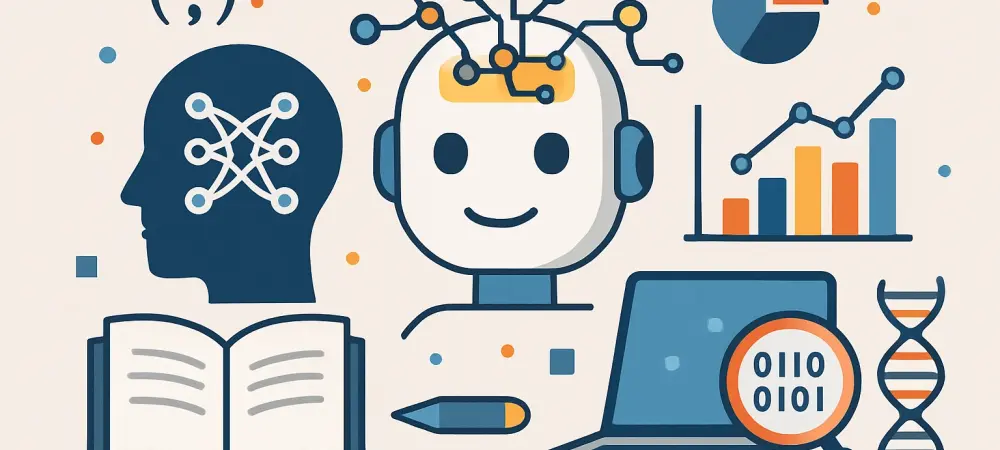
Imagine a world where a data science student can ask a complex question about neural networks and receive an instant, tailored explanation complete with code snippets, all while referencing a trusted textbook for deeper context. This scenario is not a distant dream but a reality in 2025, as artificial intelligence (AI) transforms the educational landscape. The rapid evolution of AI-assisted learning tools has revolutionized how aspiring data scientists acquire knowledge, making education more dynamic and accessible. Yet, traditional resources like books continue to hold a vital place in this fast-paced domain. This trend analysis explores the rise of AI in data science education, the enduring value of books, expert insights on their complementary nature, and the future implications of balancing both mediums for optimal learning outcomes.
The Rise of AI in Data Science Education
Surge in AI Learning Platforms
AI-driven tools have seen remarkable adoption in data science education over recent years. Platforms such as ChatGPT, DataCamp, Coursera, and Hugging Face have become integral to learners worldwide, with market reports indicating a significant uptick in usage. For instance, educational technology studies suggest that AI tool adoption in learning environments has grown by over 30% annually since 2025. These platforms offer unparalleled benefits, including instant access to vast knowledge bases and the ability to generate code on demand, streamlining the learning process for students and professionals alike.
Beyond accessibility, AI tools provide real-time feedback that helps learners correct mistakes immediately. Whether debugging a Python script or understanding a statistical model, these platforms act as virtual tutors, breaking down barriers of time and location. This efficiency has made AI an indispensable asset, especially for those juggling tight schedules or seeking quick solutions to complex problems in data science.
Practical Uses of AI in Educational Settings
The real-world impact of AI in data science learning is evident through specific applications that enhance user experience. For example, personalized tutoring features on platforms like Coursera adapt to individual learning paces, offering tailored quizzes and explanations. Interactive coding environments, such as those provided by DataCamp, allow students to experiment with algorithms in a sandbox setting, gaining hands-on experience without fear of failure.
Moreover, companies leading the integration of AI into education, like Hugging Face, have developed courseware that simplifies intricate topics through summarization and visualization. Case studies reveal how these tools help learners grasp concepts like natural language processing by breaking them into digestible parts. Such innovations demonstrate how AI not only accelerates learning but also makes abstract ideas more tangible for beginners and experts alike.
The Enduring Value of Books in Data Science Mastery
Unmatched Depth from Traditional Texts
Despite the digital surge, books remain a cornerstone for mastering data science due to their ability to provide comprehensive depth and context. Unlike fleeting digital content, texts such as Hands-On Machine Learning with Scikit-Learn, Keras, and TensorFlow by Aurélien Géron offer structured explanations that delve into the “why” behind methodologies. This foundational understanding is crucial for tackling nuanced challenges in areas like deep learning or statistical modeling.
Another exemplary resource, Deep Learning by Ian Goodfellow and Yoshua Bengio, stands out for its thorough exploration of theoretical underpinnings. These books serve as roadmaps, guiding learners through complex concepts with a level of detail that AI summaries often lack. For those aiming to build a robust knowledge base, such texts are indispensable in explaining the principles that drive real-world applications.
Tangible Benefits Beyond Digital Solutions
Books also bring practical advantages that digital tools struggle to match. Studies on cognitive science highlight that reading physical texts enhances focus and memory retention, as the tactile experience of turning pages aids in information processing. This benefit is particularly valuable in data science, where retaining intricate details about algorithms or data structures is essential for long-term success.
Additionally, books offer reliability in environments where technology may falter. With no need for internet connectivity or software updates, they provide consistent access to knowledge, making them a dependable resource in remote or tech-limited settings. The credibility of expert authorship and peer-reviewed content further solidifies their role, often surpassing the variable accuracy of AI-generated material.
Expert Perspectives on AI and Books as Complementary Tools
Synergy in Learning Approaches
Industry leaders and educators emphasize the synergy between AI tools and books as a powerful trend in data science education. Prominent data scientists argue that while AI excels in delivering quick answers and interactive experiences, books lay the groundwork for critical thinking. This combination allows learners to grasp both practical skills and theoretical insights, creating a well-rounded educational journey.
A notable perspective comes from academic professionals who advocate for using AI to supplement book-based learning. For instance, AI can summarize dense chapters or clarify obscure passages, enabling students to dive deeper into texts with greater confidence. This complementary dynamic ensures that neither medium overshadows the other, but rather enhances the overall learning process.
Addressing Potential Pitfalls
Experts also caution against over-reliance on AI for instant solutions, which can hinder the development of problem-solving skills. Thought leaders in the field note that without the structured guidance of books, learners risk missing the broader context of data science principles. Balancing quick AI assistance with the deliberate study of authoritative texts is essential to avoid superficial understanding and foster true expertise.
Future Implications of AI-Assisted Learning and Books in Data Science
Evolving Role of AI Tools
Looking ahead, AI learning tools are poised to become even more sophisticated, with advancements in personalization and integration with traditional resources. Emerging technologies may offer hyper-customized learning paths, adapting to individual strengths and weaknesses in real time. Such developments could further bridge gaps in education, ensuring that data science becomes accessible to diverse global audiences.
Additionally, the potential for AI to collaborate with digital versions of books might redefine how content is consumed. Imagine platforms that seamlessly blend textbook excerpts with interactive AI explanations, creating a hybrid learning environment. This trend points toward a future where technology amplifies rather than replaces the value of established educational materials.
Sustained Relevance of Printed Knowledge
Books are expected to maintain their significance in data science education, even as digital tools advance. Their role in providing foundational knowledge remains unmatched, serving as a bedrock for learners at all levels. In environments where access to technology is inconsistent, physical texts will continue to be a vital resource, ensuring equitable opportunities for skill development.
The broader implication of this dual trend lies in fostering balanced learning approaches. Combining the speed of AI with the depth of books can address challenges like information overload or unequal resource distribution. As education evolves, ensuring quality access to both mediums will be critical for nurturing the next generation of data scientists.
Striking a Balance for Optimal Learning
Reflecting on this trend, it becomes clear that AI has transformed data science education by offering speed and accessibility, while books provide the irreplaceable depth needed for mastery. Their complementary relationship stands out as a key insight, demonstrating that neither can fully replace the other. As the landscape shifts, the integration of both emerges as the most effective path to comprehensive understanding. Moving forward, educators and learners are encouraged to adopt a hybrid strategy, leveraging AI for immediate support and books for sustained learning. Exploring innovative ways to merge these resources, such as using AI to guide structured reading, promises to enhance educational outcomes. This balanced approach not only addresses current needs but also paves the way for future advancements in data science expertise.