

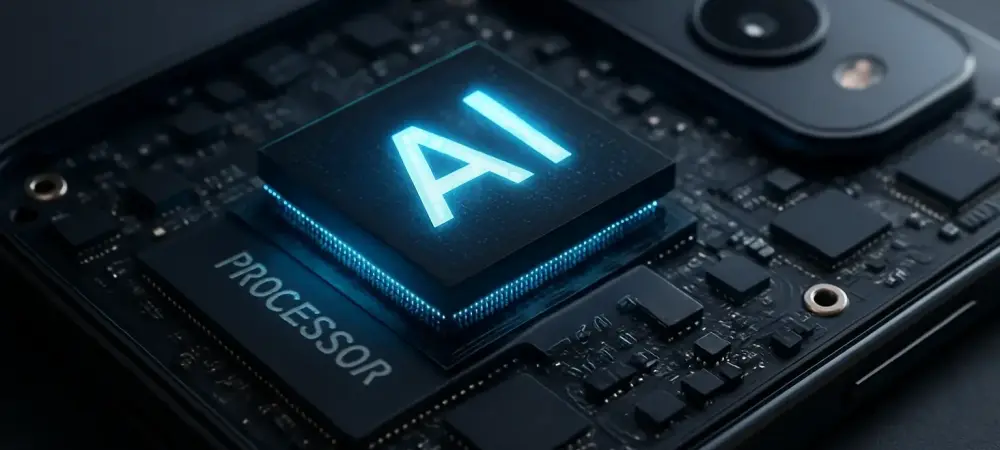
The familiar hum of a laptop processor is evolving into the silent whisper of on-device intelligence, fundamentally rewriting the rules of personal computing as raw processing power gives way to integrated, learning-oriented hardware. This analysis delves into the rapid ascent of AI-accelerated mobile processors, a trend that is profoundly reshaping user experiences from the ground up. This article will explore the market forces propelling this change, examine groundbreaking hardware like Intel’s “Panther Lake” as a defining example, consider insights from across the industry, and project the future of this intelligent computing era.
The Surge of Integrated Neural Processing
Market Momentum and Adoption Statistics
The shift toward on-device artificial intelligence is no longer a niche development; it is a full-fledged market transformation supported by compelling data. Market analysis from leading firms like Canalys and Gartner shows an exponential growth curve in the shipment of PCs and mobile devices equipped with dedicated Neural Processing Units (NPUs). Current projections forecast that a significant majority of new devices shipping by 2027 will be classified as “AI-capable,” marking a definitive pivot in hardware manufacturing priorities.
This hardware evolution is directly fueled by a corresponding shift in consumer and enterprise expectations. Users now demand features that were once the domain of science fiction, such as real-time language translation during video calls, advanced generative content creation tools that operate offline, and predictive user interfaces that anticipate needs. These sophisticated applications require immense computational power that is both instant and private, driving the widespread adoption of locally embedded AI accelerators and moving core intelligent functions away from the cloud and onto the device itself.
Consequently, the industry has entered a new competitive arena, often dubbed the “TOPS arms race.” Manufacturers are increasingly marketing their processors based on Trillion Operations Per Second (TOPS), a metric that quantifies a chip’s AI processing capability. This new benchmark highlights a fundamental pivot away from the decades-long focus on CPU clock speed (gigahertz) as the primary indicator of performance. The emphasis is now squarely on a processor’s ability to efficiently handle the massively parallel workloads characteristic of neural networks.
A New Architecture in Action Intels Core Ultra Panther Lake
Intel’s Core Ultra Series 3, code-named “Panther Lake,” stands as a prime example of this industry-wide trend in action. The launch of this processor line represents a strategic reorientation for the company, moving toward a holistic System-on-Chip (SoC) design that prioritizes artificial intelligence and power efficiency over raw frequency. Built on the cutting-edge 18A manufacturing process, Panther Lake is engineered from the ground up to deliver a unified computing experience where the CPU, GPU, and NPU work in seamless concert.
The chip’s architecture showcases several key innovations designed for the AI era. At its core is a redesigned NPU 5, a dedicated engine capable of delivering up to 50 TOPS for sustained AI workloads. This is complemented by the powerful new Xe3 integrated graphics, an architecture derived from the “Arc Battlemage” discrete GPU platform, which can contribute an additional 120 TOPS. The system also employs a sophisticated hybrid core structure, combining high-performance P-cores, efficiency-focused E-cores, and new low-power LPE-cores to optimize performance and battery life across a range of tasks.
This innovative design redefines performance metrics. For instance, the flagship Core Ultra X9 388H achieves staggering performance gains—up to 70 percent in gaming over its predecessor—not through higher clock speeds but through superior architectural efficiency and combined computational strength. By leveraging the CPU, GPU, and NPU together, the Panther Lake platform can achieve a total system performance exceeding 170 TOPS, enabling complex, on-device AI tasks that were previously impossible in a thin-and-light mobile form factor.
Industry Voices on the AI Hardware Revolution
From a chip architect’s perspective, integrating a powerful NPU into a mobile SoC presents a formidable engineering challenge. The primary goal is to deliver massive parallel processing capabilities while adhering to the strict thermal and power envelopes of a laptop. This requires a delicate balancing act between raw performance, power consumption, and heat dissipation, pushing designers to innovate in areas like on-chip interconnects and power management to ensure the NPU can operate at peak efficiency without throttling or draining the battery.
For the software development community, the proliferation of on-device AI hardware unlocks a new frontier of application possibilities. A development leader would emphasize how local processing enables more responsive, private, and sophisticated user experiences. With AI tasks running directly on the device, applications can react instantly without the latency of a round trip to the cloud. Moreover, this approach enhances user privacy, as sensitive personal data can be processed locally instead of being sent to external servers, opening the door for a new class of intelligent applications that are both powerful and secure.
A market analyst, observing the competitive landscape, would highlight the distinct strategies emerging among the major players. Companies like Intel, AMD, Apple, and Qualcomm are all racing to establish dominance in the AI-accelerated space, but each is taking a slightly different approach to hardware integration and software ecosystem development. This intense competition is a powerful catalyst for innovation, but it also creates the potential for market fragmentation. The ultimate winners will be those who not only deliver the most powerful hardware but also foster a robust developer ecosystem to create compelling AI-native experiences.
The Future Horizon Opportunities and Hurdles
The current generation of AI-accelerated processors is merely the beginning. The next wave of technological leaps will likely include even more advanced and specialized NPUs, deeper integration of AI capabilities directly into operating systems, and the emergence of truly “AI-native” applications. These applications will not simply be “AI-enhanced” but will be fundamentally architected around the constant availability of powerful, local neural processing, leading to software that is predictive, adaptive, and highly personalized.
The primary advantages of this shift toward on-device intelligence are transformative for the end-user. Enhanced data privacy stands out as a critical benefit, as processing personal information locally minimizes exposure to data breaches and external surveillance. Simultaneously, performing AI tasks on-device dramatically lowers latency, providing instantaneous results for features like live translation or image editing. This also enables robust offline functionality, ensuring that critical AI-powered tools remain available even without an internet connection.
However, significant hurdles remain on the path to widespread adoption. The most pressing challenge is the need for a mature and standardized software ecosystem that allows developers to easily harness the power of this new hardware. Without accessible tools and APIs, the potential of these powerful NPUs will go untapped. There is also a risk of market fragmentation if competing hardware platforms are not interoperable, and the industry faces the challenge of educating consumers on the tangible, real-world benefits of TOPS and on-device AI acceleration beyond technical specifications.
Conclusion Embracing the Era of Intelligent Computing
The industry’s decisive shift toward AI-accelerated processors was cemented, moving beyond incremental updates to signal a new architectural philosophy. The introduction of hardware like Intel’s Panther Lake served as a powerful catalyst in this transition, providing a clear demonstration of how a unified SoC design could deliver unprecedented efficiency and on-device intelligence. The transformative potential of local AI processing moved from a theoretical concept to a tangible reality available to millions.
This evolution represented more than a simple product cycle; it was a fundamental re-architecture of personal computing. The long-term implications for how we work, create, and interact with our digital tools became sharply defined, heralding an era where devices would not just execute commands but anticipate needs and collaborate with users in entirely new ways.
The arrival of this powerful and accessible hardware paradigm effectively passed the baton to the broader technology community. The central challenge was no longer a matter of waiting for the right technology to appear but of actively engaging with it. It called upon developers, businesses, and consumers to begin building and embracing the next generation of intelligent, responsive, and deeply personalized computing experiences that this new foundation made possible.