

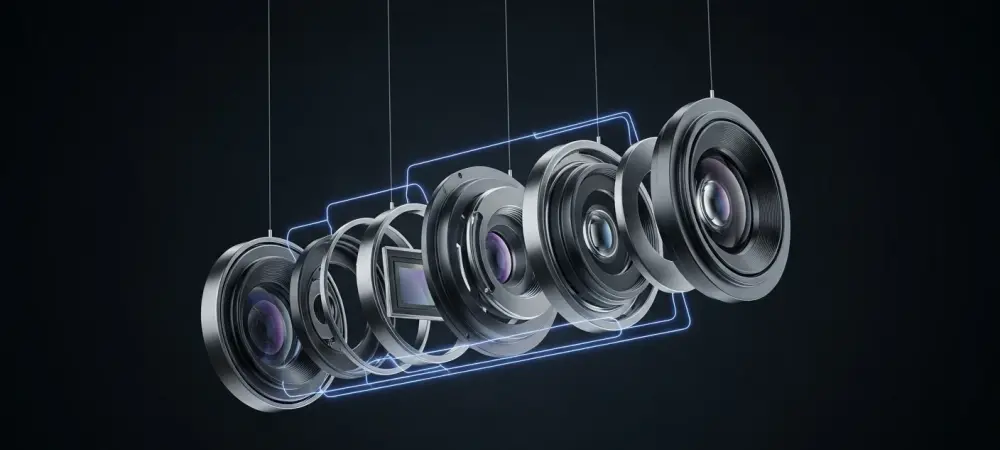
The pocket-sized device that connects us to the world has also quietly become the most prolific camera in history, rendering dedicated point-and-shoot models all but obsolete. For years, the magic of mobile photography was driven by software, with computational algorithms working behind the scenes to sharpen details and balance colors. Now, a significant shift is underway as manufacturers pivot from digital tweaks to professional-grade optical engineering. This analysis will explore the emerging hardware trends defining the next generation of smartphone cameras, their real-world implications, the insights of industry experts, and the future trajectory of mobile imaging.
The Hardware Renaissance in Smartphone Photography
The Push Toward Mechanical and Optical Excellence
A clear trend is emerging in the premium smartphone market, where consumer demand is increasingly shifting toward devices with professional-grade camera features. Data indicates that advanced imaging capabilities are a primary driver for upgrades, with users willing to invest in flagship models that promise tangible improvements in photographic quality and creative control. This consumer appetite is compelling manufacturers to move beyond incremental sensor updates and invest in more complex optical systems.
This momentum is crystallized in recent rumors surrounding Apple’s forthcoming iPhone 18 Pro lineup. Reports from credible sources, including the well-known leaker Digital Chat Station and corroborated by respected industry analyst Ming-Chi Kuo, point to a significant focus on mechanical camera enhancements. Such a strategic direction from an industry leader like Apple signals a broader market validation of this hardware-centric approach, solidifying it as a defining trend for the next cycle of flagship devices.
Breakthrough Technologies in Practice
One of the most significant rumored upgrades is the introduction of a variable aperture in the iPhone 18 Pro’s main camera. This technology, which allows the camera to mechanically adjust the opening of the lens, would grant users unprecedented control over depth of field and exposure. A wider aperture would excel in low-light situations and create a natural, soft background blur (bokeh), while a narrower setting would ensure tack-sharp focus across an entire scene, a feature highly valued in landscape and architectural photography.
Complementing this is a rumored upgrade to the telephoto lens, which is expected to feature a larger aperture than the current f/2.8 standard. This enhancement would directly address a common weakness in smartphone zoom cameras by allowing more light to reach the sensor. The practical benefits are substantial: improved performance in dimly lit environments, better separation of subjects from their backgrounds, and a marked reduction in digital noise, resulting in cleaner and more detailed long-range shots.
While the concept of a variable aperture is not entirely new—Samsung notably included it in its Galaxy S9—its potential return in a device as influential as the iPhone marks a pivotal moment. It signifies a deliberate industry-wide pivot back toward sophisticated optical hardware, recognizing the physical limitations of software-only solutions and embracing the nuanced control that mechanical components provide.
Industry Insights on the Mobile Camera Arms Race
The corroboration of these hardware-focused rumors by analysts like Ming-Chi Kuo is significant, as it suggests an industry consensus on Apple’s strategic roadmap. This isn’t merely a product leak; it reflects a calculated response to a maturing market where meaningful differentiation is becoming increasingly difficult. Experts view this move as a clear signal that major manufacturers are looking to tangible, physical upgrades to justify premium price points and attract discerning consumers.
Industry experts emphasize that this shift toward mechanical hardware is a direct answer to the escalating “camera arms race.” As computational photography reaches a point of diminishing returns, the next frontier for innovation lies in the optical hardware itself. By integrating features previously reserved for dedicated cameras, brands can offer a more compelling value proposition that appeals to both casual users and serious photography enthusiasts, setting a new standard for what a smartphone camera can achieve.
However, this path is not without its challenges. Experts caution that integrating complex mechanical components like a variable aperture system into an increasingly slim and crowded smartphone chassis is a formidable engineering feat. Moreover, these advanced parts carry higher production costs and introduce new potential points of failure, creating a delicate balance between innovation, reliability, and final retail price that manufacturers must carefully navigate.
Projecting the Future of Your Pocket Camera
Looking ahead, the future of mobile photography lies not in a battle between hardware and software, but in their seamless fusion. The introduction of advanced optical systems will provide a superior foundation for next-generation, AI-driven computational photography to build upon. Imagine an AI that can intelligently adjust a mechanical aperture in real time to capture the perfect portrait or leverage a larger telephoto lens to produce astrophotography shots that were once the exclusive domain of specialized equipment.
This convergence has broader implications for the imaging industry, likely accelerating the decline of the dedicated consumer camera market. As smartphones become capable of delivering professional-grade results, more photographers and videographers will find little reason to carry a separate device. This trend will continue to democratize high-end content creation, empowering a new generation of visual storytellers with powerful, portable, and perpetually connected tools.
Still, this evolution presents potential hurdles. The rising cost of developing and integrating these advanced systems will inevitably be passed on to the consumer, potentially pushing flagship smartphone prices even higher. There is also a risk that the increasing complexity of camera controls could alienate the average user, who values simplicity over granular control. The ultimate challenge will be to balance these powerful new features with an intuitive user experience that offers both effortless point-and-shoot capability and deep creative freedom.
Conclusion: A Clearer Picture of Tomorrow
The evidence pointed to a decisive trend: flagship smartphones were undergoing a hardware renaissance, with a renewed focus on integrating advanced mechanical and optical systems. The anticipated adoption of technologies like variable apertures and larger-aperture telephoto lenses represented a fundamental shift in mobile imaging philosophy. This movement was more than just an incremental update; it marked a pivotal moment that further blurred the distinction between smartphone cameras and their professional counterparts. By prioritizing the physics of light capture, manufacturers acknowledged the limits of software alone and set a new benchmark for quality and creative potential.
These innovations redefined what was possible in visual storytelling, placing instruments of unprecedented power and flexibility into the hands of millions. The camera in our pocket was not just getting smarter; it was becoming a true optical marvel.