

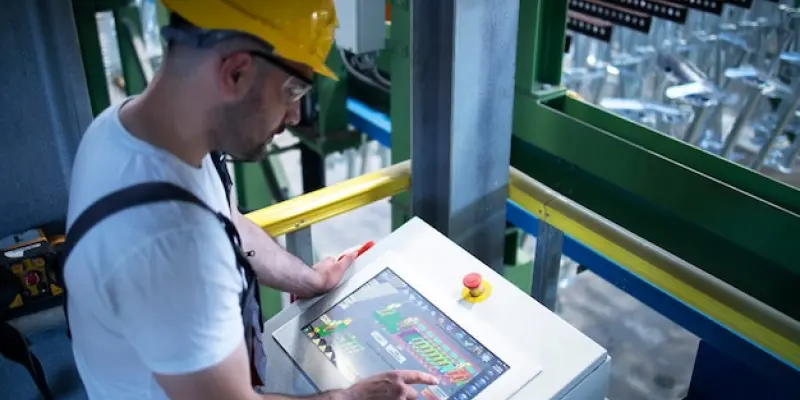
The aerospace manufacturing industry has witnessed remarkable advancements with the integration of big data and robotics. These groundbreaking technologies have fundamentally changed traditional Computer Numerical Control (CNC) metal machining practices, ushering in an era marked by heightened precision, efficiency, and stringent quality control. Complex components like turbine blades and structural supports are now produced with an unprecedented level of accuracy, thanks to the seamless blend of big data analytics and robotic automation. This article delves into the myriad ways big data and robotics are redefining aerospace manufacturing, providing in-depth insights into their transformative impact on the sector.
Leveraging Big Data for Enhanced Precision
The application of big data in CNC metal machining for aerospace focuses on the meticulous gathering and analytical processing of vast and varied data sets. The tiny tolerances required for precision parts, such as engine mounts and landing gear components, are achievable due to big data’s analytical capabilities. Modern CNC machines are outfitted with an array of sensors that continuously monitor critical metrics like spindle speed, cutting forces, temperature fluctuations, and vibrations. Machine learning algorithms then scrutinize these data feeds, identifying patterns and deviations that might indicate material or tool wear and tear.
For example, high vibration alerts in processes involving tough materials like titanium alloys can indicate potential tool degradation, prompting immediate corrective actions. This predictive approach significantly reduces waste and ensures parts conform to the aerospace industry’s stringent standards from the onset. The power of big data extends to refining machining parameters to achieve optimal performance. By scrutinizing real-time production data, manufacturers can fine-tune key variables such as feed rates and cutting speeds. Ensuring aluminum fuselage components are machined at ideal parameters enhances tool longevity and minimizes thermal deformation, crucial for maintaining product consistency and quality.
Precision machining services use big data to continuously improve these parameters, resulting in high-quality parts that meet rigorous aerospace specifications. The integration of advanced data analytics enables a level of accuracy and reliability in CNC metal machining that was previously unattainable, demonstrating the transformative potential of big data in aerospace manufacturing.
Robotics: Automating Precision and Scalability
Robotic automation has revolutionized the landscape of aerospace manufacturing by enabling rapid, precise, and scalable production processes. Robots excel at executing repetitive, intricate tasks with unprecedented accuracy, making them indispensable in the fabrication of various aerospace parts, including bracket fasteners and engine components. By automating essential production functions, robots significantly reduce human error, enhance consistency, and expedite production timelines, all while ensuring high-quality outcomes.
Robotic systems perform various operations, from loading raw materials into CNC machines to conducting thorough part inspections. This automation not only accelerates production but also guarantees uniformity across large-scale operations, which is particularly crucial when manufacturing thousands of identical aerospace components. Collaborative robots, or cobots, further elevate the precision of the manufacturing process by utilizing probe tools to measure parts during metal processing, providing real-time feedback to CNC systems. If deviations are detected, such as overcutting a titanium turbine blade, the robot can instantly signal the CNC controller to adjust toolpath settings, ensuring the part remains within specified tolerances. This precise control is essential for aerospace components that must withstand extreme operational conditions. Robots’ ability to adapt to various tasks and conditions significantly enhances both the scalability and precision of manufacturing processes. This flexibility ensures that aerospace components are produced to exacting standards, maintaining the quality and reliability necessary for the industry.
Integrating Big Data and Robotics for Real-Time Quality Control
The convergence of big data analytics and robotic systems brings a transformative advantage to real-time quality control in aerospace manufacturing. Traditional post-production inspection methods often fall short in promptly identifying flaws, leading to delays and increased production costs. However, the integration of data analytics with robotic automation facilitates immediate detection and correction of anomalies, ensuring flawless parts from the start and enhancing overall manufacturing efficiency. Big data platforms aggregate information from multiple sources, including CNC machines, robotic sensors, and advanced inspection tools. This comprehensive data collection provides a holistic view of the entire machining process, enabling more effective monitoring and control. For example, during the production of steel landing gear components, spindle load sensor data from CNC machines can be synchronized with input from robotic laser scanners. This synchronization allows for immediate adjustments in machining parameters if any deviations are detected, preventing errors and ensuring each part meets exact specifications.
Vision-guided robotic systems, equipped with high-resolution cameras, play a critical role in enhancing real-time quality control. These robots can conduct detailed inspections, detecting surface imperfections and precisely measuring intricate features of aerospace components such as wing spars. Continuously analyzing inspection data enables manufacturers to identify recurring quality issues and implement corrective measures, leading to sustained improvements in product quality and consistency over time. The integration of big data analytics with robotics not only streamlines quality control processes but also ensures that every component adheres to stringent aerospace standards.
Reducing Costs and Downtime Through Predictive Maintenance
The fusion of big data and robotics in CNC metal machining extends beyond precision and quality control, offering substantial cost-saving benefits through predictive maintenance. Unscheduled machine downtimes and equipment failures can lead to significant financial losses, particularly when producing high-value aerospace items like engine containers and structural supports. Leveraging predictive maintenance, powered by data-driven insights, helps manufacturers preempt such disruptions, ensuring smooth and uninterrupted production cycles. Big data analytics continuously monitors key performance metrics such as vibration patterns, spindle temperatures, and motor electrical outputs. Anomalies in these parameters can signal potential equipment issues before they lead to complete failures. For instance, if a CNC machine’s spindle temperature exceeds normal operating ranges during the machining of nickel alloy components, the system can automatically schedule maintenance, preventing costly breakdowns. This proactive approach minimizes unexpected downtime and maximizes operational efficiency.
Robotic systems also contribute significantly to predictive maintenance by automating routine upkeep tasks. Robots can perform essential maintenance operations such as chip removal and tool lubrication without human intervention. This automation not only reduces labor costs but also ensures that machines remain in optimal working condition, maintaining high productivity levels without compromising quality. By integrating big data analytics with robotic automation, aerospace manufacturers can achieve a seamless, efficient, and cost-effective production environment, further solidifying the industry’s commitment to innovation and excellence.
Driving Future Innovations in Aerospace Manufacturing
The aerospace manufacturing industry has experienced significant advancements through the adoption of big data and robotics. These innovative technologies have revolutionized traditional CNC metal machining, leading to an era characterized by enhanced precision, efficiency, and rigorous quality control. The manufacturing of complex components, such as turbine blades and structural supports, is now achieved with unparalleled accuracy, owing to the seamless integration of big data analytics and robotic automation. This article explores the numerous ways in which big data and robotics are transforming aerospace manufacturing. By leveraging big data, manufacturers can predict and address potential issues before they occur, enhancing maintenance schedules and reducing downtime. Robotics, on the other hand, allows for continuous, precise operations that minimize human error and increase production speed. Together, big data analytics and robotic systems provide a synergistic effect, leading to novel solutions and improvements that were previously unattainable, ultimately propelling the industry toward a future of impeccable standards and groundbreaking advancements.