

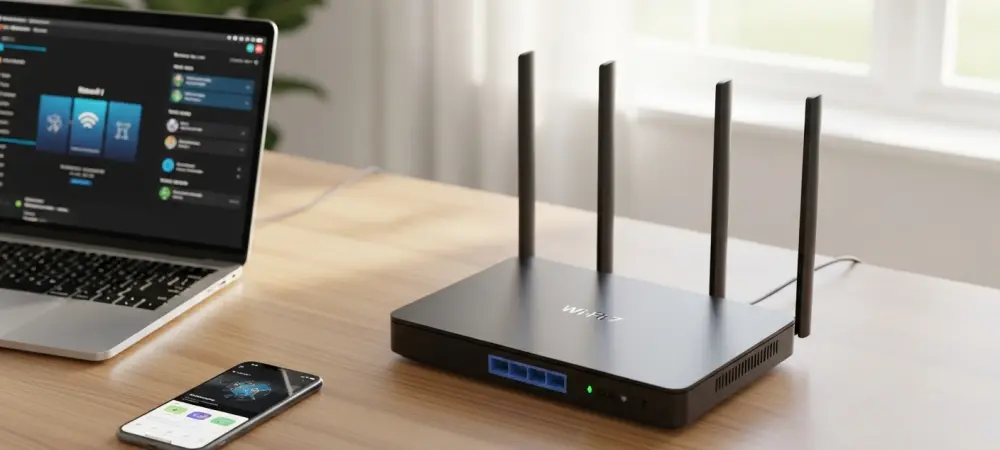
Modern households are currently navigating a digital landscape where the sheer volume of high-bandwidth activities, from multi-stream 8K video to intensive cloud gaming, has fundamentally altered the requirements for a standard home network. For years, the transition to a new wireless standard was an expensive endeavor, often restricted to early adopters willing to pay a premium for hardware that few client devices could even utilize at the time. However, the current landscape of wireless connectivity has seen a rapid democratization of technology, exemplified by devices that bridge the gap between high-end performance and budget-friendly accessibility. This shift is particularly evident in the way consumers are now moving away from the often-inadequate routers provided by internet service providers in favor of specialized hardware that offers better range, lower latency, and superior security. The Archer BE3600 stands as a primary example of this movement, offering a gateway into the next generation of connectivity without the steep financial barrier usually associated with cutting-edge networking equipment. By focusing on essential technological advancements rather than purely aesthetic or niche features, this router redefines what a value-oriented consumer can expect from their home infrastructure. It represents a significant milestone where high-speed, multi-gigabit wireless is no longer a luxury but a standard expectation for the modern connected home, ensuring that every tablet, smartphone, and smart appliance operates at peak efficiency.
Cutting-Edge Wireless Tech and Software Flexibility
The foundation of modern wireless performance lies in the ability of a router to manage multiple concurrent streams of data without succumbing to congestion or interference from neighboring signals. As residential areas become more densely packed with wireless networks, the efficiency of the underlying technology becomes more important than raw theoretical speeds. The Archer BE3600 addresses this by implementing the core architectural improvements of Wi-Fi 7, which focus on spectral efficiency and reduced airtime contention. This approach allows the router to maintain a stable environment even in “noisy” settings where dozens of other networks are competing for the same frequencies. Beyond the hardware, the software ecosystem provides the necessary flexibility to adapt to various home layouts and usage patterns. Whether it is through a simplified mobile interface or a comprehensive web-based dashboard, the goal is to provide users with a network that is both powerful and easy to maintain. This combination of hardware efficiency and software versatility ensures that the home network remains a reliable backbone for both work and leisure, capable of handling the increasing demands of a society that is more connected than ever before.
Part 1: Advanced Multi-Link Operation and Throughput
The implementation of Multi-Link Operation (MLO) within the Archer BE3600 marks a sophisticated departure from the way traditional dual-band routers managed device connections in previous years. In the past, a device would typically latch onto either the 2.4GHz or 5GHz band, often staying on a congested or slower frequency even when a better option was available. Wi-Fi 7 changes this dynamic by allowing a compatible device to connect to both bands simultaneously, effectively treating them as a single, unified pipeline for data transmission. This aggregation not only increases the potential throughput but also significantly reduces latency by allowing data packets to be sent over the clearest available path at any given microsecond. Even though this specific model omits the 6GHz band to maintain its competitive price point, the utilization of 4K-QAM (Quadrature Amplitude Modulation) ensures that the existing bands are far more efficient than their predecessors. By packing more data into each signal, the router achieves a performance level that surpasses older Wi-Fi 6 hardware, providing a smoother experience for high-intensity tasks like virtual reality or massive file transfers. This intelligent management of wireless resources ensures that even in environments with high interference, the connection remains robust and responsive.
Part 2: Comprehensive Management and Mesh Scalability
User experience is significantly enhanced by a dual-layered management system that caters to both casual users who prefer a streamlined interface and power users who demand granular control. The mobile-based Tether application provides a modern, intuitive way to set up the network in minutes, guiding the user through the process of connecting to the internet and configuring basic security settings. Beyond the initial setup, the app serves as a centralized hub for monitoring network health, managing connected devices, and implementing quick changes like updating passwords or enabling a guest network. For those who require more advanced settings, such as port forwarding, address reservation, or detailed firewall configurations, the web interface offers a comprehensive suite of tools. This flexibility ensures that the router remains useful as the technical needs of the household evolve, providing a scalable management solution that does not feel restrictive. The inclusion of clear, real-time data visualizations helps homeowners identify bandwidth-heavy devices and optimize their network layout for better coverage without needing a deep background in network engineering or complex IT certifications.
Security Features and Real-World Usage
In an era where digital privacy is constantly under threat, a router must act as more than just a gateway to the internet; it must serve as a comprehensive security perimeter for every device in the home. The Archer BE3600 is designed with this protective role in mind, integrating sophisticated defense mechanisms that operate at the network level. This centralized approach to security is far more effective than relying on individual device software, as it catches potential threats before they ever reach a computer or smartphone. Furthermore, the practical utility of the router is extended by its hardware design, which includes high-speed wired connections that are becoming increasingly necessary for modern fiber-optic internet plans. By providing a balance between high-level security protocols and tangible hardware performance, the device ensures that users do not have to sacrifice speed for safety. This dual focus makes it a reliable choice for families who need to protect their personal data while also demanding the low latency required for modern communication and entertainment. The result is a network environment that is both resilient against external attacks and capable of supporting the most demanding digital lifestyles without compromise.
Part 3: Integrated Protection and Privacy Protocols
Security has evolved from a secondary consideration to a primary requirement for home networking hardware, and the Archer BE3600 addresses this need with a robust suite of built-in protections. One of the most significant inclusions is the integrated VPN server and client support, which utilizes high-performance protocols like WireGuard and OpenVPN. By running a VPN client directly on the router, users can protect all traffic leaving their home, including data from devices that do not natively support VPN software, such as smart TVs, gaming consoles, and some smart home appliances. This level of network-wide privacy is increasingly important as concerns over data harvesting and regional content restrictions continue to grow across the digital landscape. The hardware-accelerated encryption ensures that using these protocols does not result in a drastic drop in internet speeds, which was a common drawback in older, less powerful router models. This capability provides peace of mind for families, knowing that their digital footprint is obscured and their sensitive information is encrypted before it even reaches the open internet, providing a secure foundation for all online activities.
Part 4: Practical Performance and Hardware Interconnectivity
The physical connectivity of the Archer BE3600 is where its status as a value leader is truly cemented, particularly through the inclusion of two 2.5Gbps Ethernet ports. As fiber-optic internet plans exceeding one gigabit become the standard in many urban areas, older routers with traditional 1Gbps ports have become the primary bottleneck in the home infrastructure. This model features a 2.5GbE WAN port to ingest high-speed signals and a matching 2.5GbE LAN port, which is essential for connecting high-performance devices like a network-attached storage unit or a dedicated workstation. This dual-port configuration ensures that the high-speed connection is not just limited to the wireless bands but can be distributed effectively to the most critical hardware in the home. Furthermore, the presence of a 5Gbps USB 3.0 port adds a layer of utility rarely seen at this price point, allowing for fast file sharing and automated backups across the local network. In practical, everyday usage, the router demonstrates an impressive ability to maintain high throughput and signal stability even as the distance from the unit increases, effectively covering average-sized homes with a consistent and reliable wireless signal.
Market Positioning and Final Value Analysis
The current networking market is often characterized by a race toward the highest possible technical specifications, often at the expense of consumer affordability and practical utility. Many flagship routers now command prices that rival high-end laptops, creating a significant barrier for the average person who simply wants a better internet experience. The Archer BE3600 disrupts this trend by identifying the specific features that provide the most benefit to the majority of users and focusing its resources there. This strategic positioning makes it an ideal candidate for those looking to replace the basic routers provided by their service providers, which often lack the features and performance necessary for a modern home. The value proposition here is not just about a lower price tag, but about providing a future-proofed platform that will remain relevant and capable for years to come. It represents a sensible, performance-oriented choice in a market that is often clouded by marketing hyperbole and unnecessary technical complexity.
Part 5: Strategic Design and Cost Efficiency
When analyzing the current networking market, it becomes clear that the Archer BE3600 occupies a unique position by prioritizing real-world utility over theoretical maximums that most users will never reach. Many competitors focus on marketing astronomical “combined speeds” by including a 6GHz band that adds significant cost but offers limited benefit to users who do not yet own a fleet of 6GHz-compatible devices. By strategically omitting that third band while keeping the essential Wi-Fi 7 features like Multi-Link Operation and 4K-QAM, the design provides the core benefits of the latest wireless generation at a fraction of the cost. This choice reflects a deep understanding of the average consumer’s needs—someone who wants a fast, reliable, and secure network but is not interested in paying for features they cannot currently utilize. The router competes effectively not just against other Wi-Fi 7 models, but also against high-end Wi-Fi 6 and 6E routers that are often priced higher despite being based on older architecture. This makes it a formidable choice for anyone looking to maximize their return on investment while still benefiting from the latency and efficiency improvements of the newest wireless standard.
Part 6: Long-Term Viability and Next Steps
The evaluation of the Archer BE3600 confirmed its status as a pivotal device for those looking to modernize their home infrastructure without excessive spending. It provided a stable and high-performance experience during the testing phase, proving that the move to Wi-Fi 7 was beneficial even in a dual-band configuration. Users who migrated from basic equipment or aging systems found that the increase in reliability and the reduction in lag were immediately noticeable in daily tasks. To make the most of this hardware, homeowners should verify if their current internet plan can utilize the 2.5Gbps ports and consider upgrading their most-used devices to compatible network cards where possible to fully leverage the MLO capabilities. As the digital ecosystem continues to demand more from home networks, the proactive step of installing a future-ready router ensures that the household remains connected and secure. The transition to this technology served as a clear reminder that high-quality networking should be accessible to everyone, and this model successfully broke down the barriers that once made the latest standards the exclusive domain of enthusiasts. Moving forward, the focus for consumers should be on maintaining a secure environment through the provided software tools while enjoying the seamless connectivity offered by this new era.