

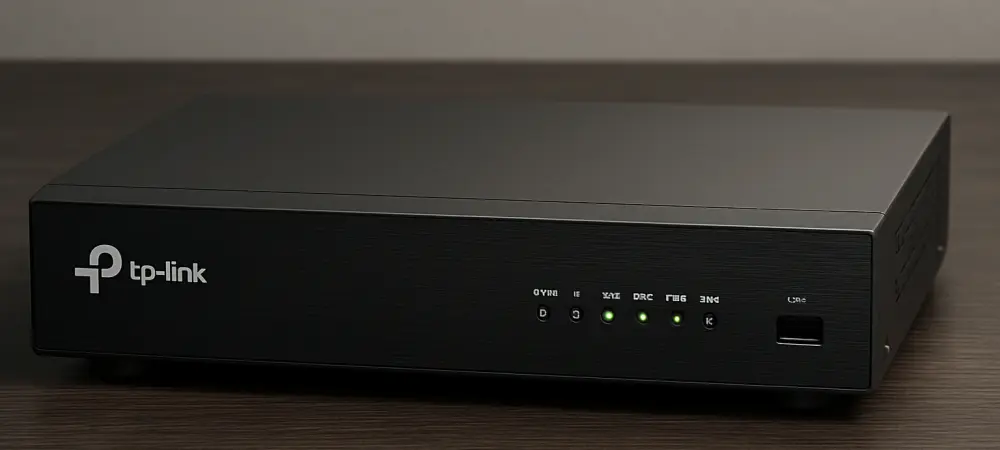
Surveillance systems are an essential component of security infrastructure, protecting properties and assets. Recently, TP-Link alerted users to critical vulnerabilities in its VIGI Network Video Recorder (NVR) systems, raising concerns about the security of surveillance footage and network protection. These vulnerabilities pose significant threats, emphasizing the importance of understanding the risks and taking appropriate measures to ensure system safety. This article addresses key questions surrounding these vulnerabilities, provides insights into the problems they create, and offers guidance on safeguarding surveillance systems.
What Are the Key Vulnerabilities Identified in TP-Link’s VIGI NVR Systems?
The significant vulnerabilities identified in TP-Link’s VIGI NVR systems are CVE-2025-7723 and CVE-2025-7724. CVE-2025-7723 is an authenticated OS command injection flaw, allowing attackers with login credentials to execute arbitrary OS-level commands. This vulnerability has a CVSS v4.0 score of 8.5, indicating its high severity. It poses risks such as compromising surveillance footage and altering device settings, which can be exploited for further network attacks. CVE-2025-7724, requiring no authentication, is even more perilous with a CVSS v4.0 score of 8.7. This vulnerability enables attackers to execute commands without credentials, raising the likelihood of tampering with video data, disrupting device operations, and launching additional attacks on the network.
Which NVR Models Are Affected By These Vulnerabilities?
The vulnerabilities are specific to the VIGI NVR1104H-4P V1 and VIGI NVR2016H-16MP V2 models. Devices running firmware versions older than 1.1.5 Build 250518 for the VIGI NVR1104H-4P V1 and 1.3.1 Build 250407 for the VIGI NVR2016H-16MP V2 are susceptible to these threats. Users owning these models should be aware of the potential risks and prioritize updating their devices to the latest firmware versions. TP-Link has released updates to counter these vulnerabilities and strongly advises users to promptly install them to protect their systems from unauthorized access and potential exploitation.
How Should Users Respond to These Security Threats?
To mitigate these security threats, users should immediately update their devices with the latest firmware provided by TP-Link. This is crucial for countering the vulnerabilities and maintaining system integrity. Additionally, verifying post-update security configurations can further bolster the protection of surveillance systems. Implementing robust security measures, such as network segmentation, is recommended to minimize attack surfaces and prevent unauthorized access. Regularly checking for firmware updates in surveillance and networked systems is indispensable for safeguarding infrastructure against emerging threats.
Why Is Regular Updating of Surveillance Systems Important?
The necessity for regular software updates in surveillance systems stems from the dynamic nature of cybersecurity threats. As new vulnerabilities are continually discovered, updating systems regularly helps in patching these weaknesses effectively. The vulnerabilities identified in TP-Link’s VIGI NVR systems underscore the importance of staying current with updates to prevent potential breaches. Maintaining up-to-date firmware is vital for defending surveillance systems against exploitation and ensuring the confidentiality, integrity, and availability of surveillance footage. Furthermore, updates can enhance the overall performance and reliability of surveillance systems, ensuring they operate optimally while minimizing risks.
Insights on Future Considerations for Surveillance Security
With the evolving landscape of cybersecurity threats, the focus must be on advanced safeguards to prevent breaches in surveillance systems. Addressing the immediate vulnerabilities with firmware updates is crucial, but future considerations involve adopting a proactive approach to cybersecurity. This includes regularly assessing network security configurations, implementing additional protections like intrusion detection systems, and fostering awareness among users regarding potential threats. Ongoing engagement with security best practices will help users stay ahead of risks, ensuring surveillance systems remain resilient against exploitation and unauthorized access.