

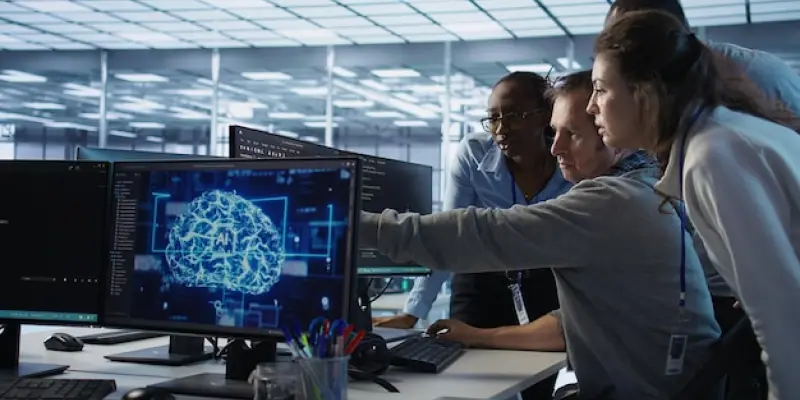
In a significant development for the tax and accounting industry, Thomson Reuters has partnered with Anthropic to introduce advanced AI technology into professional tools designed for tax experts. This collaboration marks a pivotal shift in the industry by leveraging artificial intelligence to enhance the efficiency and accuracy of tax-related tasks. The centerpiece of this initiative is the AI platform CoCounsel, which integrates Claude AI and operates on Amazon’s secure cloud infrastructure. This integration ensures the protection of sensitive client information while delivering AI-powered insights that simplify complex tax processes.
Thomson Reuters utilizes a retrieval-augmented generation (RAG) architecture that connects Claude AI to an extensive knowledge base. This database includes contributions from over 3,000 subject matter experts and encompasses 150 years of professional content, combining human expertise with cutting-edge AI technology to distribute expert knowledge more effectively. The collaboration with Anthropic focuses on enhancing Claude AI’s performance through training on high-quality professional and academic texts, optimizing its capabilities via advanced prompting strategies, and implementing tailored workflows to address unique tasks.
Enhancing Efficiency and Expertise
The implementation of different versions of Claude AI for varying task complexities exemplifies the versatility and efficiency gains brought about by this integration. Claude 3 Haiku is designated for rapid processing tasks, ensuring quick and accurate responses, while Claude 3.5 Sonnet is utilized for more detailed analyses, providing in-depth insights into complex tax matters. Preliminary results from the integration have shown remarkable improvements in efficiency, with users reporting significant time savings and improvements in the quality of their work. This allows tax professionals to focus on delivering more strategic value to their clients.
The enhancement extends beyond mere efficiency gains. By combining human expertise with AI capabilities, tax professionals can leverage the strengths of both to navigate complex regulations and tax codes with greater precision and confidence. The comprehensive knowledge base and sophisticated AI algorithms work in tandem, ensuring that users have access to the most relevant and up-to-date information. This collaborative approach not only streamlines workflows but also empowers professionals to make more informed decisions, ultimately benefiting their clients.
Prioritizing Security and Compliance
A critical aspect of this AI integration is the emphasis on security and compliance. Thomson Reuters relies on Amazon Bedrock to provide a robust and secure cloud infrastructure that meets enterprise-grade security standards throughout the entire AI lifecycle. This ensures that sensitive client information is safeguarded against potential breaches and unauthorized access. The collaboration demonstrates a commitment to maintaining the highest standards of data protection while leveraging advanced technology to enhance professional tools.
Incorporating AI into tax tools also necessitates adherence to stringent compliance regulations. Thomson Reuters and Anthropic have undertaken measures to ensure that their AI-powered systems comply with all relevant legal and regulatory requirements. This includes ongoing monitoring and evaluation of the AI’s performance to ensure it operates within prescribed ethical and legal frameworks. By prioritizing security and compliance, Thomson Reuters sets a new benchmark for how AI can be integrated into professional tools without compromising data protection and regulatory standards.
Future Prospects and Strategic Investment
In a groundbreaking move for the tax and accounting sector, Thomson Reuters has teamed up with Anthropic to bring cutting-edge AI technology to tools used by tax professionals. This partnership signifies a major shift, harnessing artificial intelligence to boost efficiency and precision in tax-related tasks. At the heart of this initiative is the AI platform CoCounsel, which incorporates Claude AI and runs on Amazon’s secure cloud infrastructure. This setup ensures the protection of sensitive client data while offering AI-powered insights that make complex tax processes simpler.
Thomson Reuters employs a retrieval-augmented generation (RAG) system, linking Claude AI to a vast knowledge base. This database, enriched by contributions from over 3,000 experts and spanning 150 years of professional content, blends human expertise with state-of-the-art AI to distribute expert knowledge more effectively. The collaboration with Anthropic aims to enhance Claude AI’s performance through training on high-quality professional and academic texts. It also focuses on optimizing capabilities via advanced prompting strategies and creating customized workflows to tackle specific tasks.