

Dominic Jainy is a seasoned hardware specialist with a deep focus on the intersection of high-performance computing and advanced thermal management. With years of experience monitoring the evolution of silicon architecture, he provides a unique perspective on how modifications like delidding can push consumer hardware beyond its factory-set boundaries. As the enthusiast market shifts toward specialized, pre-modified components, his insights help clarify whether the massive price premiums for chips like the Ryzen 7 9850X3D are a luxury or a necessity for modern performance. We discuss the thermal mechanics, warranty risks, and market positioning of these high-end Zen 5 processors.
The delidded Ryzen 7 9850X3D carries a significant premium at $876 compared to its standard $526 MSRP. Who is the primary target for this $350 markup, and what specific performance metrics or thermal improvements justify this investment?
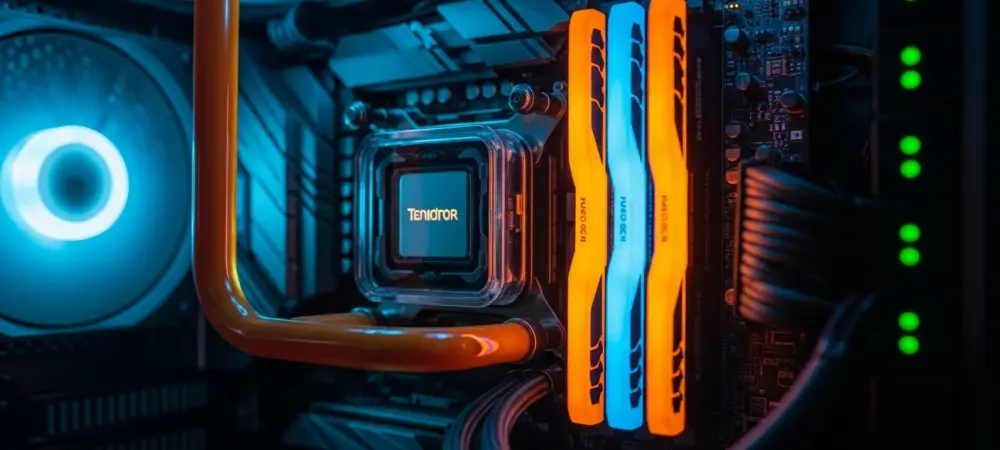
This premium is not intended for the average PC gamer, but rather for the elite tier of enthusiast overclockers who view every degree of heat as a barrier to peak performance. By paying that $350 markup, users are investing in the delicate removal of the integrated heat spreader, which allows a cooling solution to sit directly on the CCD and IOD. This direct-die contact is essential for maximizing thermal conductivity and unlocking the true overclocking potential of the Zen 5 architecture. While the standard user might see this as an unnecessary expense, the $876 price tag covers the expert labor of delidding and the custom protection that comes with it.
Removing the integrated heat spreader to expose the CCD and IOD typically voids original manufacturer warranties. How does a third-party two-year warranty change the risk profile for enthusiasts, and what step-by-step precautions must users take to avoid accidentally voiding this specialized coverage during the installation of custom cooling?
The two-year warranty provided by the vendor is a game-changer because it eliminates the terrifying “zero-recourse” risk that usually accompanies delidding a brand-new $526 processor. To maintain this coverage, users must be extremely careful; for instance, the vendor explicitly states that attempting to reinstall the original stock heat spreader will immediately void the specialized warranty. During installation, you have to ensure you are using compatible direct-die cooling hardware and avoid any physical damage to the exposed dies on the substrate. It is about embracing the “naked” chip while strictly following the provided installation guidelines to keep that two-year safety net intact.
While the 9850X3D shares many specifications with the 9800X3D, it features an improved boost clock. How does direct-die cooling specifically help maintain these higher frequencies under heavy workloads, and what anecdotal evidence have you seen regarding the stability of these Zen 5 chips when pushed to their limits?
Because the 9850X3D is essentially a higher-clocked version of the 9800X3D, heat becomes the primary bottleneck when trying to sustain those improved boost frequencies over long periods. Removing the thermal bottleneck of the integrated heat spreader allows the chip to dump heat into a custom loop much faster, preventing the aggressive thermal throttling that often occurs under heavy workloads. In practice, we see that these Zen 5 chips exhibit much better stability at their limits when they aren’t fighting the heat buildup trapped between the silicon and the metal spreader. The result is a chip that can hold its maximum boost clock more consistently, providing a smoother experience in CPU-intensive tasks.
With delidded 16-core chips reaching prices over $1,100, the enthusiast market is seeing unprecedented price tiers for modified hardware. How does the 8-core 9850X3D fit into a high-end build compared to its more expensive siblings, and what metrics suggest that this configuration remains the optimal choice for gaming?
While a delidded 16-core Ryzen 9 9950X3D commands a staggering $1,168, the $876 8-core 9850X3D is positioned as the precision tool for pure gamers. Most gaming engines are still optimized for the 8-core/16-thread configuration, meaning you aren’t sacrificing actual gaming frames by choosing it over the more expensive 16-core monster. By focusing the cooling efforts on a single CCD, the 9850X3D can often achieve higher effective gaming performance because it avoids the latency and heat complexities of the dual-CCD layout found in the $1,100+ tier. It remains the optimal choice because it provides the fastest gaming architecture currently available without the diminishing returns of extra cores that many games simply won’t use.
What is your forecast for the future of delidded processors as manufacturer out-of-the-box speeds continue to push the thermal limits of traditional integrated heat spreaders?
I forecast that we will see a growing divide where high-end enthusiast chips are increasingly designed with the expectation of extreme cooling, potentially leading manufacturers to offer more flexible heat spreader designs. As we see with the 9850X3D and its siblings, the thermal density of modern nodes is making traditional heat spreaders a liability for those seeking the absolute maximum performance. Over the next few years, I expect more third-party partnerships to emerge, offering pre-delidded and warrantied CPUs as a standard tier for consumers who want the maximum performance experience without the personal risk of breaking the hardware. Eventually, the very concept of a permanent heat spreader might become an optional feature for the highest-performing silicon in the enthusiast stack.