

Introduction
The digital workforce is currently undergoing its most significant transformation since the invention of the graphical user interface as static tools evolve into dynamic partners. This shift marks a departure from simple prompt-response interactions toward complex, autonomous systems capable of executing entire business processes without constant human oversight. Organizations now face a strategic choice between maintaining high-touch manual control and embracing delegation through sophisticated agentic architectures. The primary objective of this exploration is to clarify the functional differences between AI assistants and the more advanced goal-oriented agents. By examining the operational scope, current adoption trends, and necessary governance frameworks, this article provides the essential context for navigating the next phase of automation. Readers can expect to learn how these technologies interact with existing software ecosystems and what measures are required to ensure their safe deployment.
Key Questions or Key Topics Section
The transition from passive help to active agency represents a fundamental change in the relationship between humans and software. Understanding this evolution requires a deep dive into the mechanics of how these systems operate and the market forces driving their integration.
How do AI assistants differ from goal-oriented agents in daily operations?
The distinction often confuses stakeholders who view all generative AI through the same lens of chat-based interfaces. However, the fundamental difference lies in the level of agency and the nature of the interaction. Assistants are essentially reactive, waiting for a user to provide a specific instruction before generating a response or a piece of content. They act as sophisticated consultants that provide information but rely on a human to perform the actual work. In contrast, goal-oriented agents operate with a high degree of autonomy, moving from task-based prompts to objective-based missions. While an assistant might help draft a response to a customer complaint, an agent can be tasked with resolving the complaint entirely. This involves analyzing the issue, checking inventory systems, processing a refund, and sending a confirmation email. The human sets the goal, and the agent determines the necessary steps to reach it, shifting the user role from a micro-manager to a supervisor.
What role does tool use play in the evolution of autonomous agents?
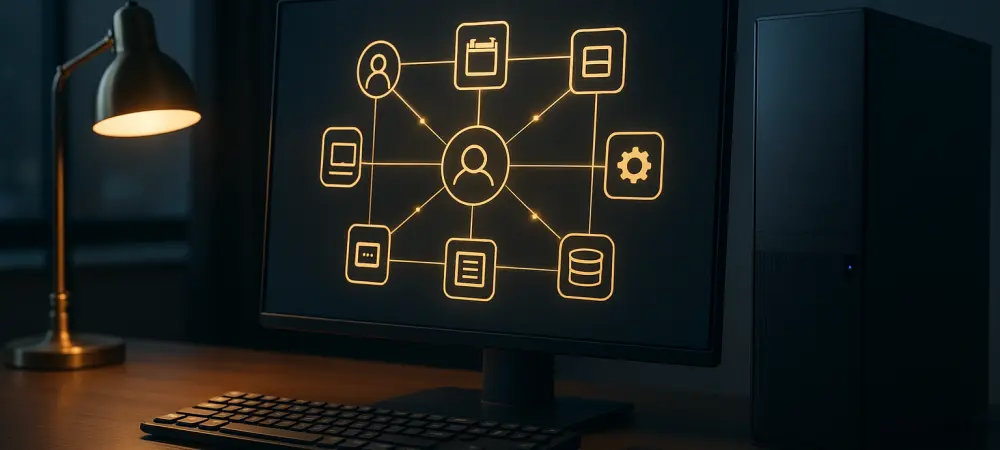
For years, artificial intelligence was confined to the sandbox of its own training data, unable to influence the world outside its text window. This limitation turned AI into a passive observer rather than an active participant in business workflows. The breakthrough occurred when developers began equipping these models with the ability to interact with external software, APIs, and databases, effectively giving the AI hands to manipulate the digital environment.
This capability, often referred to as tool-use or function-calling, is the engine behind agentic behavior. By accessing tools like a CRM, a calendar, or an accounting suite, an agent can bridge the gap between planning and execution. For example, instead of merely suggesting a meeting time, an agent can cross-reference multiple schedules and book the appointment directly. This transition from suggesting to doing is supported by recent metrics showing that large enterprises have increased their active agent usage by nearly 18 times compared to the previous year.
Why is the enterprise adoption of AI agents experiencing a sudden surge?
Organizations are reaching a saturation point with basic productivity tools and are now seeking deeper efficiencies that can only be unlocked through automation. While the initial wave of AI integration focused on individual output, the current focus has shifted toward systemic improvements. Businesses are looking for ways to handle high-volume, repetitive processes that have traditionally required significant human capital, even if those tasks are complex and multi-staged. Market data indicates a massive pivot, with projections suggesting that 40 percent of enterprise applications will feature task-specific agents by the end of 2026. This trend is fueled by the realization that AI can handle routine heavy lifting more consistently than human staff. Despite this enthusiasm, a gap remains between testing and scaling. While over 60 percent of firms are currently piloting agentic systems, only a smaller fraction has successfully implemented them across all operations due to the complexities of specialized knowledge gaps.
What are the primary risks associated with deploying autonomous systems?
Granting a software system the power to make decisions and execute actions comes with a unique set of hazards that were largely absent in the assistant model. In a traditional setup, a hallucination is merely a piece of incorrect text that a human can catch and correct. However, in an agentic setup, a hallucination can result in a physical or financial action, such as an unauthorized bank transfer or the accidental deletion of critical client records.
This hallucination in action represents a significant governance challenge for the modern enterprise. Experts suggest that nearly 40 percent of organizations might actually scale back their use of autonomous agents by 2027 if they cannot establish proper guardrails. Effective risk management requires the implementation of strict access rules, comprehensive audit trails, and mandatory human checkpoints for high-stakes decisions. The goal is to create a system where the agent is empowered to act but remains within a strictly defined sandbox of authority.
Summary or Recap
The evolution from AI assistants to goal-oriented agents represents a shift from information retrieval to autonomous execution. While assistants remain invaluable for creative brainstorming and data synthesis, agents provide the mechanical power needed to automate entire workflows. This progress is currently visible in the massive growth of agentic tools within enterprise software suites, where the focus has moved toward tool-use and complex reasoning. Success in this new landscape depends on a balanced strategy that utilizes assistants for knowledge work and agents for repeatable processes. Governance remains the most critical factor, as the ability of an agent to trigger real-world actions necessitates rigorous oversight. Organizations must focus on building robust guardrails to prevent operational failures while still allowing the technology to alleviate the burden of routine tasks.
Conclusion or Final Thoughts
The transition toward autonomous agents demanded a fundamental rethinking of how human intelligence and machine efficiency coincided. Organizations that thrived were those that moved beyond the novelty of conversational AI to implement systems capable of achieving measurable business goals. They prioritized the creation of clear permission structures and emphasized the importance of maintaining human oversight at critical junctures. As the industry moved toward 2027, the focus shifted from what the AI could say to what the AI could safely do. Leaders who successfully navigated this period spent as much time on governance as they did on deployment. This shift eventually paved the way for the truly autonomous enterprise, where digital workers handled the complexity of operations while humans focused on the creative and ethical direction of the firm.