

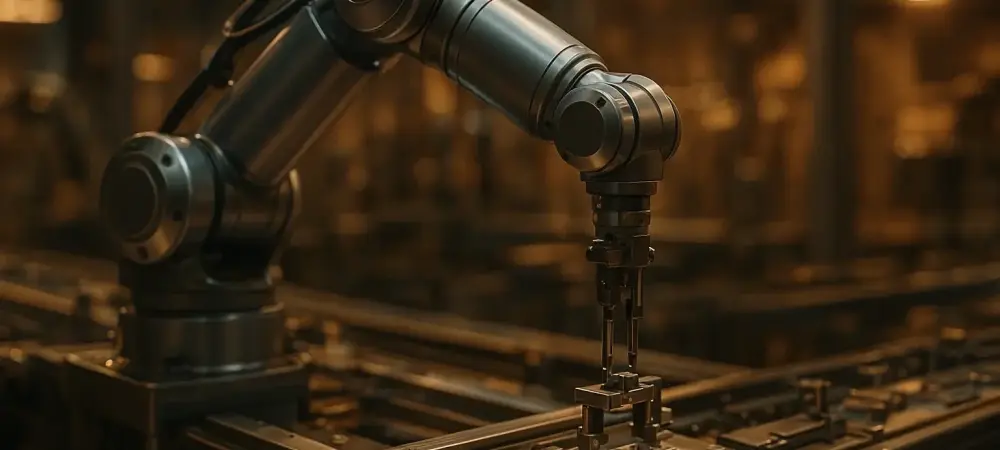
The traditional paradigm of industrial automation, once defined by rigid robotic arms bolted to factory floors, underwent a seismic shift as engineers successfully integrated vision-language-action models into mobile humanoid platforms capable of navigating complex, human-centric environments. This movement, widely recognized as the era of Physical AI, represents a departure from the “caged” robotics of the past decade. By 2026, the industrial sector has moved away from hyper-specialized machines toward versatile systems that possess the cognitive flexibility to handle unstructured tasks. These advancements are not merely incremental; they signify a fundamental change in how digital intelligence interacts with the material world. The significance of this trend lies in the fusion of multi-modal foundation models with ruggedized hardware. Previously, robots struggled with any task that had not been explicitly programmed into their code. However, the current generation of embodied intelligence allows machines to “see” a workspace, “understand” a verbal or gestural command, and “act” with a level of mechanical nuance that was previously reserved for human workers. This capability has effectively bridged the gap between high-level reasoning and physical execution, turning robots into adaptive agents rather than static tools.
The Shift From Specialized Automation to General-Purpose Physical AI
Market Dynamics and the Growth of Embodied Intelligence
The transition toward mobile, humanoid platforms has been accelerated by an unprecedented surge in capital investment from the world’s most prominent technology leaders. Since the start of 2026, firms like Nvidia and OpenAI have intensified their support for physical AI, while high-profile figures such as Jeff Bezos have directed substantial funding into startups like Physical Intelligence. This financial momentum is driven by the realization that general-purpose robotics represents a multi-trillion-dollar market opportunity. Unlike the single-task robotic arms that dominated factories for decades, these new platforms are designed for mobility and multi-functionality across diverse industrial sectors. Statistical data from 2026 to 2028 indicates a sharp rise in the adoption of vision-language-action (VLA) models, which serve as the “brain” for these machines. These models allow a robot to interpret complex environmental cues and linguistic instructions simultaneously. Consequently, the industry is seeing a massive push to deploy these units in environments that were once considered too unpredictable for automation, such as crowded shipping docks or modular assembly lines. The goal is to move robotics out of safety cages and into human-centric spaces where they can perform a variety of non-repetitive tasks.
Real-World Applications: From Lab Demonstrations to Factory Floors
Concrete evidence of this trend can be found in the recent work of Cambridge Consultants, where engineers have moved beyond theoretical models to create integrated hardware-software systems. These systems often feature custom compute “backpacks” that provide the necessary processing power for real-time decision-making without the latency of cloud-based solutions. Coupled with high-dexterity robotic hands, these units are now capable of performing precision picking and placing in logistics centers. This level of mechanical refinement allows them to handle fragile items or irregularly shaped packages with the same ease as a human operator.
Furthermore, the implementation of multi-modal interaction platforms has revolutionized how workers communicate with their robotic counterparts. In modern warehouses, a human supervisor can point toward a specific pallet and provide a vague instruction like “move that over there,” and the robot can resolve the ambiguity by calculating the gesture’s trajectory and the spatial context of the room. This ability to interpret human intent in real time is a hallmark of “full-stack” physical AI systems. These platforms are currently being tested in unpredictable industrial settings where navigation and obstacle avoidance are constant requirements.
Expert Perspectives on the Human Variable and Technical Integration
Lead engineers in the field have identified “reading the room” as the most significant hurdle for widespread industrial AI adoption. Human unpredictability remains a primary challenge, as workers do not always follow linear paths or provide clear signals. Experts suggest that for a robot to be truly useful, it must possess an innate awareness of human social norms and movement patterns. This requires sophisticated sensor fusion and the ability to process massive amounts of data at the edge to ensure that safety remains the top priority in a shared workspace.
To address these safety concerns, professional commentary highlights the necessity of localized “kill switches” and redundant safety layers managed by edge computing. By eliminating the latency associated with remote processing, robots can react to a sudden human presence in milliseconds. However, there remains a “deployment chasm” that the industry is still working to cross. While AI models have reached a high level of sophistication, they often require further refinement in terms of operational speed and reliability to meet the grueling standards of 24/7 factory environments without frequent intervention.
The Future Outlook: A New Paradigm for Manual Labor
The evolution of robotic training has shifted from rigid, line-by-line programming to self-learning loops and video-based observation. Robots are now being trained to perform manual tasks by watching human demonstrations, allowing them to internalize complex movements through imitation and reinforcement learning. This shift toward “agentic AI” in the physical world suggests that robots will soon transition from being simple tools to collaborative partners. This change has profound implications for the global workforce, as the demand for robots capable of handling diverse, non-repetitive manual tasks continues to grow. Forecasts for the period from 2026 to 2029 suggest that the first wave of commercially viable humanoid deployments will focus on sectors with high labor shortages, such as heavy logistics and precision manufacturing. While the benefits include increased operational efficiency and improved workplace safety, the risks regarding data security and the scaling of autonomous systems must be managed carefully. As these robots become more integrated into the global economy, the focus will likely shift toward ensuring that they can operate reliably in even the most chaotic industrial environments.
Conclusion: Navigating the Era of Embodied AI
The journey toward commercializing physical AI required a fundamental rethink of how machines interacted with the world. It was observed that the convergence of multi-modal foundation models and robust edge computing provided the necessary framework for robots to transition from static tools to dynamic collaborators. This evolution emphasized the critical role of human-centric design, which ultimately paved the way for more resilient and adaptable industrial ecosystems. The integration of high-performance hardware with agentic software successfully bridged the gap between digital intelligence and physical labor, transforming a once-distant vision into a tangible reality.
As the industry moved forward, the focus shifted toward the validation and verification of these complex systems to ensure they met the highest safety standards. The successful deployment of humanoid robotics in unstructured environments proved that the “human variable” could be managed through sophisticated awareness platforms. These advancements demonstrated that the future of manual labor would be defined by a synergy between human ingenuity and robotic precision. Ultimately, the progress made in physical AI established a new benchmark for global economic productivity, marking the start of a transformative era for the industrial world.