

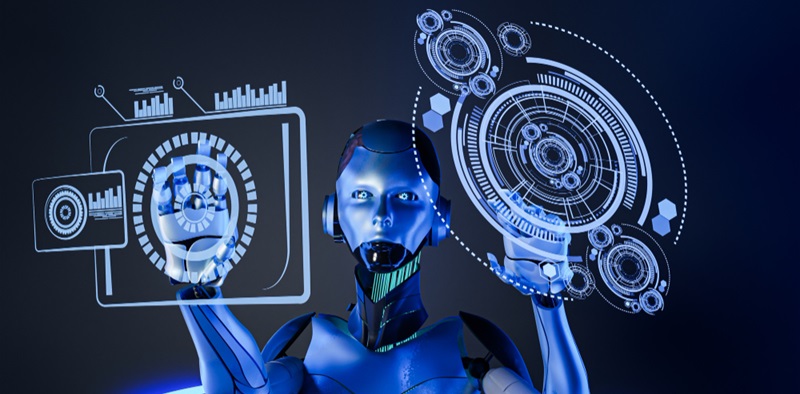
The field of Artificial Intelligence (AI) has witnessed a revolutionary breakthrough with the rise of ChatGPT, challenging the preconceived notions of hardcore, logic-loving professors who once believed that AI would never come to fruition. This article explores the impact of ChatGPT and AI on various aspects of our society, shedding light on the challenges faced, the behaviors exhibited by AI, and the future implications they hold.
The Skepticism and Evolution of AI
In the not-so-distant past, AI was met with skepticism and doubt. Hardcore, logic-loving professors scoffed at the mere idea of it becoming a reality. However, the rise of ChatGPT has defied these naysayers and proven that AI has the potential to surpass our expectations.
Balancing Opportunities and Electricity Consumption
As AI continues to penetrate various industries, one major challenge lies in finding a way to unlock its grand opportunities without incurring an exorbitant electricity bill. The energy requirements of AI systems are substantial, and it is crucial to strike a balance between harnessing their potential and maintaining sustainability.
Computational Power: A Key Challenge for AI Projects
A hurdle faced by new AI projects is the acquisition of sufficient computational power to facilitate effective learning. Complex algorithms and deep neural networks demand significant processing capabilities. Overcoming this challenge is vital to propel AI research forward and enable AI systems to reach their full potential.
The Expanding List of Intractable Problems
AI adds yet another layer of complexity to the list of intractable problems facing humanity. The debate over AI’s impact on humanity has grown steadily, intensifying discussions about its implications in fields such as politics, ethics, and social dynamics. The simple act of determining whether AI is truly thinking or functioning as a statistical mechanism has profound implications for the future.
Childlike Behaviors and Their Dangers
AIs often exhibit childlike behaviors, which can both entertain and concern us. While they may unintentionally make things up, the real danger lies in their ability to speak unfiltered truths. The implications of AI-driven honesty raise critical ethical concerns and emphasize the need for responsible AI development and usage.
Acknowledgments and Legal Implications
When a human acknowledges acquiring knowledge from a source, it is seen as a humble gesture. However, when an AI claims something similar, legal questions arise, making one wonder if there is a potential for compensation. This newfound complexity raises intriguing questions about AI’s role in intellectual property and the boundaries of attribution.
AI’s Impact on Content Creation
The advent of AI-generated content poses a significant challenge to traditional forms of content creation. Comparisons are drawn to the piracy of old books and its impact on the future of writing, be it books, magazine articles, or blog posts. The concern lies not only in the process of piracy, but also in the question of whether human creativity will be overtaken by AI in the realm of content creation.
Generative AI and Its Influence
The first generation of AI models learned from human-created information. However, as generative AI models began proliferating beyond the boundaries of labs, AI-generated content seeped into the internet and became part of the training data for the next generation of AI. This blending raises questions about the accuracy and bias embedded within AI systems.
Differing Views on AI’s Potential
Opinions about AI’s trajectory are polarized. Some pundits perceive AI as overhyped, drawing parallels to the dot-com bubble and companies like Pets.com. Others see AI’s potential akin to the rise of Amazon in its early days – a revolutionary force poised to transform multiple industries. The true trajectory remains uncertain, and only time will tell.
The rise of ChatGPT has shattered the skepticism surrounding AI, unlocking a new world of possibilities and challenges. Finding the right balance between opportunity and energy consumption, ensuring ample computational power, navigating the expanding list of intractable problems, and understanding AI’s behaviors are crucial for our future. As AI continues to evolve, it is vital to explore its implications and shape its development responsibly. Despite uncertainties, one thing is clear: AI is here to stay, transforming how we live and interact with technology.