

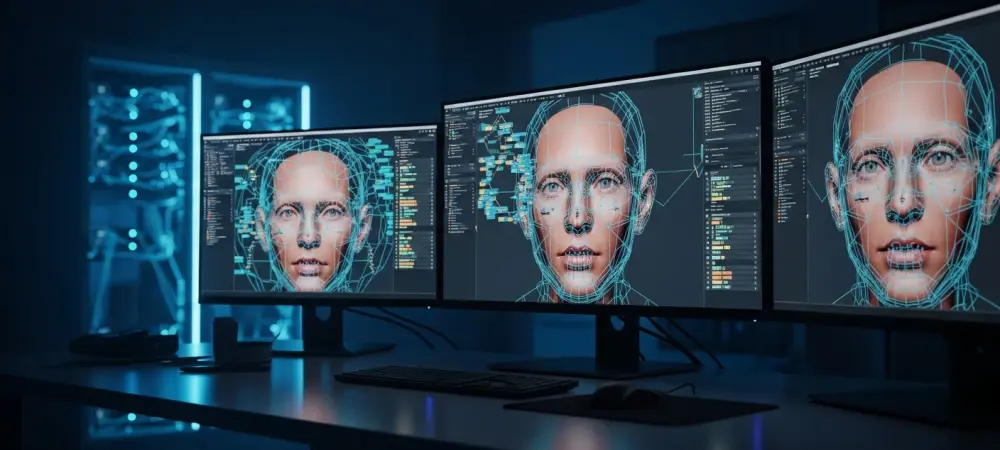
Dominic Jainy stands at the forefront of the technological revolution, blending extensive expertise in machine learning, blockchain, and 3D modeling to reshape how we perceive digital identity. As an IT professional with a keen eye for the intersection of synthetic media and industrial application, he has spent years dissecting the mechanics behind the “uncanny valley” to create digital humans that are as functional as they are lifelike. From the high-stakes rendering pipelines of modern cinema to the nuanced interactions of AI-driven medical simulations, Dominic’s work explores the profound ways these generated entities are becoming indispensable to our digital economy.
In this discussion, we explore the intricate technical architectures of GANs and diffusion models, the economic shifts within production studios, and the critical ethical frameworks required to govern synthetic identities. We also delve into the evolving role of AI characters in mental health and the metaverse, examining how persistent memory and natural language processing are turning static pixels into lifelong digital companions.
Generative Adversarial Networks and Diffusion models are the backbone of modern character creation. How do these technologies work together to produce hyper-realistic facial attributes, and what specific hardware or software benchmarks are required to render these digital humans in real-time?
The synergy between Generative Adversarial Networks (GANs) and diffusion models represents the current gold standard for achieving high-fidelity digital humans. In a typical workflow, we use GANs to handle the competitive generation of micro-details like skin pores and iris patterns, while diffusion models excel at maintaining structural integrity and high-quality rendering during the denoising process. To achieve a real-time result, developers must utilize high-end GPUs with dedicated tensor cores, often requiring at least 24GB of VRAM to handle the massive datasets of human faces and textures simultaneously. The process involves a three-step technical breakdown: first, the latent space is sampled to define base features; second, 3D modeling engines apply skeletal rigging to these generated outputs; and finally, real-time ray tracing software calculates light bounce on the synthetic skin to ensure the character doesn’t look plastic. It is a resource-intensive dance that demands sub-millisecond latency to ensure that as the AI generates a frame, the hardware can display it without a stutter.
Production studios are increasingly turning to procedural generation for background characters in films and open-world games. What are the specific cost-saving metrics associated with this transition, and how does automating these designs change the daily workflow for professional character artists?
The transition to procedural generation is a financial game-changer, as it allows studios to generate thousands of unique characters instantly rather than having an artist spend 40 to 60 hours on a single background asset. By automating the creation of non-player characters (NPCs) and “crowd fillers,” studios can reduce their character-related production costs by upwards of 70% in some instances. For the professional artist, the daily workflow shifts from manual sculpting and texture painting to “parameter design,” where they oversee the rules that govern the AI’s creative output. We see this in open-world gaming where a single artist can now populate an entire city with diverse, realistic citizens by simply tweaking age, apparel, and ethnicity sliders. This shift allows the human creative team to focus exclusively on “hero” characters—those central to the plot—while the machine handles the heavy lifting of architectural variety and environmental population.
Virtual tutors and therapy avatars are now being used for medical simulations and mental health support. In what ways do these digital characters improve the quality of patient interaction training, and what specific personality traits must be programmed to ensure they respond authentically to human distress?
Virtual avatars provide a safe, repeatable environment for healthcare professionals to practice high-stakes communication without the risk of harming a real patient. These digital characters improve training quality by offering 24/7 availability and the ability to simulate rare medical or psychological crises that a student might not encounter in a standard clinical rotation. To ensure an authentic response to human distress, we must program specific traits such as high levels of empathy, active listening cues, and modulated vocal tones that react to the user’s volume and pace. If a student becomes aggressive or overly emotional, the avatar must display realistic facial attributes like furrowed brows or softened eyes to reflect that the “distress” is being acknowledged. This level of responsiveness is built on Natural Language Processing (NLP) models that can detect sentiment in real-time, allowing the avatar to pivot its personality to better support the user’s mental state.
Virtual influencers and AI brand ambassadors are becoming common in personalized marketing and social media. How do these digital identities impact consumer trust compared to human spokespeople, and what are the practical steps for a brand to maintain its authenticity when using a non-human representative?
The impact on consumer trust is a complex phenomenon because, while digital influencers offer a “perfect” and controlled brand image, they can sometimes feel disconnected from the lived human experience. Brands can bridge this gap by ensuring their AI ambassadors possess a persistent personality and a transparent origin story, which helps the audience form a parasocial bond. To maintain authenticity, a brand must be rigorous in its 3D animation engine use, ensuring the character’s movements and reactions are fluid and consistent across all social media platforms. Practical steps include clearly labeling the character as AI-generated to avoid deceptive marketing and using the character to participate in real-world causes or trends that align with the brand’s values. When an AI ambassador responds to a comment with a personalized, context-aware reply, it creates a sense of engagement that can actually rival the loyalty felt toward human spokespeople.
The rise of hyper-realistic AI brings concerns regarding deepfakes, data privacy, and algorithmic bias. What ethical frameworks should developers follow to protect real human data, and how can the industry mitigate the risks of job displacement for human actors and voice-over artists?
Ethical frameworks must prioritize informed consent and data sovereignty, ensuring that the large datasets of human faces used to train these models do not exploit individuals without compensation or permission. Developers should implement strict “digital watermarking” on all hyper-realistic outputs to distinguish them from real footage, thereby mitigating the threat of deepfakes in political or personal spheres. To address job displacement, the industry must explore new licensing models where human actors and voice-over artists can “rent” their digital doubles for background work, allowing them to earn royalties even when they aren’t physically on set. This creates a collaborative ecosystem where AI is viewed as a tool that enhances human capability rather than a replacement for it. We must also be vigilant about algorithmic bias, ensuring that the characters generated represent the full spectrum of human diversity to prevent the reinforcement of harmful stereotypes.
As digital humans move into the metaverse, they are expected to function as companions with persistent memory. How will the integration of Natural Language Processing and 3D animation engines evolve to handle long-term social interactions, and what are the technical hurdles for making these responses indistinguishable from reality?
The evolution toward persistent memory involves moving away from “stateless” conversations to systems that store and retrieve past interactions to build a long-term relationship with the user. In the metaverse, this means your AI companion will remember your favorite topics or your emotional state from a week ago, weaving those details into current dialogue through advanced NLP. The technical hurdle lies in the “latency-fidelity trade-off,” where generating a complex, emotive 3D response in real-time often taxes the system to the point where the character’s lips might not perfectly sync with the generated speech. To make these interactions indistinguishable from reality, we need to bridge the gap between high-quality rendering and the speed of human thought, which requires more efficient neural compression. As these companions become more integrated into our daily lives, the challenge will be managing the sheer volume of data required to keep their “memories” and “personalities” consistent across different virtual worlds.
What is your forecast for Realistic AI Character Generators?
I predict that within the next decade, AI characters will transition from being distinct “tools” to becoming essential, invisible components of our physical and digital environments. We will see the rise of hyper-realistic avatars that are indistinguishable from real humans, functioning as personal assistants, 24/7 healthcare monitors, and even lifelike historical figures in educational settings. The metaverse will be populated by millions of these entities, each with a unique memory and emotional depth, creating a digital economy where “identity” is a fluid and programmable asset. Ultimately, the success of this technology will depend on our ability to establish global ethical standards that protect the boundary between the synthetic and the biological, ensuring that these digital humans enhance our social fabric rather than tear it.