

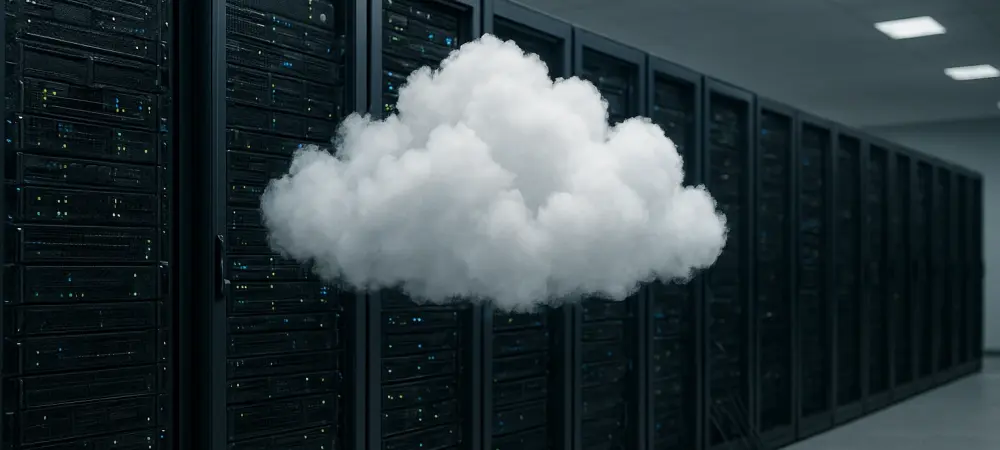
While the digital age has long promoted the illusion of a weightless, ethereal internet, the undeniable truth remains that every byte of data resides on a physical silicon wafer cooled by real-world electricity and connected by thousands of miles of tangible subsea cabling. This material foundation is currently facing unprecedented pressure as the global digital economy expands into increasingly volatile territories. In 2026, the reliance on hyperscale data centers has reached a critical juncture where the abstract concept of the cloud meets the harsh realities of geography and finite resources. The stability of global commerce now rests on a surprisingly small number of physical hubs, making the vulnerability of these sites a matter of urgent strategic concern for enterprises and governments alike.
The Material Reality of the Global Cloud Ecosystem
The current state of hyperscale data centers reveals a massive concentration of digital power within a few geographically concentrated zones. These facilities serve as the backbone of the global digital economy, yet they remain tethered to the terrestrial limitations of regional power grids and water supplies for cooling. Despite the marketing of seamless virtualization, the physical hardware underlying these systems is susceptible to environmental degradation and mechanical failure. As major market players continue to dominate the landscape, the concentration of risk within a few hyperscalers creates a systemic fragility. If a single primary hub in a region like Northern Virginia or Western Europe experiences a physical breach, the ripple effects can paralyze thousands of downstream businesses.
Furthermore, the stability of the cloud is inextricably linked to the integrity of subsea fiber-optic cables, which handle the vast majority of international data traffic. These cables are often located in high-traffic maritime corridors where they are vulnerable to accidental damage from anchors or intentional acts of sabotage. Regional power grids also represent a significant point of failure, as data centers require massive, uninterrupted electrical loads that can strain local infrastructure during peak periods or weather events. International regulations and data sovereignty laws complicate this further by mandating that data stay within specific borders. Consequently, providers are often forced to place assets in regions that may be politically unstable or prone to natural disasters, simply to comply with local legal frameworks.
Emerging Threats and the Shifting Landscape of Infrastructure Risk
Kinetic Warfare and the Evolution of Regional Failure Modes
Modern geopolitical conflicts have introduced a new category of risk that traditional digital security measures were never designed to handle. The rise of drone technology and precision kinetic strikes means that physical data center locations are now viable targets in regional disputes. While cybersecurity focuses on preventing data breaches, physical sabotage can take an entire cloud region offline for years. Traditional Multi-Availability Zone strategies, which distribute data across a few dozen miles, were built on the assumption of isolated failures like localized fires or equipment glitches. However, these strategies often fail during large-scale regional instability where an entire metropolitan area or province might lose power, connectivity, and labor simultaneously.
The transition from digital-only cyber threats to physical infrastructure sabotage represents a fundamental shift in the threat landscape. Attacks on cooling systems, power substations, or fiber landing stations can cause damage that is far more difficult to remediate than a software virus or a ransomware attack. When the hardware itself is destroyed, the time to recover is measured in months or years rather than hours or days. This physical reality forces a reevaluation of what it means to be resilient in an era where kinetic warfare and high-tech sabotage are no longer theoretical possibilities but active threats to uptime.
Market Forecasts and the High Cost of Recovery Timelines
Projecting the economic consequences of regional cloud outages suggests a long-term financial burden that most enterprises have yet to fully integrate into their risk models. From 2026 to 2028, the cost of reconstruction and hardware replacement in conflict-affected or disaster-prone areas is expected to rise sharply due to supply chain inflation. Market data indicates that while enterprise cloud spending continues to grow at a rapid pace, investment in true geographic disaster recovery and cross-cloud resilience lags behind. This creates a dangerous gap between the perceived reliability of cloud services and the actual capability to recover from a total regional loss.
In response to these risks, a forward-looking perspective suggests the emergence of a Resilience Premium in future cloud service level agreements. Providers that can offer verified physical hardening and genuinely diverse geographic footprints will likely command higher prices as businesses seek to insulate themselves from regional failures. The market is shifting away from a race to the bottom on price toward a more nuanced valuation of reliability. Enterprises are beginning to realize that the cost of a prolonged outage far exceeds the additional expense of maintaining a cold or warm standby region in a distant, stable geography.
Technological and Geopolitical Obstacles to Seamless Uptime
Maintaining five nines of availability in volatile geographic regions involves architectural complexities that go far beyond simple software redundancy. The physical limitations of hardware restoration in conflict zones or disaster areas remain a significant hurdle, as logistical bottlenecks can prevent the delivery of specialized servers and cooling components. Even when hardware is available, the challenge of human capital and labor shortages in maintaining data center operations during a crisis cannot be ignored. Skilled technicians are often the first to evacuate during regional instability, leaving critical infrastructure to operate on automated systems that may not be equipped to handle complex, cascading failures.
Moreover, the hidden dependencies within Software-as-a-Service ecosystems create a fragile chain of reliance that is difficult to map. Many specialized SaaS providers are themselves hosted on the same hyperscale infrastructure as their clients, meaning a single regional failure can take down an entire stack of business tools. The global supply chain for high-end semiconductors also remains a bottleneck, as any disruption in the manufacturing or shipping of these components delays the replacement of damaged servers. These constraints mean that even the most well-funded cloud providers are subject to the same physical and logistical realities as any other heavy industry.
The Regulatory Framework for Critical Digital Infrastructure
The evolution of compliance standards is beginning to reflect the necessity of physical resilience in the digital age. Frameworks such as SOC2, ISO 27001, and GDPR are being updated to include more rigorous requirements for physical site security and geographic diversity. Government mandates for national security audits of cloud providers are becoming standard practice, as states recognize that their national economies are entirely dependent on these private infrastructures. These audits often focus on the physical security of data centers and the vetting of the personnel who have access to the hardware, shifting the focus from the digital perimeter to the physical walls. Mandatory disclosure laws regarding physical infrastructure vulnerabilities and the causes of outages are also gaining traction. These laws aim to provide more transparency for enterprise customers, who have historically been kept in the dark about the specific reasons for service disruptions. By forcing providers to admit when physical flaws or environmental factors lead to downtime, regulators are shifting the Shared Responsibility Model toward more provider accountability. This transparency allows businesses to make more informed decisions about where to place their workloads and how much to invest in independent redundancy measures.
The Future of Resilient Architecture and Distributed Computing
The rise of sovereign clouds and localized data centers marks a significant shift in the effort to mitigate global supply chain risks. By building infrastructure that is legally and physically decoupled from global hubs, nations and large enterprises are attempting to shield themselves from external shocks. Additionally, the growth of edge computing and decentralized infrastructure offers a way to reduce the reliance on massive central hubs. By processing data closer to where it is generated, organizations can maintain basic functionality even if their primary cloud region is compromised, creating a more distributed and durable network.
AI-driven predictive maintenance and autonomous failover systems are also expected to play a larger role in future cloud regions. These technologies can identify physical components that are likely to fail before they cause an outage and can automatically reroute traffic to healthy zones without human intervention. As the industry moves forward, the shift toward multi-cloud and cross-region architectures will become a standard requirement for enterprise survival. Relying on a single provider in a single region is increasingly viewed as an unacceptable risk, leading to a new era of architecture that prioritizes survival over simplicity.
A New Paradigm for Pragmatic Cloud Management
The investigation into modern cloud vulnerabilities demonstrated that the physical fragility of these systems was a major blind spot for the digital economy. It became clear that the most effective organizations were those that treated the cloud as a physical utility rather than an abstract service. These leaders implemented deep-dive dependency mapping to understand exactly where their data resided and which subsea cables or power grids were critical to their operations. The adoption of chaos engineering as a business continuity tool allowed teams to simulate the total loss of a region and refine their failover processes before a real disaster struck. The transition from a cloud-first to a resilience-first digital strategy proved to be the defining shift of the mid-decade period. Organizations that successfully navigated this change moved away from a passive reliance on their providers and toward an active, region-aware management style. They realized that while the cloud offered unparalleled efficiency and scale, it remained a fallible human construction subject to the laws of physics and the whims of global events. By acknowledging these limitations and building systems that accounted for physical failure, the industry established a more durable foundation for the future of the global digital utility.