

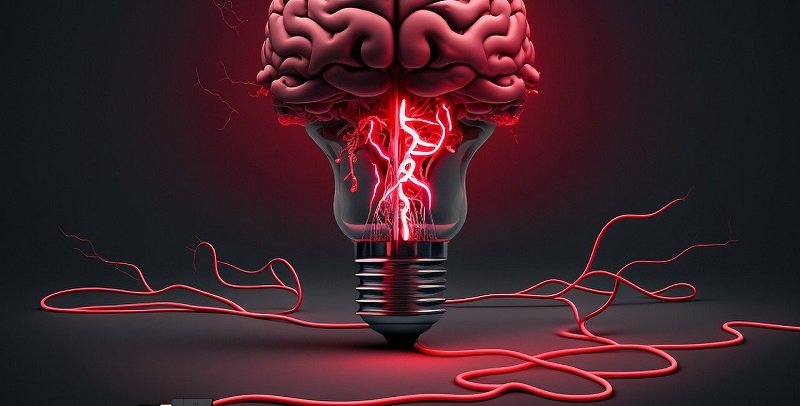
Artificial intelligence (AI) holds great promise in enhancing efficiency, automating tasks, and revolutionizing various industries. However, as the demand for AI services continues to grow exponentially, concerns arise regarding the significant increase in energy consumption associated with its usage. This article explores the energy-intensive nature of AI, discusses the impact of AI training and usage on energy consumption, examines the challenge of efficiency and demand, projects future electricity consumption, and highlights the importance of mindful AI usage.
Energy Consumption in AI Training
Training AI models requires vast amounts of data, resulting in an energy-intensive process. One notable example is Hugging Face’s multilingual text-generating AI tool, which consumed approximately 433 megawatt-hours (MWh) during training, equivalent to powering 40 average American homes for a year. This case study illustrates the substantial energy demands that AI training entails.
Energy consumption in AI usage does not end with AI training. Every time an AI tool generates a text or image based on prompts, a significant amount of computing power is utilized, subsequently consuming additional energy. This continuous energy consumption must be considered when evaluating the environmental impact of AI applications.
The Challenge of Efficiency and Demand
Efforts are underway globally to improve the efficiency of AI hardware and software. However, an increase in efficiency often leads to a rise in demand for AI applications, offsetting the potential energy savings. Simply put, as AI becomes more efficient, more applications are developed, and more individuals adopt it, thereby increasing overall energy consumption.
Projected Increase in AI-related Electricity Consumption
Based on extensive analysis, researchers estimate that if AI were integrated into every Google search, it would consume approximately 29.2 TWh of power annually. To put this figure into perspective, it is equivalent to the annual electricity consumption of Ireland. Moreover, projections indicate that by 2027, worldwide AI-related electricity consumption could increase by 85 to 134 TWh annually, driven by the growth in AI server production.
Implications and Caution
The potential growth in AI-related electricity consumption highlights the need for careful consideration regarding AI usage. While AI offers remarkable possibilities, it is crucial to assess whether it is genuinely necessary in each application. Mindful implementation of AI can ensure that resources are not needlessly expended on tasks where AI may not provide substantial benefits.
Artificial intelligence brings tremendous potential for advancements, but it also presents significant challenges, especially concerning energy consumption. As the demand for AI services continues to grow, the energy-intensive nature of AI training and usage becomes more evident. It is essential to use AI mindfully, considering the environmental impact and the necessity of incorporating AI in different applications. Striking a balance between maximizing AI’s potential and minimizing energy consumption is vital for a sustainable future. Only by doing so can we harness the power of AI while preserving our planet’s resources.