

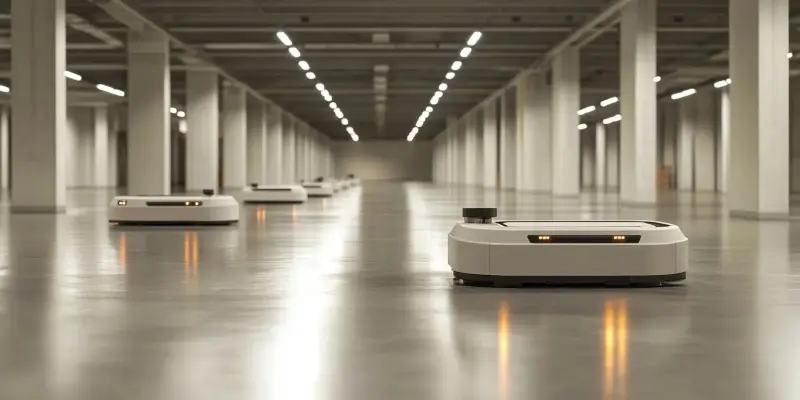
The rise of Autonomous Mobile Robots (AMRs) is revolutionizing intralogistics across various industries, fueled by advancements in technology that enhance efficiency and safety, leading to a significant increase in their adoption. 29% of manufacturers are already integrating robotics and automation into their operations, while another 54% plan to embrace these technologies within the next five years. Currently, AMRs represent about 40% of all mobile robot sales, underscoring their importance for businesses focused on boosting productivity and maintaining high safety standards.
The Surge in AMR Adoption
Matt Rendall, CEO and co-founder of Otto Motors, a subsidiary of Rockwell Automation, predicts that the next five years could mark a “golden age of AMR adoption.” This optimistic outlook is supported by numerous instances demonstrating the effective use of AMRs across different sectors, driven by the need for greater efficiency and heightened safety in manufacturing and other industries. AMRs have started to reshape traditional workflows, proving to be essential in streamlining operations and reducing operational costs.
One prominent example of successful AMR implementation is GE Healthcare’s Repair Operation Center. The center, tasked with the timely servicing of intricate medical devices, reaped substantial benefits from deploying Otto AMRs. These robots enabled GE Healthcare to consolidate four regional repair centers into a single national hub. This shift resulted in a 65% reduction in the square footage allocated for repairs and a 40% reduction in work cell size, optimizing the use of valuable real estate in a manufacturing setting where every inch counts.
Success Stories in AMR Implementation
Forvia, a France-based automotive supplier, witnessed a remarkable return on investment (ROI) within just 11 months of implementing Otto AMRs, underscoring the tangible financial benefits of adopting this technology. During this period, Forvia reported zero safety incidents, accentuating the significant safety improvements brought by AMRs. This feat is particularly crucial in manufacturing environments where safety is a constant priority, and any reduction in incidents can have a substantial impact on operations and workforce well-being.
Another compelling success story comes from the packaging company Mauser, where Otto AMRs revolutionized the end-of-line operations, resulting in a sixfold increase in throughput. This substantial boost in productivity illustrated the immense potential of AMRs when seamlessly integrated into manufacturing processes. Moreover, it allowed Mauser to reassign human workers previously involved in these tasks to other areas more suited for human intervention, creating a win-win situation where both productivity and workforce allocation were optimized to enhance overall operational efficiency.
Overcoming Integration Challenges
Despite the evident advantages of AMRs, the complexity of integration remains a significant hurdle for manufacturers striving to build advanced factories. Rendall, however, is confident that Rockwell Automation’s acquisition of Otto Motors and Clearpath Robotics positions the company to simplify this integration process. By addressing the complexities and streamlining the deployment of AMRs, Rockwell can significantly mitigate risks and reduce the time to value for manufacturers adopting this transformative technology, encouraging wider acceptance and utilization.
Ryan Gariepy, CTO and co-founder of Otto Motors, highlighted the strides in technological advancements that have improved both the deployment and functionality of AMRs. These advancements encompass areas like dynamic planning and control, perception and sensing, and intelligence and collaboration. The sophisticated capabilities of modern AMRs now enable them to navigate complex and dynamic environments much like humans can, a significant improvement from earlier models that depended on meticulously controlled settings.
Technological Advancements in AMRs
Gariepy noted that early AMRs were limited to highly controlled operational environments due to technological constraints. In contrast, today’s advanced AMRs are capable of operating efficiently in less controlled and more varied environments. This flexibility allows them to collect valuable data for continuous improvement of both the robots themselves and the overall factory operations. Such capabilities reduce the need for extensive configuration details, further enhancing the robots’ efficacy and making them more adaptable to diverse industrial needs.
The deployment of AMRs significantly bolsters workplace safety, a crucial factor as these robots become faster and more ubiquitous, especially with the integration of artificial intelligence. Gariepy elaborated that while managing a few robots might categorize them as special devices, a facility with hundreds or even thousands of robots necessitates stringent safety measures. The enhanced safety protocols ensure that the workforce can operate alongside these robots without compromising safety, creating a harmonious and productive work environment.
AMRs as Force Multipliers
The emergence of Autonomous Mobile Robots (AMRs) is transforming intralogistics across a range of industries, driven by technological advancements that boost both efficiency and safety. This shift has led to a marked increase in the adoption of these innovative robots. According to a 2024 report by MHI, 29% of manufacturers have already begun integrating robotics and automation into their processes, with an additional 54% planning to do so within the next five years. Presently, AMRs account for approximately 40% of all mobile robot sales, highlighting their importance for businesses aiming to enhance productivity while upholding high safety standards. These sophisticated robots help streamline operations, reduce labor costs, and minimize human error, making them an attractive investment for companies. As AMR technology continues to evolve, it is expected that their role in industrial automation will become even more significant, further driving the efficiency and safety in various sectors.