

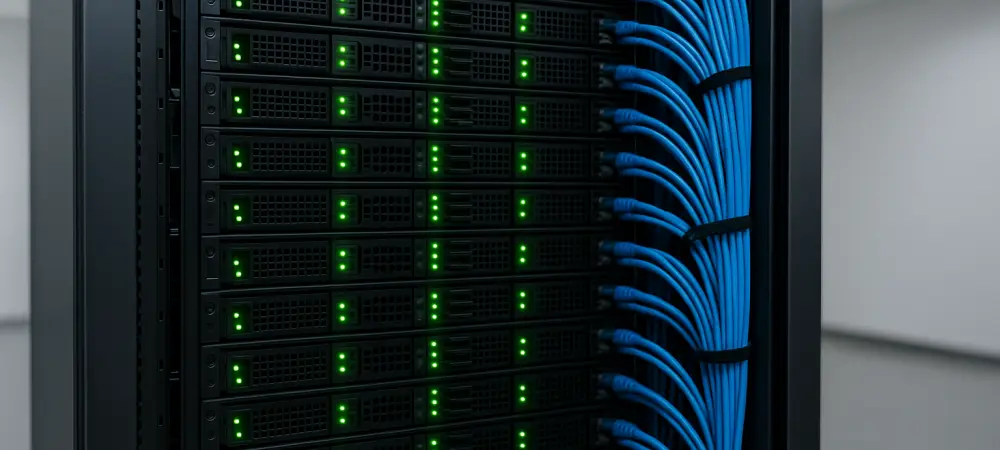
Sophisticated hardware acceleration layers in OpenCV automatically detect and utilize AVX-512 instructions on modern processors to optimize execution paths. This technical efficiency is a prerequisite for the current era of artificial intelligence, which has evolved from simple scripts to the expansive frontier models dominating the landscape today. The Open Source Computer Vision Library stands as the fundamental pillar supporting this transformation, enabling machines to interpret visual data with precision. By providing a standardized suite of pre-built software components, OpenCV effectively democratizes access to complex visual analysis. Developers no longer need to navigate the arduous process of writing custom pixel-manipulation algorithms from scratch; instead, they can leverage established tools to focus on high-level innovation. This shift has turned computer vision from a niche academic pursuit into a ubiquitous utility, powering everything from facial recognition systems to real-time industrial monitoring sensors across global networks.
Legacy of Innovation: The Version 5.0 Shift
The journey of OpenCV began in 2000 as an Intel Research initiative, originally designed to maximize the performance of CPU-intensive software on emerging consumer hardware. Over the last quarter-century, the project has transitioned from a corporate-led venture into a massive, community-driven ecosystem overseen by a dedicated non-profit foundation. This shift ensured that the library remained transparent and accessible to a global audience, preventing the monopolization of critical vision technologies. The longevity of the library is primarily due to its remarkable adaptability; it has survived several major shifts in computing paradigms, from the rise of mobile devices to the current explosion of specialized neural processing units. By maintaining a balance between academic rigor and practical industry requirements, the library has stayed relevant in a field where software usually becomes obsolete within a few short years. This foundation provides the stability needed for long-term infrastructure projects. The release of OpenCV 5.0 serves as a pivotal modernization effort, focusing on a comprehensive cleanup of the Application Programming Interface to better suit today’s development standards. This version represents more than just a routine update; it is a fundamental reorganization designed to align the library with modern C++ standards and contemporary software engineering workflows. By streamlining the internal architecture, the developers have improved compatibility with specialized machine learning ecosystems and generative AI pipelines. This modernization ensures that a project with roots in the early internet remains a potent tool for high-speed edge computing and complex cloud-based inference. The update specifically addresses the need for cleaner, more maintainable code, which is essential as AI systems become increasingly integrated into safety-critical infrastructure. Such strategic updates guarantee that the library continues to serve as the preferred engine for visual perception in a rapidly evolving market.
Performance Standards: Universal System Compatibility
At its core, OpenCV is engineered using C++, a language chosen for its proximity to hardware and its ability to deliver the extreme performance required for real-time video analysis. While the core libraries are highly optimized, the developers have prioritized accessibility by creating robust interfaces for high-level languages like Python, Java, and JavaScript. The introduction of the wasmCV project is a particularly significant advancement, as it provides a WebAssembly interface that brings native-level vision performance directly to the web browser. This capability allows complex image processing tasks to occur on the client side without the latency of cloud communication, which is vital for interactive web applications. By supporting a wide array of environments, the library ensures that a single vision algorithm can be deployed across mobile platforms, desktop workstations, and distributed cloud networks with minimal modification. This versatility remains a primary reason for its widespread adoption across diverse industries. A distinguishing feature of the library is its hardware-agnostic design, which allows it to utilize specific silicon optimizations while presenting a simplified interface to the programmer. This hardware-blind approach means that developers can write general code while OpenCV identifies the best execution path, whether it involves utilizing integrated GPUs or specialized vector processing units. For researchers and industrial engineers working with custom hardware, the library allows for the integration of unique acceleration layers, making it flexible enough for everything from microcontrollers to enterprise-grade AI clusters. This abstraction layer effectively future-proofs applications, as software built on the library can automatically benefit from performance gains in new generations of processors without requiring a complete rewrite. This synergy between software and hardware is critical for applications that demand low-power consumption alongside high computational throughput, such as autonomous drones or battery-operated smart cameras.
Functional Specialization: Deep Learning Integration
The library is thoughtfully organized into several specialized modules to ensure it remains efficient rather than becoming an unmanageable software monolith. This modular design allows developers to include only the specific components necessary for their application, which minimizes the memory footprint of the final product. For instance, the objdetect module provides targeted tools for identifying specific objects like barcodes or faces within a frame, while the video analysis module focuses on complex tasks like optical flow and motion tracking. This distinction is crucial for maintaining performance; a security system might use the videoio module simply to stream data, while simultaneously employing the analysis module to trigger alerts based on movement. By separating the technical aspects of video handling from higher-order interpretation, OpenCV provides a clear and logical workflow that simplifies the debugging process. This functional compartmentalization is a key factor in the library’s widespread use in embedded systems. In the contemporary AI landscape, the Deep Neural Network module has emerged as a cornerstone for deploying machine learning models in real-world scenarios. This module functions as a lightweight inference engine, allowing developers to load and execute pretrained models from popular frameworks like TensorFlow, PyTorch, or Caffe via the ONNX format. By acting as a universal bridge, OpenCV eliminates the need for heavy training frameworks during the deployment phase, which significantly reduces the operational overhead of AI applications. This streamlined pipeline is particularly beneficial for edge devices where storage and processing power are limited. Developers can train a sophisticated vision model in a high-resource environment and then deploy it using OpenCV to perform tasks like real-time pose estimation or semantic segmentation. This capability has effectively lowered the barrier to entry for small-scale developers and startups, enabling them to implement state-of-the-art vision models without investing in massive infrastructure.
Ecosystem Resources: Prototyping Capabilities
Beyond its primary processing capabilities, the project offers a wealth of auxiliary resources designed to accelerate the development lifecycle. The OpenCV Zoo, hosted on the Hugging Face platform, serves as a curated repository of pretrained models that are pre-optimized for the library’s specific architecture. This resource provides immediate access to high-performance solutions for common tasks such as image deblurring, gesture recognition, and facial landmark detection. By providing both the engine and the model data, the ecosystem offers an end-to-end solution that reduces the time from conceptualization to deployment. Additionally, the inclusion of a dedicated datasets module allows developers to access standardized benchmarks for testing the accuracy and robustness of their systems. These tools are essential for academic research and industrial validation, ensuring that new algorithms meet the rigorous standards required for production environments. This comprehensive support network makes it a reliable choice for long-term software development.
Rapid prototyping is further supported by the highgui module, which provides a straightforward way to create functional user interfaces without the need for complex external toolkits. While it is not intended to compete with full-featured GUI frameworks, it allows engineers to quickly build windows, buttons, and sliders to adjust parameters in real-time. This capability is invaluable during the experimentation phase, where visual feedback is necessary to fine-tune image filters or detection thresholds. In many industrial settings, these lightweight interfaces are sufficient for standalone tools used in quality control or automated inspection. The ability to visualize data processing steps in real-time helps developers identify bottlenecks and edge cases that might be missed in a headless environment. By combining powerful analytical tools with a simple yet effective interface layer, OpenCV bridges the gap between raw code and actionable visual insights. This unique combination of features continues to drive innovation in fields ranging from robotics to medical imaging.
Strategic Implementation: Future Directions
The evolution of OpenCV established a resilient foundation for the visual intelligence systems that defined the early half of this decade. Industry leaders recognized that the library’s strength resided in its unique ability to harmonize two decades of traditional vision algorithms with the latest deep learning techniques. For organizations looking to capitalize on these advancements, the path forward involved integrating modular vision pipelines directly into edge-computing architectures to reduce data latency. Engineers prioritized the use of the DNN module to bypass the bloat of traditional frameworks, ensuring that inference remained fast and efficient across varying hardware tiers. Looking ahead, the focus shifted toward expanding the wasmCV implementation to enable more sophisticated browser-based AI, effectively moving complex processing closer to the end-user. Adopting these streamlined workflows became a strategic necessity for maintaining a competitive edge in a market where visual data is the primary source of actionable intelligence.