

The New Standard of Visual Clarity in the Generative Era
Photographic memory used to be a biological rarity, but today, digital sensors and neural networks have collaborated to ensure that no detail is ever truly lost to time or poor equipment. This transition marks the end of the “pixelated” era, where low-resolution artifacts are no longer an acceptable limitation for professionals or enthusiasts.
As 4K resolution becomes the baseline for digital consumption, the demand for sophisticated upscaling tools has skyrocketed. These engines do more than stretch an image; they interpret it. By understanding the underlying geometry of a scene, modern enhancers can breathe life into a blurred snapshot, making it indistinguishable from a high-end RAW file. This article explores the current market leaders and the architectural breakthroughs that have redefined visual excellence in this competitive year.
Analyzing the Market Leaders and Architectural Breakthroughs
The Rise of Generative Reconstruction Over Traditional Interpolation
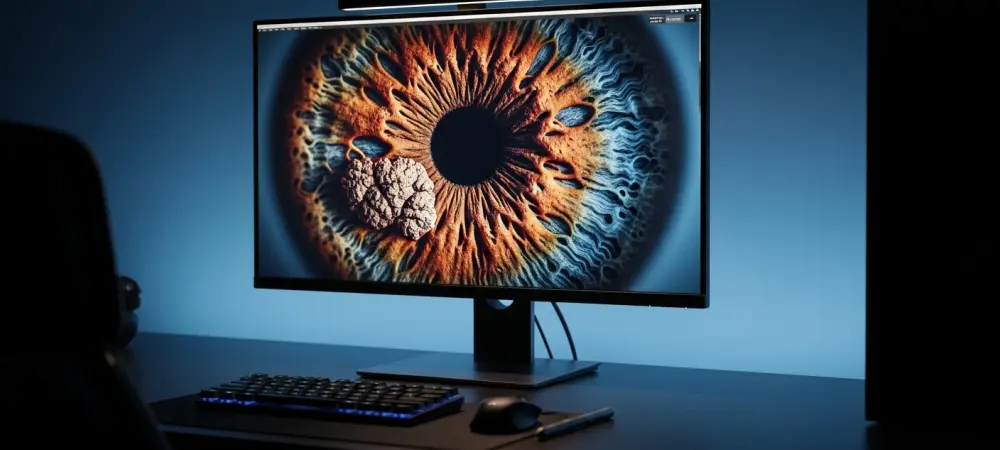
The fundamental technology powering today’s top enhancers has moved away from traditional interpolation, which merely guessed the color of new pixels based on their neighbors. Instead, the industry has embraced generative reconstruction. This method uses deep learning to synthesize entirely new visual data based on massive datasets of high-definition imagery. When a tool encounters a blurry eye or a weathered stone wall, it does not just sharpen the edges; it understands the texture of a cornea or the porous nature of granite and recreates those features with anatomical or geological precision.
This shift has not been without its share of debate regarding the “truth” of a photograph. Critics often point out that when an AI adds skin pores or individual strands of hair that were not in the original file, the result is technically a simulation. However, for most creative and commercial applications, the goal is aesthetic perfection rather than forensic accuracy. The consensus among digital artists is that as long as the generative “hallucination” remains consistent with the artistic intent, the added detail is a massive net positive for the industry.
Evaluating the Heavy Hitters: From Professional Realism to Workflow Efficiency
Different tools now serve distinct roles within the creative ecosystem, with Magnific AI currently leading the charge for high-end realism. Its strength lies in a specific type of creative “up-rendering” that adds intricate details, making it the preferred choice for filmmakers and high-fashion photographers. In contrast, Nano Banana Pro has carved out a niche by prioritizing volume and speed. It offers a streamlined approach for e-commerce, where a brand might need to upscale thousands of product shots simultaneously without sacrificing the integrity of the material textures.
Meanwhile, tools like the Crystal AI Upscaler focus on technical precision, avoiding the stylistic flourishes of more creative engines. This tool is the “clean” alternative, favored by those who need to maintain the exact likeness of a subject—such as in architectural rendering or historical documentation. These diverse approaches highlight that the best tool is no longer defined by a single metric, but by how well it aligns with a specific professional goal.
Privacy, Localization, and the Technical Edge of Modern Upscaling
As cloud-based processing becomes more expensive and data privacy concerns rise, local processing has emerged as a critical competitive factor. Topaz Gigapixel AI remains a dominant force by leveraging the neural engines found in modern desktop hardware. This allows users to perform intensive 4K upscaling entirely offline, ensuring that sensitive or proprietary imagery never leaves their local drive. This “on-device” trend is a direct response to a global push for better data sovereignty and faster iteration cycles that do not depend on server latency.
Furthermore, regional differences in aesthetic preferences have started to influence algorithmic development. Some enhancers now offer “local logic” modules that can be toggled to better represent specific cultural textures, skin tones, or architectural styles. This nuance prevents the “homogenization” of imagery that early AI tools were often accused of. By challenging the assumption that one algorithm fits all, developers have created more inclusive and versatile software that performs equally well across different global markets and subject matters.
Integration vs. Specialization in the Creative Ecosystem
The ongoing battle between specialized standalone apps and integrated suites like Adobe Firefly has reached a tipping point. Adobe has successfully embedded its upscaling logic directly into the Photoshop workspace, allowing for a non-destructive workflow where enhancement is just one step in a larger creative process. This integration is a significant advantage for designers who value time-saving “one-click” solutions. However, many power users still gravitate toward specialized catalysts like Krea AI for experimental work. Krea’s live-edit dashboard allows for real-time feedback, making it a favorite for those who treat upscaling as a collaborative, iterative dialogue with the machine. Looking toward the future, the boundary between “editing” and “generating” will likely continue to blur. Industry leaders suggest that we are moving toward a reality where “resolution” is a choice rather than a constraint of the hardware. Whether a professional chooses the deep integration of a creative suite or the specialized power of a dedicated upscaler, the objective remains the same: ensuring that the final output matches the clarity of the creator’s vision.
Strategic Implementation: Choosing the Right Tool for the Task
To navigate this dense market effectively, professionals must evaluate their specific needs against the strengths of each platform. For those working in archival restoration where privacy is paramount, a local-first solution like Topaz remains the gold standard. Conversely, those in rapid-fire digital marketing will find more value in the bulk processing and efficiency of Nano Banana Pro. It is no longer enough to simply “buy the best AI”; one must select the engine that understands the context of the work. Best practices now involve a multi-layered approach. Often, the most successful creators use a specialized tool like Magnific for the initial high-detail reconstruction and then move into an integrated environment like Firefly for final color grading and composition. This hybrid strategy leverages the raw power of specialized AI while maintaining the flexibility of a professional design workflow.
The End of the Low-Resolution Era
The advancements observed in recent months have effectively dismantled the barriers that once separated amateur captures from professional-grade media. The transition from simple pixel stretching to intelligent generative reconstruction was a pivotal moment in digital history. It allowed for the preservation of legacy assets and the elevation of modern creative works to a universal 4K standard, regardless of the original capture conditions.
Moving forward, the focus will likely shift from achieving 4K clarity to mastering the subtleties of lighting, shadow, and atmospheric depth within the upscaling process. Creative professionals should prioritize building a toolkit that balances speed, privacy, and artistic control. Those who mastered these tools successfully integrated them as invisible partners, turning the technical limitations of the past into the creative opportunities of the present.