

With a deep background in artificial intelligence and machine learning, Dominic Jainy has a unique perspective on the seismic shifts occurring beneath the surface of the AI boom. While much of the world focuses on the massive, power-hungry models that are always on, always processing, Dominic’s attention is on a quieter, more profound revolution: the move toward reactive, event-driven AI. We discussed this new frontier, exploring how Spiking Neural Networks mimic the brain’s efficiency, the specialized neuromorphic hardware making it possible, and how these attentive systems will fundamentally reshape our relationship with technology.
We’re seeing a shift from AI systems that are always on, like a panopticon, to ones that are more reactive. Could you walk us through the fundamental change in design philosophy this represents? What are the key advantages you’re measuring, like energy efficiency, that make this approach so compelling?
The change is truly a paradigm shift. For years, the brute-force approach has dominated: throw more data and more processing power at a problem. This results in these “always-on” systems that are constantly crunching numbers, whether the information is relevant or not. The new philosophy is one of elegance and efficiency, inspired by biology. We’re designing systems to value “trigger events”—to pay attention only when something meaningful happens in their environment. The key advantage is a staggering reduction in energy consumption. A system that is dormant until acted upon is inherently more efficient. Look at a chip like IBM’s TrueNorth; it operates on the order of 65–70 milliwatts. This isn’t just an incremental improvement; it’s a completely different class of energy usage, making complex AI feasible in tiny, battery-powered devices where it was once impossible.
To make this more tangible for our readers, could you paint a picture of a Spiking Neural Network in action? Let’s take that example of a robot ‘waking up’ to a hand wave. How does an SNN process that stimulus step-by-step, and how is that fundamentally different from how a conventional AI would ‘see’ the same event?
Of course. A conventional neural net would be processing every single frame from its camera, running dense matrix multiplications and effectively asking, “Is this a hand? Is this a hand?” over and over. It’s exhaustive. The SNN-powered robot operates with a beautiful subtlety. Its artificial neurons are at rest, each holding a latent “membrane voltage.” As your hand moves, the robot’s sensors pick up on that change, translating it into a series of discrete signals. Each signal gives a little nudge to the voltage of specific neurons. A slight flicker might not be enough, but a clear, sustained wave provides a rapid sequence of stimuli that pushes certain neurons to their threshold. At that point, pop, they fire a single “spike” of information before resetting. It is the specific timing and cascade of these spikes across the network that constitutes recognition. The SNN isn’t analyzing a static image; it’s interpreting a pattern unfolding in time, much like how our own brains recognize a familiar melody not from a single note, but from the sequence.
You mentioned specialized hardware like IBM’s TrueNorth and Intel’s Loihi, which are a world away from the GPUs we hear so much about. What are the core engineering hurdles in building these asynchronous, event-driven chips? What kind of trade-offs are engineers like the team behind TrueNorth making when they prioritize this architecture over the high-throughput power of a GPU?
The primary engineering challenge is a complete rethinking of chip architecture, moving away from the synchronized, clock-driven world of GPUs. A GPU is a master of parallel brute force; it’s designed to execute massive, dense calculations all at the same time. A neuromorphic chip is asynchronous—it has no global clock. Activity happens only when and where an event, a “spike,” occurs. The hurdle is managing the complex, sparse communication between potentially millions of synapses and the 4,096 neurosynaptic cores you find on something like TrueNorth. The main trade-off is sacrificing raw mathematical throughput. You wouldn’t use a neuromorphic chip to train a massive language model from scratch. But in exchange, you gain unparalleled performance-per-watt on tasks that are event-based and sparse, which covers a vast amount of real-world sensory processing. You’re trading a sledgehammer for a scalpel.
The idea that we might end up ‘walking on eggshells’ around our AI is both funny and a bit unsettling. Moving beyond industrial robots, can you imagine a tangible consumer product where this reactive, event-driven intelligence would completely transform the user experience? Perhaps you could describe a hypothetical device and how interacting with it would feel different.
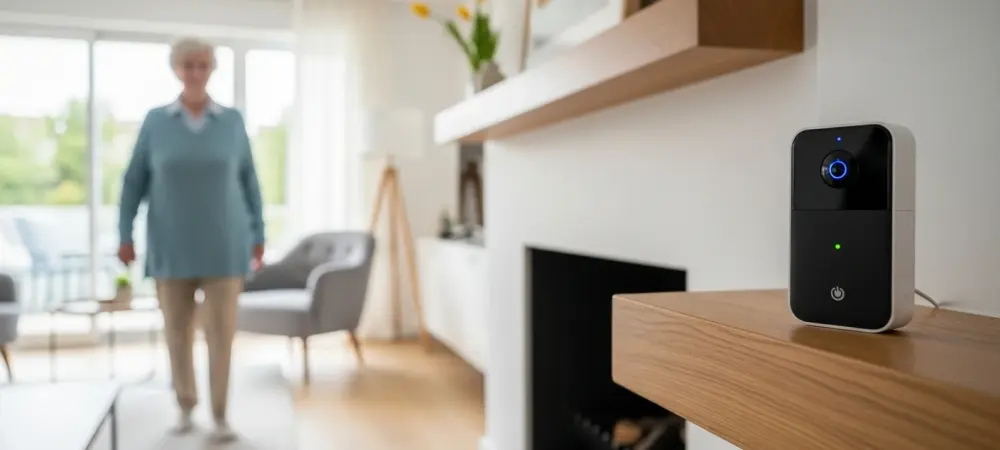
It’s a fantastic question because this is where the technology becomes personal. Forget industrial robots for a moment and imagine a home health monitor for an elderly relative. Today’s devices are either intrusive, with cameras always on, or simplistic, like a button to be pushed after a fall. A neuromorphic-powered device would be completely different. It would be a small, ambient sensor that learns the household’s normal patterns—the sound of footsteps, the hum of the kitchen appliances, the time of day the television turns on. It would sit dormant, using almost no power. But it would be acutely tuned for anomalies. The sound of a fall, a cry for help, or even a prolonged, unusual silence would be the trigger events. The system would wake instantly, not because it was “watching,” but because a specific, meaningful stimulus occurred. The user experience is transformed from one of active surveillance to one of passive, respectful guardianship. It would feel less like a gadget and more like a quiet, ever-present protector.
What is your forecast for reactive AI and neuromorphic computing? The article teases that 2026 is going to look ‘a little weird.’ What specific advancements or adoptions do you realistically see by then that will make our day-to-day interactions with AI feel fundamentally different?
I believe the “weirdness” by 2026 will come from the seamless, almost invisible, integration of this technology into our lives. I forecast that we’ll see the first truly long-duration smart devices—not just smartwatches that last a few days, but perhaps hearing aids or augmented reality glasses that run for weeks on a single charge because their core processing is event-driven. Your device won’t constantly analyze the world; it will react. Imagine glasses that only overlay information when you glance at a specific product on a shelf, or a personal assistant that only listens when it detects a tone of urgency in your voice. Our interactions will shift from being deliberate—typing a query, speaking a wake word—to being contextual and anticipatory. The AI will respond to our world rather than waiting for us to command it. This shift from a “command-and-response” model to an “event-and-assist” dynamic will make technology feel more like a natural extension of our own senses, and that will indeed feel profoundly new and different.