

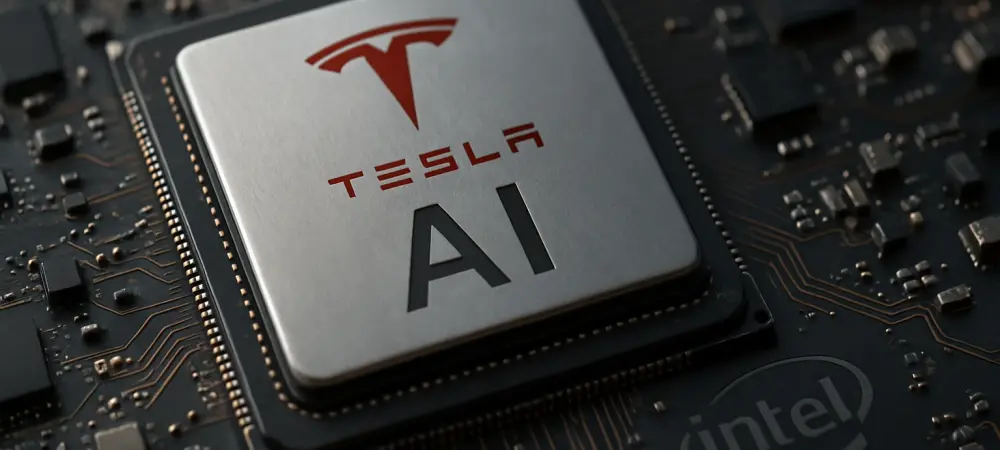
I’m thrilled to sit down with Dominic Jainy, a seasoned IT professional whose deep expertise in artificial intelligence, machine learning, and blockchain has made him a go-to voice on cutting-edge tech trends. With a keen eye for how these technologies transform industries, Dominic offers unique insights into the potential Tesla-Intel chip partnership—a development that could redefine AI hardware economics and manufacturing. In our conversation, we explore the strategic motivations behind this collaboration, the ambitious cost and performance goals set by Tesla, the implications of massive fabrication facilities, and the broader impact on the AI chip landscape. Let’s dive into this fascinating discussion.
Can you walk us through the strategic reasons behind Tesla considering a partnership with Intel for AI chip production?
Absolutely. Tesla’s move toward Intel seems to stem from a pressing need to address supply chain constraints. They’ve been working with major players like TSMC and Samsung, but even under the best scenarios, the production capacity isn’t meeting Tesla’s ambitious demands for AI chips, especially for autonomous driving systems. Intel, with its domestic manufacturing capabilities in the US, offers a potential solution to diversify and secure supply. Plus, Intel’s push to regain ground in the AI chip race aligns with Tesla’s need for innovative, cost-effective production. It’s a strategic fit—Intel gets a high-profile customer, and Tesla gets a pathway to scale.
What challenges has Tesla encountered with its existing suppliers that might be pushing this shift?
Tesla’s biggest hurdle with current suppliers is sheer volume. The demand for chips to power their AI-driven systems, like those in self-driving tech, is skyrocketing. Suppliers in Taiwan and South Korea are already stretched thin due to global demand and geopolitical tensions impacting supply chains. There’s also the issue of lead times—waiting for chips slows down Tesla’s aggressive timelines for innovation. Partnering with a US-based manufacturer like Intel could reduce some of these risks and give Tesla more control over production schedules.
How realistic do you think Tesla’s goal of slashing manufacturing costs to 10% of Nvidia’s is?
It’s an incredibly bold target, and while I admire the ambition, I’m cautious about its feasibility. Achieving a 90% cost reduction would require breakthroughs in multiple areas—cheaper materials, optimized design processes, and massive economies of scale. Tesla’s focus on custom chips tailored for their own software could help cut costs by eliminating unnecessary features, but getting to 10% of Nvidia’s cost seems like a stretch without sacrificing some performance or quality. It’s more likely they’ll get close to a significant reduction, maybe 30-50%, which would still be game-changing.
What are some potential risks or trade-offs Tesla might face in chasing such aggressive cost cuts?
The biggest risk is compromising on reliability or performance. If you cut costs by using less advanced manufacturing nodes or cheaper materials, you might end up with chips that can’t handle the intense workloads of autonomous driving systems. There’s also the issue of R&D investment—pushing for low costs might divert resources from innovation. And if the chips underperform, it could delay Tesla’s rollout of new tech or, worse, impact safety in their vehicles. It’s a high-stakes balancing act between cost and quality.
Tesla’s claim about the AI5 chip using just one-third of the power of Nvidia’s Blackwell chip sounds groundbreaking. Why does this matter so much?
Power efficiency is a huge deal in AI hardware, especially for applications like autonomous driving where energy consumption directly affects range and operational costs. If Tesla’s AI5 chip truly uses one-third of the power, it means their vehicles could run AI computations longer without draining the battery, which is critical for electric vehicles. Beyond that, lower power usage reduces heat output, simplifying cooling systems and potentially cutting costs further. It’s a competitive edge not just for Tesla but could set a new benchmark for the industry.
How might this power efficiency specifically enhance Tesla’s autonomous driving technology?
For autonomous driving, power efficiency translates to real-time processing with less energy drain. These systems rely on constant AI computations—analyzing sensor data, making split-second decisions, and learning on the fly. If the AI5 chip consumes less power, Tesla’s vehicles can sustain longer drives without needing to recharge as often, which is a massive advantage for user experience and logistics, especially for their planned robotaxi fleets. It could also mean packing more computational power into the same energy budget, pushing the boundaries of what their systems can do.
Tesla’s vision of a ‘terafab’—a giant chip fabrication facility—sounds ambitious. What could this mean for the future of chip manufacturing?
A ‘terafab’ producing 100,000 wafer starts per month would be a seismic shift. It’s not just about Tesla meeting its own needs; it’s about redefining scale in chip manufacturing. Most fabs operate at much lower capacities, so this kind of volume could make Tesla a major player overnight, potentially rivaling established foundries. It also signals a move toward vertical integration—controlling the entire pipeline from design to production—which could inspire other tech giants to follow suit. However, the capital investment and expertise required are enormous, so it’s a risky bet.
Do you think other tech companies might adopt a similar model, or is this unique to Tesla’s situation?
I think it’s somewhat unique to Tesla because of their specific needs for custom AI chips at massive scale, driven by their autonomous driving and robotics ambitions. Most tech companies prefer to outsource manufacturing to focus on design and software. But if Tesla pulls this off successfully, it could spark a trend, especially among companies worried about supply chain vulnerabilities or wanting tighter control over costs. The barrier, though, is the sheer cost and complexity—building a fab isn’t something most firms can stomach.
Intel has been playing catch-up in the AI chip market. How could partnering with Tesla help turn things around for them?
A partnership with Tesla could be a lifeline for Intel. They’ve struggled to compete with Nvidia’s dominance in AI chips, and landing a high-profile customer like Tesla would validate their manufacturing tech and boost market confidence. It’s also a chance to scale production on their latest nodes, driving down costs through volume. Plus, with the US government holding a 10% stake in Intel, this deal could be seen as a win for domestic manufacturing, potentially unlocking more support or funding. It’s a strategic opportunity to reposition Intel as a key player in AI hardware.
Looking at Tesla’s roadmap for AI5 and AI6 chips, what challenges do you see in meeting their aggressive timelines?
Tesla’s timeline—small-scale AI5 production in 2026, high volume by 2027, and doubling performance with AI6 by mid-2028—is incredibly tight. The biggest challenge is scaling manufacturing capacity that quickly, especially if they’re building a new ‘terafab.’ Construction, equipment setup, and yield optimization take years, not months. Then there’s the design iteration—ensuring AI5 performs as promised and doubling that with AI6 requires flawless execution in R&D. Any hiccups, from supply shortages to technical setbacks, could throw this off. It’s doable, but they’ll need everything to go right.
What is your forecast for the AI chip landscape if partnerships like Tesla-Intel come to fruition?
If this partnership materializes and delivers on even half of the promises—cost reductions, power efficiency, massive production scale—it could reshape the AI chip landscape. We might see a shift toward more custom, vertically integrated solutions as companies prioritize control and cost over off-the-shelf chips. Nvidia’s dominance could face real pressure, forcing them to innovate faster or cut prices. It could also accelerate the push for domestic manufacturing, especially in the US, as geopolitical tensions grow. Overall, I think we’re heading toward a more fragmented, competitive market with faster innovation cycles, which is exciting but will challenge enterprises to keep up.