

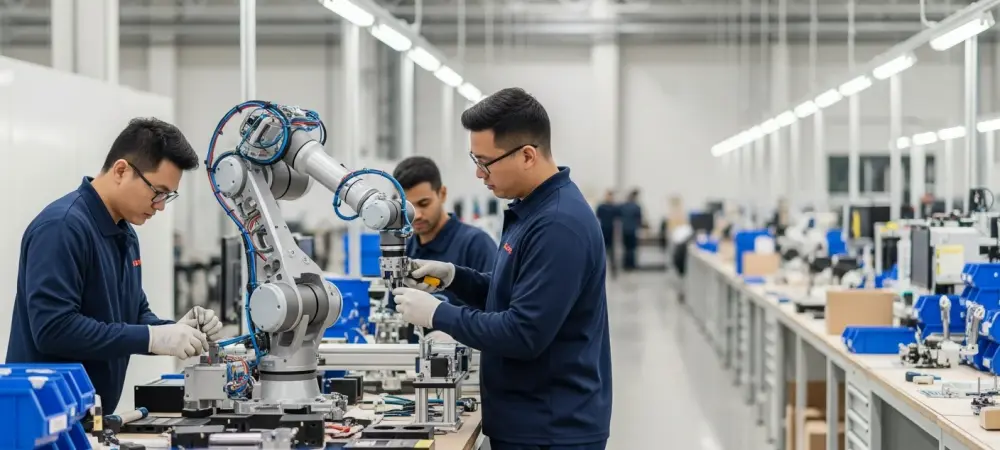
Amidst a landscape of persistent labor shortages and a concerted national push to revitalize domestic manufacturing, the accelerated adoption of automation has become a critical strategy for American industries seeking to enhance productivity and maintain global competitiveness. Responding directly to this demand, Teradyne has unveiled a new multifaceted operations hub in Wixom, Michigan, a facility strategically designed to serve as a nerve center for the production of advanced robotics. This significant investment is poised to centralize the manufacturing of collaborative robots (cobots) and autonomous mobile robots (AMRs), two of the most transformative technologies in modern industrial automation. By integrating production with comprehensive training and service capabilities under one roof, the center aims not only to bolster the US supply chain for robotics but also to cultivate the skilled workforce necessary to support this technological shift. The establishment of this hub represents a tangible commitment to the American reindustrialization movement, promising to create new high-tech jobs and provide a robust domestic ecosystem for the automation solutions that are reshaping factory floors and logistics centers across the country.
A Strategic Move for American Automation
Integrating Production and Workforce Development
The Wixom facility is engineered as a holistic ecosystem, moving beyond the traditional concept of a standalone factory to combine three core functions essential for sustainable technological growth: manufacturing, training, and service. This integrated model is a direct response to the needs of the modern U.S. market, where access to technology must be paired with robust local support and skill development. By co-locating the production lines for Universal Robots and Mobile Industrial Robots (MiR) with an in-house training center, Teradyne is creating a powerful synergy. New and existing customers can receive hands-on instruction on the very equipment being built just steps away, fostering a deeper understanding and accelerating implementation. Furthermore, the inclusion of a dedicated service center ensures rapid and expert support, minimizing downtime and maximizing the return on investment for American businesses. This comprehensive approach is foundational to fostering domestic workforce development, equipping technicians and engineers with the critical skills needed to operate and maintain advanced automation systems. The creation of approximately 200 jobs at the hub directly contributes to this goal, solidifying the facility’s role as a cornerstone of technological advancement and economic opportunity in the region.
Fueling the Reindustrialization Effort
The launch of the Michigan hub is a significant milestone in the broader U.S. reindustrialization movement, a national effort to strengthen domestic manufacturing capabilities and reduce reliance on fragile global supply chains. By onshoring the production of sophisticated cobots and AMRs, Teradyne is not only ensuring a more resilient supply of critical automation technology for North American companies but also actively participating in the rebuilding of the nation’s industrial base. This strategic localization allows the company to be more responsive to the evolving needs of its customers in the manufacturing and logistics sectors, which are increasingly turning to automation to solve complex challenges. The proximity of production to the end-user shortens lead times, simplifies logistics, and fosters closer collaboration, enabling companies to integrate robotic solutions more quickly and effectively. In a competitive global economy, the ability to deploy automation swiftly is a key differentiator, and this new hub positions Teradyne as a pivotal partner for American businesses striving to improve efficiency, enhance quality, and overcome the persistent scarcity of skilled labor. This investment underscores a powerful vote of confidence in the future of American manufacturing.
Advanced Robotics for Modern Industry
The Versatility of Collaborative Robots
At the heart of the new facility’s production will be the versatile line of cobots from Universal Robots, which are renowned for their adaptability across a vast spectrum of industrial applications. These robotic arms are engineered to work safely alongside human employees, taking over repetitive, strenuous, or precise tasks to augment the workforce rather than replace it. The range of models to be manufactured in Wixom highlights this flexibility, with reach capabilities spanning from 128 mm for intricate, small-part assembly to 1750 mm for larger-scale operations, and impressive payload capacities that can handle up to 64 kg. However, what truly sets these cobots apart and drives their widespread adoption is their remarkable accessibility. Breaking from the tradition of complex, code-intensive robotics, Universal Robots utilizes an intuitive, graphical programming interface. This allows operators with no prior programming experience to configure and deploy the machines using a simple drag-and-drop system. This democratization of automation empowers small and medium-sized enterprises to leverage the benefits of robotics without the need for a dedicated team of specialized engineers, lowering the barrier to entry and unlocking productivity gains for a wider segment of the U.S. economy.
The Intelligence of Autonomous Mobile Robots
Complementing the cobot production, the hub will also manufacture the advanced AMRs from MiR, which are essential for optimizing the internal logistics of modern factories, warehouses, and distribution centers. These intelligent robots are designed to automate the transportation of goods, materials, and components, freeing up human workers for more value-added tasks. Unlike traditional automated guided vehicles that require physical guides like magnetic tape or barcodes, MiR’s AMRs navigate with complete autonomy. They use a sophisticated combination of internal facility maps, integrated vision systems, and LiDAR sensors to perceive their environment, move freely through dynamic spaces, and safely maneuver around obstacles and people. This advanced navigation makes them exceptionally flexible and scalable, as they can be deployed and rerouted without requiring any changes to the physical infrastructure. The MiR portfolio, featuring models capable of transporting payloads up to 1350 kg by lifting shelves or towing carts, provides a powerful solution for streamlining material flow, a critical component of lean manufacturing and efficient e-commerce fulfillment operations.
A New Chapter in US Robotics
The inauguration of Teradyne’s Wixom hub marked a definitive step forward in solidifying the infrastructure for advanced robotics within the United States. This facility was established not merely as a production plant but as a comprehensive center designed to nurture the entire lifecycle of automation, from manufacturing and deployment to training and long-term support. The strategic decision to consolidate these functions under one roof provided a powerful model for how technology leaders can invest in the American market, building a self-sustaining ecosystem that directly addresses the needs of domestic industries. By onshoring the production of its key robotics lines, the company created a more agile and resilient supply chain for its North American customers. This move reflected a deep understanding of the current industrial landscape, where the successful integration of automation depended as much on accessible expertise and skilled personnel as it did on the technology itself. The hub’s focus on workforce development established a critical pipeline of talent, ensuring that the benefits of this technology could be fully realized across the economy.