

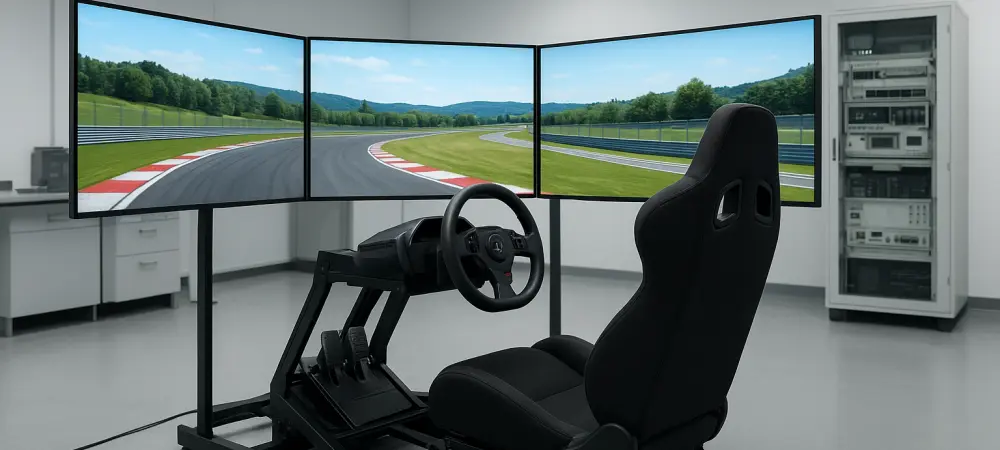
The transition to experiential learning at Temasek Polytechnic allows learners to see firsthand how data-driven decisions directly influence racing outcomes and engineering precision. This evolution is embodied in the newly unveiled DRIVE Lab, which stands for Data-Driven Racing Intelligence and Virtual Experience. Located within the School of Informatics and IT, this facility represents a significant departure from traditional classroom settings by placing students in the driver’s seat of high-stakes technological environments. Central to the lab is a life-sized racing cockpit donated by Oracle, providing an authentic interface for navigating a virtual recreation of the Marina Bay Street Circuit. Instead of observing from the sidelines, students actively generate complex telemetry data that mirrors the intense reality of professional motorsports. This approach ensures that data science principles are not just taught as abstract concepts but are felt through high-performance simulation.
Bridging the Gap Between Simulation and Statistics
Moving away from the conventional reliance on static, pre-packaged datasets, the DRIVE Lab empowers approximately 600 first-year students annually to produce their own raw information through active experimentation. This shift is critical because it forces learners to confront the inherent messiness and variability of real-world data collection from the very start of their academic journey. By utilizing a sophisticated three-monitor setup, participants can monitor performance metrics such as braking points and throttle application in real time. These students are no longer just numbers on a screen; they are analysts tasked with diagnosing specific performance gaps by comparing their personal lap times against professional benchmarks, including those set by Formula 1 champion Max Verstappen. Such comparisons provide a tangible baseline for success, transforming a standard statistics lesson into a compelling quest for efficiency and technical mastery that resonates deeply with the cohort.
The pedagogical value of this environment extends far beyond the thrill of virtual racing as it emphasizes the end-to-end analytics workflow that defines modern industry standards. Students navigate the entire lifecycle of a data project, starting with the capture of raw telemetry and moving through the stages of cleaning, processing, and visualization. This iterative process allows them to see exactly how small adjustments in driving strategy or vehicle setup lead to measurable improvements in performance. By fostering a mindset of continuous optimization, the lab prepares future professionals to handle the complexities of data-driven industries where precision is paramount. The ability to articulate why a specific change was made based on historical data trends is a skill that translates directly to fields like software engineering and financial modeling. Consequently, the laboratory serves as a testing ground for critical thinking, where every virtual turn reinforces evidence-based decision making.
Expanding the Scope of Multi-Disciplinary Data Visualization
While the Formula 1 simulator captures much of the initial excitement, the facility also houses the SPHERE globe, an interactive 3D visualization tool that broadens the analytical scope of the lab. This advanced hardware allows students to move beyond local racing circuits to explore global phenomena, providing a macro-level perspective on data science. It is particularly instrumental for electives such as Data Analytics for Environmental Sustainability, where learners can visualize massive datasets related to global warming and atmospheric pressure. By tracking the progression of hurricanes or observing shifting weather patterns on a spherical surface, students gain a unique understanding of how geographic information systems function in a professional context. This multi-disciplinary approach demonstrates that the skills acquired through racing telemetry—such as identifying patterns and predicting trends—are equally applicable to environmental science, urban planning, and large-scale logistics.
The successful implementation of this immersive environment demonstrated that student engagement levels reached new heights when academic rigor was paired with practical application. Educators observed that the tangible nature of generating personal data points encouraged a deeper level of inquiry and collaboration. Looking ahead, the institution planned to expand the reach of this facility by hosting outreach programs for secondary school students, aiming to inspire the next generation of tech talent. By April 2027, the lab will be fully integrated into the core Year One curriculum, ensuring that every graduate enters the workforce with a sophisticated understanding of data visualization. Future initiatives should focus on integrating emerging artificial intelligence models into the simulator to further refine predictive capabilities. This proactive strategy ensures that the workforce remains resilient and adaptable in an increasingly data-reliant global economy, setting a new standard for modern technical education.