

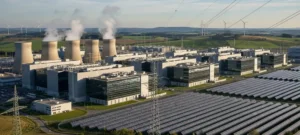
The traditional industrial landscape of Lower Saxony is undergoing a profound transformation as massive investments in digital infrastructure begin to reshape the local economy. Telis Energie Deutschland, a subsidiary of the Carlyle-backed Telis Energy Group, has unveiled plans to develop a staggering 500MW data center campus in Mehrum. This €1 billion project, which covers over 4 million square feet, signals a bold departure from the saturated markets of the past, positioning the region near Hanover as a primary contender in the global race for high-capacity computing.
Redefining the Scale of German Digital Infrastructure
While Frankfurt has long served as the heartbeat of the European data economy, this new project is set to shift the country’s digital center of gravity toward the north. The Mehrum campus represents one of the most ambitious infrastructure undertakings in the nation, providing a necessary relief valve for the burgeoning demand for cloud services. By moving away from traditional hubs, developers are finding the physical space required for a new generation of hyper-scale facilities. The scale of this development is truly unprecedented for the region, featuring six massive buildings designed to house the hardware driving modern society. As data consumption surges, the project serves as a blueprint for how legacy industrial sites can be repurposed for the digital age. This transition ensures that Germany maintains its competitive edge in the technological landscape without being restricted by the physical boundaries of established urban centers.
The Strategic Shift Toward Northern Germany’s Industrial Corridors
For years, growth was concentrated in the “FLAP” markets—Frankfurt, London, Amsterdam, and Paris—leading to severe power grid congestion and a shortage of available land. The development in Mehrum highlights a growing trend of “secondary market” expansion where developers seek untapped resources and more flexible zoning opportunities. By establishing a presence in Lower Saxony, Telis Energy is capitalizing on the proximity to emerging energy nodes, ensuring that the skyrocketing demand for artificial intelligence can be met.
This migration northward is not merely about space; it is about the long-term sustainability of the national grid. By distributing the load across different geographic regions, the industry reduces the risk of localized energy crises. Furthermore, the strategic placement near Hanover allows for efficient connectivity to major transport and communication corridors, making it an ideal location for a facility of this magnitude.
Key Specifications and Economic Impact of the Mehrum Project
The proposed campus is designed for massive scale, featuring six individual buildings that will reach heights of 25 meters to accommodate high-density server racks. To support the 500MW load, the site will rely on high-voltage lines connected to a new gas-fired power station and a dedicated substation. These technical specifications are essential for maintaining the redundancy and uptime required by global tech giants and high-performance computing tasks.
Beyond the physical construction, the project will serve as a significant local employer, creating approximately 80 permanent high-skill positions. These roles, ranging from IT specialists to security personnel, will provide stable economic opportunities in a region traditionally focused on manufacturing. The influx of capital and professional talent is expected to stimulate local businesses and infrastructure, creating a positive feedback loop for the surrounding community.
Financial Backing and the Evolution of Energy-Integrated Data Hubs
The involvement of Carlyle and the Telis Energy Group underscores a sophisticated marriage between private equity and large-scale utility management. Since its founding, Telis Energy has focused on a massive renewable pipeline across Europe, a strategy that aligns perfectly with the high energy requirements of modern data centers. This partnership reflects a broader industry shift where developers are no longer just building “shells” for servers but are becoming active participants in energy generation.
By integrating power production directly with data storage, these firms are securing their long-term operational viability in a volatile energy market. This model reduces dependency on external providers and allows for more precise control over carbon footprints. As investors increasingly prioritize green energy, the ability to combine massive digital capacity with smart energy management has become a critical differentiator in the global market.
Navigating the Complexities of High-Capacity Infrastructure Development
Building a facility of this magnitude required a multi-layered strategy that extended far beyond technical engineering. Developers first had to secure municipal approvals, a process that involved aligning project goals with local economic interests and environmental standards. Furthermore, the integration of high-voltage power solutions necessitated early coordination with utility providers to build out the necessary substations and transmission lines.
The success of the project depended on a framework that balanced aggressive scaling with community engagement and a robust energy procurement plan. Moving forward, the focus shifted toward the implementation of advanced cooling technologies and waste-heat recovery systems to maximize efficiency. Stakeholders recognized that future developments must prioritize grid stability and resource conservation to remain viable in an increasingly regulated environment.