

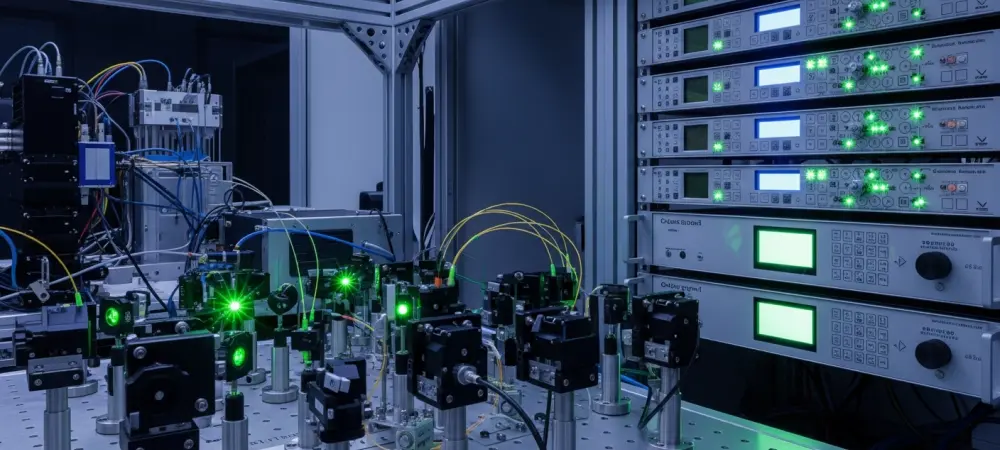
As the computational power of quantum processors begins to outpace the defensive capabilities of traditional RSA and ECC encryption, the global telecommunications sector has initiated a comprehensive transition toward quantum-resistant architectures to safeguard sensitive data from sophisticated decryption threats. This transformation is driven by the urgency of the “harvest now, decrypt later” phenomenon, where malicious actors intercept encrypted traffic today with the intent of breaking it once fault-tolerant quantum computers become available. Leading carriers such as SK Telecom and Deutsche Telekom are already demonstrating the efficacy of Quantum Key Distribution and Post-Quantum Cryptography in real-world environments. By embedding these protocols directly into the optical layer and core network hardware, providers are establishing a foundation that ensures long-term data integrity. This strategic pivot represents a move away from reactive security patches toward a proactive, hardware-integrated defense mechanism that treats quantum safety as a fundamental requirement rather than an optional feature for enterprise and government clients.
Standardizing Post-Quantum Cryptography Across Global Architectures
The adoption of standardized algorithms approved by the National Institute of Standards and Technology has become the cornerstone for building resilient digital highways across the globe. Algorithms such as ML-KEM and ML-DSA are being integrated into Transport Layer Security protocols to ensure that every packet traversing the network remains shielded from future quantum analysis. Unlike traditional methods that rely on the difficulty of factoring large prime numbers, these lattice-based cryptographic schemes provide a mathematical complexity that remains unsolvable even for the most advanced quantum processors currently under development. Major infrastructure vendors like Nokia and Ericsson have started shipping 5G core equipment that supports these PQC standards natively, allowing operators to activate these features without significant downtime. This standardized approach facilitates interoperability between different service providers, ensuring that cross-border data remains secure as it moves between various international nodes and regional exchange points. Complementing software-based PQC, the deployment of Quantum Key Distribution is creating a physical layer of security that utilizes the principles of quantum mechanics to detect eavesdropping. Telcos are now laying dedicated dark fiber strands specifically for QKD, enabling the distribution of cryptographic keys via single photons that cannot be measured or copied without altering their state. This method provides an extra layer of defense for critical infrastructure, such as financial transaction hubs and military communications, where absolute secrecy is paramount. In regions like Southeast Asia and Western Europe, the establishment of quantum-safe corridors has proven that QKD can coexist with classical data transmission on the same fiber-optic cables through advanced wavelength division multiplexing techniques. As the cost of quantum-ready hardware decreases, the integration of these systems is moving beyond trial phases into standard architectural blueprints, paving the way for a holistic security environment that protects both control and data planes.
Advancing 5G Sensing and Security Roadmaps
Beyond the realm of cybersecurity, the telecommunications industry is redefining the functional limits of cellular infrastructure by implementing Integrated Sensing and Communication technology within 5G-Advanced networks. This dual-use capability allows 5G radio waves to function as a distributed radar system, detecting the presence, velocity, and trajectory of physical objects within the network’s coverage area. By analyzing the reflections and scattering of millimeter-wave signals, operators can now offer high-precision sensing services without the need for additional hardware like cameras or lidar. This technology is particularly transformative for the logistics and transportation sectors, where it enables real-time monitoring of drone corridors and autonomous vehicle movements with unprecedented accuracy. The ability to extract environmental data from existing radio frequency emissions represents a significant shift in how spectrum assets are valued, moving from simple data transport toward a multidimensional intelligence gathering utility for smart city developers.
Organizations that successfully navigated the transition to quantum-safe environments prioritized the audit of their legacy cryptographic assets and implemented crypto-agility frameworks to ensure long-term resilience. This approach allowed engineers to swap out vulnerable algorithms without disrupting critical services, while the integration of 5G sensing provided a new layer of environmental intelligence for smart city infrastructure. To maintain this momentum, stakeholders focused on continuous training for security personnel and the refinement of signal processing algorithms to maximize the precision of radio-based detection. These entities also established collaborative partnerships with government bodies to align their security protocols with national safety standards, ensuring that data remained protected against evolving computational threats. By treating quantum safety as a core operational requirement rather than a secondary concern, the industry secured its digital sovereignty and unlocked significant new revenue streams from advanced sensing capabilities.