

The sleek, $3,500 aluminum and glass visor that was supposed to redefine human interaction now sits quietly on a mahogany nightstand, its battery depleted and its lenses gathering a fine layer of suburban dust. This scene has become a common tableau in households that once rushed to embrace the “spatial computing” revolution, only to find that wearing a heavy computer on one’s face is a demanding chore rather than a digital escape. While the engineering prowess behind these devices is undeniable, the friction of entering a virtual world has proven too high for the average person to maintain as a daily habit.
The rejection of bulky, face-mounted hardware marks a significant cultural shift away from the total digital immersion that characterized the early part of the decade. Consumers are increasingly prioritizing “eye contact” and physical presence over the isolated “metaverse” experiences that promised to replace reality. This movement reflects a broader fatigue with hardware that requires a steep learning curve and a social sacrifice, leading tech enthusiasts to look for devices that complement their surroundings rather than obscuring them entirely.
The $3,500 Dust Collector: Why the Metaverse Dream Is Moving to the Nightstand
The paradox of modern hardware lies in the gap between technical capability and human comfort. Even as displays reach resolutions that mimic the human eye, the physical “clutter factor” remains an insurmountable obstacle for most users. A high-end headset requires a dedicated space, a charging routine, and a willingness to be blind to the physical world, which many now find increasingly claustrophobic. The initial novelty of high-fidelity virtual environments has given way to a realization that most digital tasks—checking emails, watching videos, or socializing—are simply more efficient on a smartphone or a laptop.
This transition highlights a collective pivot back toward an enhanced physical reality. The cultural zeitgeist has moved away from the escapism popularized during years of social distancing, favoring instead technology that feels invisible. As users abandon the sensory deprivation of virtual reality, the industry is forced to acknowledge that a “face-worn computer” must be as effortless as a pair of traditional spectacles to achieve long-term success. The dream of the metaverse hasn’t necessarily died; it has simply evolved into a desire for a digital layer that sits gently atop the real world.
From Pandemic Hype to the Reality of “VR Winter”
The enthusiasm bubble that grew steadily between 2014 and 2024 has finally reached a point of exhaustion. During the peak of the pandemic, virtual reality was marketed as the inevitable successor to the office and the living room, but the post-pandemic reality has been far less accommodating. Corporate giants that once bet their entire identities on virtual worlds are now facing a period of intense retrenchment. Meta, for instance, has implemented a 10% reduction in its Reality Labs division, signaling a move away from the unbridled spending of previous years. The closure of Horizon Workrooms further underscores the failure of virtual meeting spaces to replace the organic flow of a physical office.
The launch of the Apple Vision Pro was expected to be a watershed moment for the industry, yet its exorbitant pricing stalled the very momentum it was meant to accelerate. By positioning spatial computing as a luxury tier product, manufacturers inadvertently alienated the mass market, reinforcing the perception of VR as a niche hobby for the wealthy or the tech-obsessed. The “price-to-utility ratio” remains the ultimate barrier; when a device costs as much as a used car but offers fewer daily benefits than a smartphone, the market’s response is inevitably tepid. This “winter” is characterized by a fundamental questioning of why these devices exist in the first place.
The Great 2026 Market Reshuffle: Hard Data and Shifting Shipments
Current market data reveals a stark divergence between different categories of wearable tech. Pure virtual reality—devices that completely block out the world—is witnessing a collapse in consumer interest, with standalone headset shipments plummeting toward fewer than 50,000 units. This decline suggests that the “pure VR” segment may be relegated to specialized gaming and professional niches indefinitely. Conversely, Mixed Reality (MR) is showing signs of a rebound, with shipments projected to reach 6 million units this year. This growth is largely fueled by new entries like Samsung’s Galaxy XR, which aims to find a middle ground between immersion and utility. The most explosive growth, however, is found in the category of XR glasses. These lightweight, often smartphone-tethered displays have seen their shipments double over the past twelve months. By offloading the processing power to a phone the user already owns, these glasses offer a “big screen” experience without the weight of a traditional headset. Despite this success, the wearable market still struggles to emerge from the shadow of the smartphone. While moving 12 million units is a victory for a new category, it remains a rounding error compared to the billion-plus smartphones sold annually, proving that the “smartphone moment” for eyewear is still on the horizon.
Expert Perspectives on the “Utility Value” vs. “Lifestyle Value”
Industry veterans are increasingly divided on whether the current slowdown is a terminal failure or a necessary phase of refinement. Many analysts argue that the industry is currently in a “Bridge Technology” period, where today’s clunky devices are merely stepping stones toward the true goal of lightweight augmented reality. For these experts, the current pivot is a healthy correction that forces companies to focus on “utility value”—actual problems that the technology can solve—rather than “lifestyle value,” which relies on vague promises of a cooler, more digital life. This shift is most evident in the enterprise sector, where VR has found a permanent home in high-stakes training. In environments like surgery, flight simulation, or hazardous industrial maintenance, the value of a fully immersive environment is undisputed. These applications prove that the technology works; it simply hasn’t found its “killer app” for the average person at home. The transition from trying to build a new digital society to simply providing a better way to watch a movie or follow a recipe suggests a more grounded, realistic future for the hardware.
The AI Smart Glasses Framework: A Strategy for the New Wearable Era
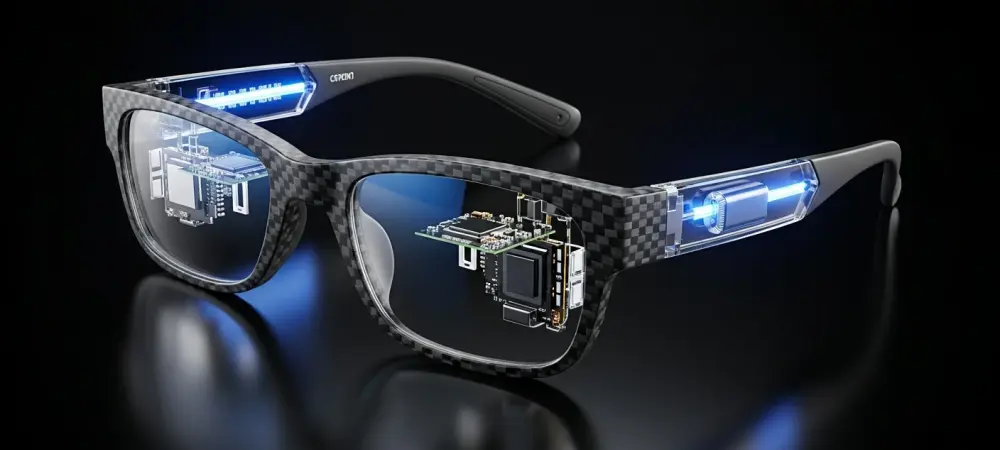
The most successful pivot in the industry has been the rise of AI-powered smart glasses that prioritize form over complex visual features. The blueprint established by the Meta Ray-Ban collaboration has proven that consumers are far more willing to wear technology that looks like fashion. By forgoing heavy lenses and cooling fans in favor of high-quality cameras, microphones, and speakers, these devices offer immediate utility through voice assistants like Siri, Gemini, and OpenAI’s latest models. This strategy replaces the “wow factor” of 3D graphics with the everyday convenience of a hands-free AI companion.
However, as these AI glasses become more prevalent, they are navigating a complex privacy minefield. The integration of “wearable surveillance” features, such as discreet recording and potential facial recognition, has reignited long-standing debates about consent in public spaces. Tech giants are currently racing to implement hardware-level safeguards, like brighter recording LEDs, to address these stigmas. As we move further into the year, the “gold rush” for AI-infused hardware is expected to intensify, with Google and Apple rumored to be preparing their own versions of lightweight, AI-first spectacles that look nothing like the “face-puters” of the past decade.
In the final analysis, the technology industry learned that the human face is the most valuable and sensitive real estate on the planet. The transition from immersive virtual reality to lightweight, AI-assisted eyewear was a pragmatic response to the reality that users wanted tools, not destinations. Successful firms moved toward products that integrated seamlessly into the existing social fabric rather than attempting to tear it down and replace it with pixels. By 2027, the focus likely shifted entirely toward perfecting the invisible interface, ensuring that the next generation of wearables would be defined by what they helped the user see in the real world, rather than what they helped them hide from.