

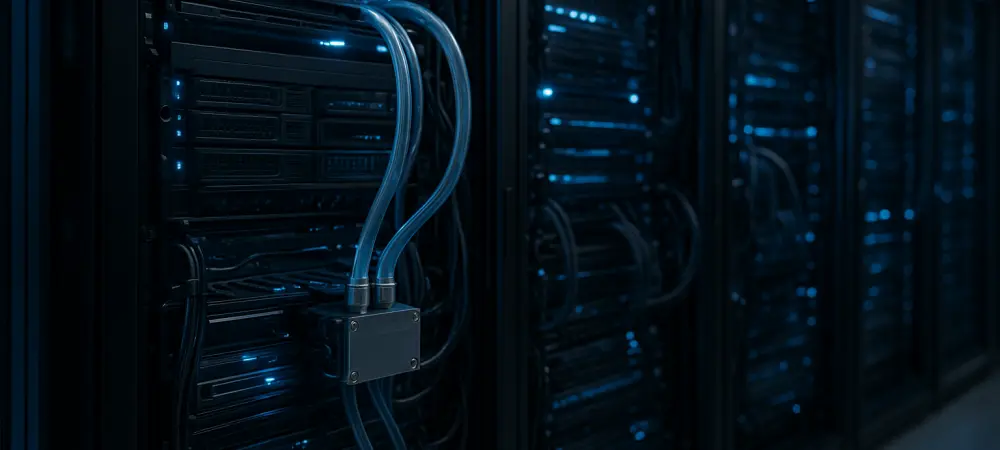
The landscape of digital infrastructure is undergoing a seismic shift where the traditional metrics of success are being replaced by the sheer necessity of gigawatt-scale power to support the next generation of artificial intelligence. It is no longer enough to simply build data halls; the industry now demands specialized ecosystems capable of sustaining workloads that were inconceivable just a few years ago. T5 Data Centers has responded to this challenge with a high-stakes corporate reorganization designed to strip away distractions and focus entirely on large-scale development.
This pivot involves divesting long-standing service divisions to strategic partners, effectively unbundling the vertically integrated model that once defined the firm. By separating its operational and construction arms, T5 is positioning itself to address the massive spatial and energetic requirements of high-performance computing (HPC) while allowing its former subsidiaries to thrive as independent, market-neutral powerhouses. This evolution reflects a broader trend where specialization is becoming the prerequisite for competing in the AI era.
The Pivot Toward Gigawatt-Scale Infrastructure
The data center industry is moving beyond megawatt thinking as the AI revolution demands a fundamental shift in how physical infrastructure is built and managed. T5 Data Centers has executed a bold corporate reorganization, divesting its service divisions to concentrate exclusively on large-scale development. By shedding its operational and construction arms, T5 positions itself to meet the massive power and space requirements of high-performance computing and artificial intelligence. This strategic alignment recognizes that the infrastructure of the future is defined by scale and power density. Rather than spreading resources across multiple service verticals, the firm is now focused on securing the land and power necessary for massive campuses. This concentration of effort allows for more rapid innovation in cooling technologies and power distribution, which are critical for the energy-intensive workloads that have become the new industry standard.
Why Specialization Defines the New Data Center Era
The rise of generative AI has created an unprecedented surge in demand, making generalist business models less efficient than hyper-focused specialized firms. Traditional vertically integrated models are being replaced by strategic partnerships that allow for faster time-to-market and greater technical agility. This industry-wide transformation reflects the necessity of handling complex, energy-intensive workloads that require specific engineering expertise rather than a one-size-fits-all approach.
Specialized firms can innovate more quickly because they are not tethered to the legacy processes of a massive parent organization. In an environment where technology cycles are shortening, the ability to pivot and adopt new standards is a significant competitive advantage. This shift toward specialization ensures that every aspect of the data center lifecycle, from site selection to daily maintenance, is handled by experts who are exclusively dedicated to their respective crafts.
Decoupling Operations and Construction for Market Agility
The Salute acquisition: Scaling operational excellence. Salute’s acquisition of T5 Operations has created a global powerhouse managing over 15 gigawatts of data center capacity across 150 markets. This move integrates the technical commissioning and facility management lifecycle with an owner-operator mindset. To ensure continuity, David Mettler has joined the Salute executive team, while Pete Marin took a seat on the board to preserve institutional knowledge and strategic direction. The independence of EverOn Data Center Services: Rebranding and growth. T5’s construction division rebranded as EverOn, transitioning from an internal department to a standalone general contractor. The growth metrics are significant, with revenue rising from $1.7 billion in 2026 toward a projected $2.4 billion by 2028. Currently, 83 percent of EverOn’s revenue comes from third-party projects, allowing the entity to serve the broader industry with complete market neutrality and without any perceived conflict of interest.
Strategic Backing and the Role of Private Equity
The influence of New Mountain Capital has been instrumental in fueling Salute’s aggressive acquisition strategy and global footprint expansion. By consolidating specialized firms like Keysource and Northshore under the Salute umbrella, the firm has created a more robust service ecosystem for AI clients. This financial backing provides the stability and scale necessary to manage the most complex digital infrastructure environments in the world.
Simultaneously, QuadReal Property Group continues its support of T5’s core mission to develop build-to-suit campuses and gigawatt-scale sites. This ongoing partnership allows T5 to maintain its focus on the high-capital requirements of development while its former units operate independently. The interplay between private equity and specialized developers ensures that the industry has the capital necessary to keep pace with the relentless growth of AI capacity requirements.
Frameworks for Navigating the Specialized Data Center Market
Evaluating specialized partnerships involves identifying the benefits of working with independent contractors like EverOn for mission-critical digital infrastructure. These organizations provide a level of focus and neutrality that is often missing in vertically integrated firms. Strategies for scaling AI capacity are increasingly leveraging build-to-suit models in major hubs like Chicago and Atlanta to secure early-mover advantages in markets where power is becoming a scarce resource.
Managing high-density workloads requires applying the owner mindset to facility management to ensure reliability in high-performance computing environments. As the industry continues the shift to gigawatt campuses, the transition from regional data halls to massive, centralized AI-ready sites will become the standard. This evolution requires a framework that prioritizes technical precision and long-term asset health above all else to ensure the stability of the global digital economy. The industry’s collective pivot toward hyper-specialization demonstrated that the path to AI scalability required a leaner and more focused organizational structure. Stakeholders who embraced this decoupling strategy moved more effectively than those who remained tethered to legacy models. By prioritizing the development of massive, purpose-built sites, firms secured the physical capacity necessary to sustain the current wave of technological innovation. These structural changes provided a clear blueprint for how infrastructure must evolve to meet the relentless demands of the digital future.