

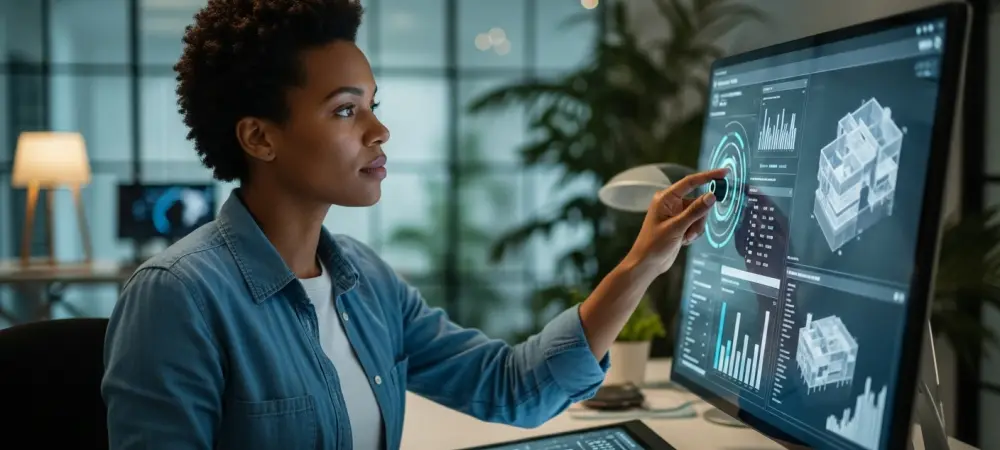
The bustling streets of Austin have transformed into a living laboratory where the friction between biological intuition and algorithmic precision creates the sparks of a new cultural fire. This year, the South by Southwest festival has moved beyond the theoretical anxieties of previous seasons to establish a concrete framework for the next era of human expression. Since the seismic shift triggered by the initial release of generative models three years ago, the conversation has matured from fear-based speculation into an industrial reality that demands immediate adaptation. This cultural flashpoint serves as the premier stage for a high-stakes debate regarding whether the future of art and innovation belongs solely to biological humans or to the silicon-based machines they have built. As tech developers and artists converge in this space, they are actively negotiating the boundaries of a world where generative artificial intelligence is no longer just a novelty but a fundamental layer of the creative stack.
The Evolution of Creative Agency: From Tools to Collaborative Partners
The current landscape represents a pivotal shift in the relationship between human talent and sophisticated software, moving away from simple execution toward a model of complex partnership. Before the rapid acceleration seen in recent years, the idea of a machine matching the nuance of human creative output was largely dismissed as a distant possibility. However, the emergence of advanced tools like ByteDance’s Seedance 2.0 has forced a radical reassessment of these assumptions by allowing users to generate hyper-realistic video content from simple text prompts. This technology does more than just automate a task; it challenges the very definition of what it means to be a creator in a digital environment. By providing high-fidelity outputs that previously required massive production teams, these platforms are shifting the focus from technical skill to the conceptual depth of the initial prompt, thereby redefining the core essence of creative agency for a new generation of digital artists.
While some industry analysts remain focused on a potential “SaaSpocalypse” where traditional software value disappears, a more optimistic synthesis is gaining traction among leading tech organizations. Companies like Superhuman have led this transition by rebranding AI not as a threat to the workforce, but as a collaborative starting point that eliminates the paralysis of the blank page. This “blinking cursor” philosophy posits that while an algorithm can produce a technically correct draft or a visually stunning image, it lacks the inherent intent required to spark a cultural movement. The consensus emerging from industry leaders suggests that the most successful creative endeavors will be those that use AI to handle the heavy lifting of production while reserving the final judgment for the human operator. This approach ensures that the “human touch” remains the primary differentiator in a market increasingly saturated with machine-generated content, preserving value through unique intent.
Historical Perspectives on Innovation: Why the Past Informs the Present
Historical precedents provide a necessary sense of perspective, revealing that the current anxiety surrounding artificial intelligence is part of a recurring pattern in human innovation. In 1839, the advent of photography led many critics to declare that the art of painting was dead, viewing the camera as a thoughtless mechanism that lacked the soul of a true genius. However, history shows that photography did not replace painting; instead, it liberated painters from the burden of literal representation and gave birth to entirely new fields like cinematography. By examining these shifts, it becomes clear that every major technological advancement in the arts is initially met with deep suspicion before it is eventually integrated into the standard toolkit of human expression. The current era of AI-assisted creation is simply the latest chapter in this ongoing story, moving through a predictable cycle of disruption, resistance, and eventually, the normalization of the medium.
Drawing on the theories of media analyst Marshall McLuhan, it is evident that the tools we use do not merely facilitate expression but fundamentally redefine the nature of human discourse itself. Just as the printing press did more than just make books cheaper—enabling mass debates on economics and politics that were previously impossible—AI is currently restructuring how we perceive information. The radio similarly transformed music from a rare live event into a constant background element of daily life, changing the very rhythm of human existence. In the same vein, generative intelligence is lowering the barrier to entry for complex production, allowing for a higher frequency of sophisticated intellectual exchange across various demographics. This shift suggests that AI is not just a faster way to write or draw; it is a transformative medium that will likely change the experience of being human by democratizing the ability to produce high-level conceptual work.
Redefining the Creative Process: The Human Role in an Automated Age
A fundamental “new rule” of expression established at recent forums is the absolute necessity of keeping a human in the loop to ensure that creative output remains meaningful. Despite the impressive ability of models to mimic taste and judgment, the biological urge to express remains the indispensable engine that drives the technology forward. Without the specific direction and emotional resonance provided by a human being, even the most advanced generative models remain dormant tools incapable of generating true cultural significance. This realization has shifted the industry focus toward the concept of the human-machine synthesis, where the individual acts as a director rather than a manual laborer. This new role requires a different set of skills, emphasizing the importance of curation, ethical oversight, and the ability to weave disparate algorithmic outputs into a coherent and impactful narrative that resonates with an audience.
Industry leaders are working to reduce abstract anxiety by contextualizing technological progress as a continuous timeline of human tool-making that stretches back to the dawn of civilization. By presenting AI alongside historical milestones like cave paintings and the development of computer code, creators can better understand their place within a long tradition of innovation. This historical grounding helps to demystify the technology, framing it as a facilitator that allows the mind to focus on higher-level conceptual work by automating the more mundane aspects of the creative process. The primary benefit of this era is the reduction in the “cost” of the creative process, which opens the door for users to explore territories that were previously unreachable due to technical or financial constraints. This evolution encourages a move away from the fear of obsolescence toward a future where human potential is expanded by the very tools that once seemed to threaten it.
Strategic Integration of Intelligence: Mapping the Path Toward 2028
The path forward for creators between 2026 and 2028 involves a strategic commitment to mastering these new tools while doubling down on the qualities that machines cannot replicate. Practical implementation requires a shift in education and professional development, focusing on prompt engineering, algorithmic literacy, and the ethical implications of synthetic media. As these technologies become more integrated into the daily workflow, the value of a creator will increasingly be measured by their ability to provide unique perspectives and navigate the complex moral landscape of digital authorship. This period of transition provides an opportunity for organizations to redesign their creative departments to prioritize high-level strategy and emotional intelligence, ensuring that they remain competitive in an environment where technical execution is becoming a commodity. The focus must remain on using the machine as a mirror to view and expand our own humanity.
The dialogue at the festival successfully transitioned the industry from a state of suspicion toward a posture of informed mastery and strategic integration. Experts concluded that the integration of human intuition with machine efficiency was not a zero-sum game, but rather an additive process that expanded the total volume of human expression. By looking back at the long-term impact of the printing press and the camera, the creative community recognized a clear pattern of growth and diversification that followed every major period of technical disruption. The actionable takeaway for participants involved the immediate adoption of hybrid workflows and the development of robust internal guidelines for the ethical use of generative models. Ultimately, the future of creativity was viewed as a collaborative endeavor where the machine served as the latest instrument in a much older orchestra, allowing for a more expressive and connected world through the expansion of our collective capacity to produce meaning.