

Unveiling the Computational Revolution
In an era where scientific breakthroughs and artificial intelligence advancements depend on raw computational power, global data processing needs have surged by over 30% annually, according to recent industry estimates. This unprecedented demand highlights a crucial shift in how research and innovation are conducted, placing supercomputing infrastructure at the core of solving humanity’s most complex challenges, from climate change to personalized medicine. This analysis explores the growing trend of supercomputing expansion, focusing on the Leibniz Supercomputing Centre (LRZ) in Munich, Germany, as a leading example, while examining global patterns, expert opinions, and the critical balance between power and sustainability that will shape the future of technology.
Global Momentum in Supercomputing Infrastructure
Escalating Investments and Market Growth
High-performance computing (HPC) and AI infrastructure have become foundations of modern progress, with global investments projected to surpass $100 billion by 2027, as reported by leading market research firms. This financial commitment reflects a wider recognition of computational power as a driver of innovation across various sectors. Governments and private entities alike are pouring resources into expanding data centers and upgrading systems to keep up with the rapid growth of data-intensive applications.
Beyond mere funding, the adoption rate of HPC solutions has sped up, especially in academia and industry, where simulations and predictive modeling are essential. For instance, the number of data centers worldwide supporting supercomputing tasks has increased significantly over the past few years, with many regions reporting double-digit growth in capacity to handle workloads in fields like genomics and astrophysics. This trend shows a collective effort toward building strong computational ecosystems capable of tackling global-scale problems.
Case Study: LRZ’s Strategic Expansion
A clear example of this global surge is seen at the LRZ in Munich, Germany, where a €500 million ($575.85 million) investment by the Free State of Bavaria is driving a major upgrade. This initiative aims to boost the center’s power capacity to 40 MW by 2028, supported by the construction of a new substation in Garching that will deliver 50 MVA to each of two transformers. These enhancements are designed to meet the rising demands of scientific research and AI development.
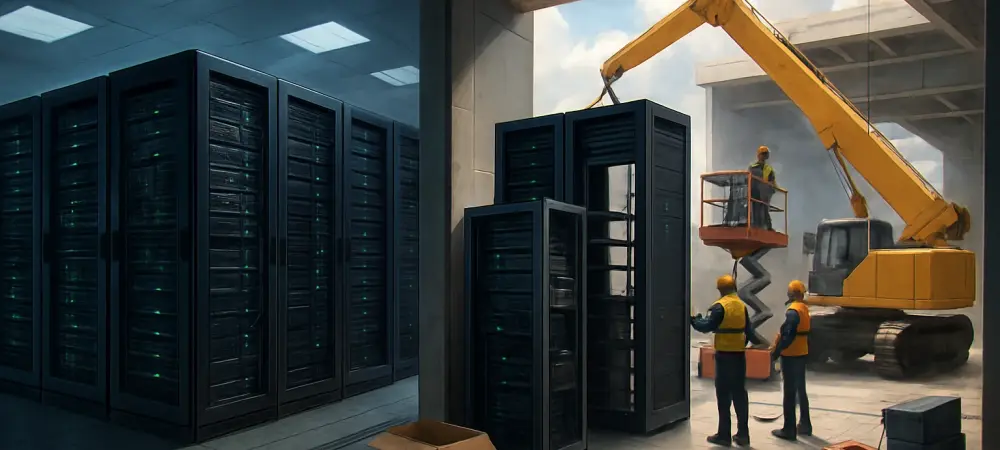
Further strengthening this effort, LRZ is set to launch the Blue Lion supercomputer in 2027, a system developed by HPE with Nvidia Blackwell GPUs, promising 30 times the performance of its current SuperMUC-NG platform. Additionally, a northward extension of the data center will add five floors dedicated to power and cooling infrastructure, ensuring scalability for future supercomputers and AI clusters. This project demonstrates how regional hubs are adapting to the computational needs of the modern era through careful infrastructure planning.
Voices from the Field: Expert Perspectives
Leadership Insights from LRZ
Prof. Helmut Reiser, deputy director at LRZ, has emphasized the essential role of advanced supercomputing in maintaining Bavaria’s status as a research powerhouse. He points out that fields like climate modeling and AI-driven simulations increasingly rely on cutting-edge systems to deliver accurate and timely results. His perspective highlights the urgency of infrastructure investments to support scientific communities in addressing pressing global issues.
Industry-Wide Views on Competitiveness
Beyond regional insights, industry experts widely agree that staying competitive in the global research landscape requires ongoing upgrades to computational facilities. However, they also warn against unchecked expansion, noting the increasing energy demands that come with more powerful systems. Balancing performance with environmental responsibility emerges as a key concern, sparking discussions on innovative energy management practices within the sector.
Looking Ahead: Powering Progress Sustainably
Technological Frontiers in Supercomputing
The future of supercomputing holds even greater potential, with systems like Blue Lion paving the way for successors that could redefine research and AI applications. Expected advancements include faster processing speeds and larger-scale simulations, potentially speeding up discoveries in drug development and environmental forecasting. These innovations point to a future where computational power becomes an even more vital part of scientific exploration.
Sustainability as a Core Challenge
However, with greater power comes the challenge of energy consumption, an issue that LRZ is tackling through waste heat reutilization, currently redirecting excess heat to office buildings and planning broader campus integration. This approach serves as a model for other data centers aiming to reduce their environmental footprint. The industry must address the risk of straining energy grids if sustainable practices are not prioritized alongside expansion.
Broader Implications and Risks
The implications of supercomputing growth include both opportunities and challenges, with the potential for faster scientific breakthroughs offset by concerns over environmental impact. If sustainability measures fall behind, the strain on resources could undermine gains in innovation, requiring a unified focus on efficiency. This duality creates a complex landscape where technological ambition must align with ecological responsibility to ensure long-term benefits.
Reflecting on the Path Traveled
Looking back, the global trend of supercomputing infrastructure expansion reveals a dynamic interplay of innovation and responsibility, with initiatives like LRZ’s €500 million upgrade in Munich serving as benchmarks of progress. The integration of powerful systems such as Blue Lion, alongside sustainable practices like waste heat reutilization, highlighted a dual commitment to performance and environmental care. These efforts emphasized the crucial role of computational power in advancing research.
As a next step, stakeholders across governments, industries, and academia are encouraged to collaborate on developing energy-efficient frameworks that can support the next generation of supercomputers without harming planetary health. Investing in renewable energy integration and advanced cooling technologies emerged as practical priorities. This forward-thinking approach promises to balance the relentless pursuit of knowledge with a sustainable vision for the future.