

Objective performance measurements allow engineering teams to compare different software versions and identify exactly where playback artifacts or lag are being introduced into the delivery pipeline. As the fragmentation of the global streaming landscape reaches new heights, the technical debt associated with maintaining quality across thousands of device variations has become a primary hurdle for media companies. At IBC2026 in Amsterdam, the industry is witnessing a shift toward more intelligent, hardware-integrated solutions that address these bottlenecks directly. The traditional manual approach to quality assurance is no longer viable given the rapid deployment cycles required to stay competitive in the modern market. Suitest has responded by unveiling a suite of tools that unify physical device management with advanced machine learning capabilities. These innovations allow developers to simulate real-world conditions with pinpoint accuracy while reducing the operational overhead typically associated with large-scale testing labs. By bridging the gap between physical hardware and cloud-based automation, the platform ensures that the viewer experience remains consistent regardless of whether the content is consumed on a high-end smart TV or a legacy set-top box.
Optimizing Enterprise Infrastructure with AI-Accelerated Hardware
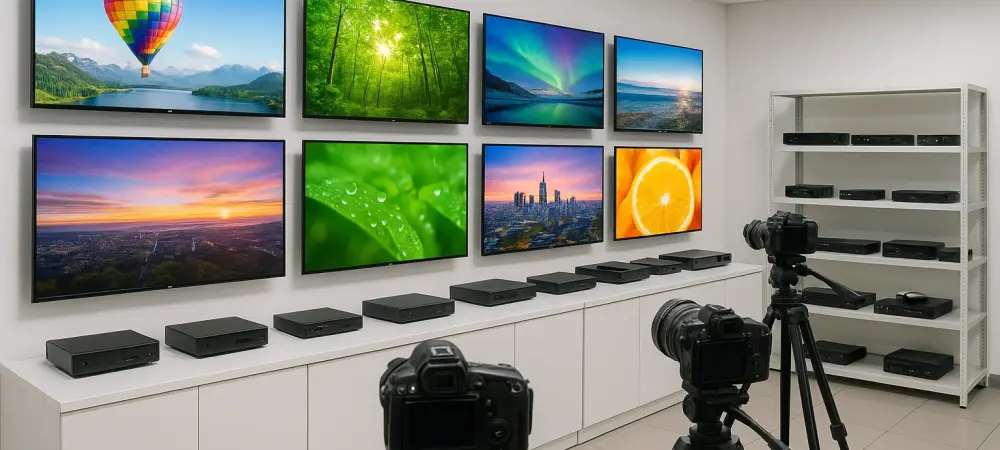
The introduction of the TVafer high-density 1U rack enclosure represents a significant leap forward in how enterprise-grade testing labs are designed and maintained. This hardware solution is engineered to maximize space efficiency by housing multiple testing units within a compact physical footprint, allowing organizations to scale their operations without needing massive server rooms. Each enclosure integrates seamlessly with the latest HDMI capture devices and camera systems, providing a robust foundation for capturing high-fidelity output from any connected device. This physical consolidation is paired with intelligent thermal management and power control, ensuring that long-duration stress tests do not lead to hardware degradation or inconsistent results. For engineering teams, this means the ability to manage hundreds of real devices with the same ease as virtualized environments. The reduction in physical clutter also simplifies the wiring and maintenance protocols, which have historically been a significant source of downtime in complex quality assurance workflows.
Beyond the physical housing, the introduction of AI-accelerated components within the capture devices allows for the immediate processing of visual data at the edge. This local processing power enables the system to detect subtle anomalies, such as frame drops or macroblocking, without the latency associated with sending raw video streams to a central server for analysis. The HDMI capture device works in tandem with specialized camera systems to provide a dual-layer validation process, ensuring that what the software thinks it is outputting actually matches what appears on the physical screen. This is particularly critical for testing High Dynamic Range content and high-refresh-rate applications where visual fidelity is paramount. By offloading these intensive computational tasks to dedicated hardware, the overall testing cycle is shortened, allowing for faster feedback loops during the development process. Consequently, software architects can iterate on new features with the confidence that the physical hardware will accurately reflect their changes in real-time.
Enhancing Remote Debugging via the Public Device Cloud
Remote accessibility has become a cornerstone of modern development, and the expansion of the Public Device Cloud offers teams unprecedented access to a global inventory of platforms. Supporting major ecosystems like Samsung Tizen, LG webOS, and Roku, the platform enables engineers to execute scripts and debug applications on physical devices located halfway across the world. A significant technical achievement showcased this year is the implementation of lossless video quality during remote sessions. Previously, video compression often masked minor graphical glitches, making it difficult for QA professionals to identify non-critical but distracting visual artifacts. By providing a crystal-clear, uncompressed feed, the system allows for the same level of scrutiny as if the tester were sitting directly in front of the television. This level of transparency is essential for global brands that must maintain a premium aesthetic across diverse hardware specifications. The cloud infrastructure also supports simultaneous multi-device execution, which is vital for verifying synchronized features.
Adding a layer of cognitive intelligence to the remote testing process, the debut of AI Sight for Android applications marks a shift toward self-aware automation. This feature utilizes machine learning models to recognize on-screen elements and navigate complex user interfaces without relying solely on static element IDs or brittle XPath selectors. This makes automation scripts significantly more resilient to minor UI changes that would typically break traditional testing frameworks. Furthermore, the integration of real-time debugging tools allows developers to pull system logs, inspect network traffic, and monitor resource utilization directly through the web interface. By embedding these diagnostic capabilities into the standard workflow, the platform minimizes the time spent setting up local environments and troubleshooting connectivity issues. Teams can now focus on high-level logic and user experience design rather than the mechanics of device communication. This holistic approach to cloud-based testing ensures that even the most complex Android-based streaming applications can be vetted thoroughly.
Streamlining Operator Monitoring and Compliance Certification
Network operators and pay-TV providers face unique challenges when deploying updates to managed set-top boxes, where a single regression can impact millions of subscribers. The specialized workflow developed for these stakeholders combines continuous live service monitoring with deep performance analytics to provide a comprehensive view of network health. Utilizing the TVafer system, operators can set up automated watchdogs that scan for black screens, playback freezes, or audio-video desynchronization. When an issue is detected, the system automatically captures the relevant logs and video segments, allowing for rapid root-cause analysis. This proactive stance is especially important for Android TV deployments, where frequent OS updates require constant re-validation of core streaming functionalities. By automating the detection of delivery failures, engineering teams can prioritize critical fixes and maintain high Service Level Agreements. This continuous feedback loop not only improves the stability of current services but also provides valuable data for optimizing future delivery strategies. The transition toward automated compliance for standards like the Freely application and DVB-I protocols simplified the labor-intensive process of device certification. Manufacturers utilized these automated scripts to verify that pre-production hardware met regional requirements without the need for manual testing marathons. The platform allowed for remote diagnostic capabilities, such as firmware updates and serial log collection, which enabled engineering teams to refine their products throughout the design phase. Moving forward, organizations should prioritize the integration of these automated certification paths into their initial hardware development cycles to reduce time-to-market. Adopting a unified testing standard for both live monitoring and pre-launch validation will likely become a prerequisite for maintaining a competitive edge in a crowded media landscape. Stakeholders are encouraged to invest in high-density hardware infrastructure to support the increasing demand for 8K and low-latency streaming services. By leveraging AI-driven insights early in the lifecycle, companies successfully mitigated the risks associated with global software rollouts.