

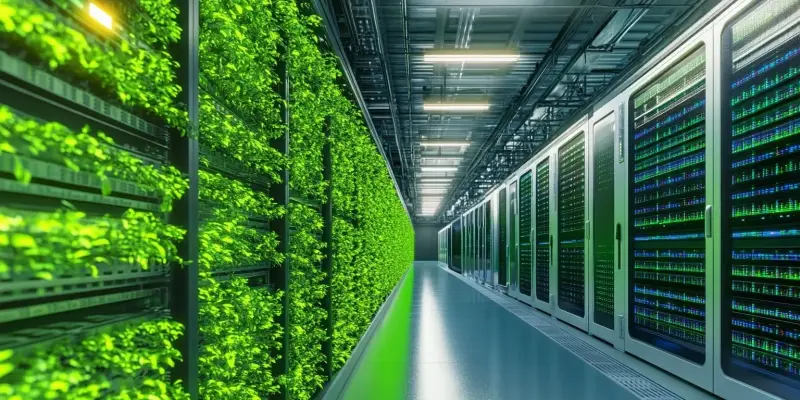
India is at the forefront of the digital revolution, with its data center infrastructure expanding rapidly to support the burgeoning digital economy, artificial intelligence (AI), and cryptomining activities. However, this growth comes at a significant environmental cost, as data centers are substantial energy consumers and major contributors to greenhouse gas (GHG) emissions. As India strives to meet its ambitious climate goals, implementing strategies to minimize these emissions becomes paramount.
India’s Climate Commitments and Energy Landscape
National and Global Climate Goals
During COP26, India pledged to achieve net-zero emissions by 2070 and generate 500 GW of non-fossil fuel power by 2030, with 50 percent of energy derived from renewable resources. These commitments highlight the nation’s dedication to addressing climate change. The government recognizes the urgency in curbing greenhouse gas emissions, especially since the digital economy is growing at an unprecedented pace. Despite these ambitious goals, the transition from fossil fuels to renewable energy sources remains a formidable challenge.
India’s trajectory to achieve these climate targets involves substantial reforms and investments in clean energy. Concurrently, supporting industries such as data centers, which are pivotal for the country’s digital infrastructure, must evolve to align with these climate objectives. Achieving the stipulated renewable energy targets would not only help mitigate climate change but also reinforce India’s position as a leader in the global green economy.
Reliance on Coal-fired Power
Despite these ambitious goals, India remains heavily reliant on coal-fired power generation, which accounts for 68 percent of its electricity consumption. This underscores the urgent need to transition to renewable energy sources to curtail GHG emissions. The dominance of coal in India’s energy mix is a critical barrier to achieving net-zero emissions. Transitioning away from coal necessitates not only expanding renewable energy capacities but also enhancing grid infrastructure to support intermittent energy sources like solar and wind. The journey towards renewable energy adoption demands a multifaceted approach involving technological innovation, financial investment, and stringent policy frameworks, ensuring a smoother transition to a sustainable power sector.
The Growing Demand for Data Centers
Data Center Capacity and Energy Consumption
India produces 20 percent of the world’s data but only hosts three percent of its data center capacity. The demand for data centers is rapidly increasing, with predictions indicating that capacity will double from 1 GW to 2 GW between 2024 and 2026, potentially reaching 17 GW by 2030. Consequently, data centers are expected to consume about eight percent of the nation’s energy. Given this rapid expansion, the environmental footprint of data centers is becoming a significant concern.
The critical challenge lies in accommodating this growth while minimizing the associated energy consumption and emissions. Sustainable practices and innovative technologies are imperative to enhance efficiency and reduce the carbon footprint. Ensuring that data centers operate sustainably will not only benefit the environment but also lead to cost savings and enhanced resilience against regulatory pressures.
CtrlS’s Commitment to Sustainability
One of the leading companies in India’s data center industry, CtrlS, has acknowledged the need for sustainable practices. The company has implemented various strategies to achieve its sustainability goals, including advancing towards 100 percent renewable energy, achieving industry-lowest Power Usage Effectiveness (PUE), optimizing cooling systems, improving energy efficiency, conducting water conservation measures, and setting a target for net-zero emissions by 2040. These initiatives underscore CtrlS’s dedication to environmental stewardship and operational excellence.
CtrlS’s multifaceted approach exemplifies how corporations can contribute to national and global sustainability targets. By investing in renewable energy projects, such as solar and wind power, and integrating energy-efficient technologies, CtrlS not only reduces its environmental impact but also sets industry standards for sustainable operations.
Renewable Energy and Technological Innovations
Advancements in Renewable Energy
Renewable energy technologies such as solar, wind, and hydropower are evolving with greater efficiency and reduced costs. The advancements in battery storage and the potential of ‘green hydrogen’ are additional promising developments. These innovations are critical in addressing the intermittency of renewable energy sources, ensuring a stable and reliable power supply for data centers.
The integration of advanced energy storage solutions, such as lithium-ion batteries and emerging technologies like green hydrogen, can significantly enhance the reliability of renewable energy systems. Green hydrogen, produced through electrolysis using renewable electricity, holds tremendous potential as a clean energy carrier and storage solution.
CtrlS’s Renewable Energy Investments
CtrlS aims to invest in variable renewable energy (around 1000 MW by 2030), supported by battery storage to ensure nearly complete reliance on renewable energy. Initiatives like the 100 MW solar project investment in Maharashtra and long-term power purchase agreements in Karnataka and Noida align with these ambitions. These projects reflect CtrlS’s proactive approach in transitioning to renewable energy and reducing its carbon footprint.
The development of large-scale renewable energy projects not only supports CtrlS’s sustainability goals but also contributes to regional economic development and job creation.
Energy Efficiency and Cooling Systems
Green Building Certifications
Green Building Council certifications are crucial indicators of sustainability in infrastructure. CtrlS embraces cutting-edge technologies for its data centers, including liquid cooling, well-ventilated designs, and water conservation techniques. Such practices have earned CtrlS’s Mumbai data center a LEED Platinum certification, recognized globally for sustainability excellence. These certifications validate the company’s efforts in integrating sustainable practices into its operations and set a benchmark for industry peers.
Green building certifications emphasize the importance of adopting energy-efficient designs and construction practices. Features such as optimized natural ventilation, efficient lighting systems, and the use of renewable materials contribute to reducing the environmental impact of data centers.
Optimizing Energy Efficiency
Energy efficiency optimization is another critical focus for data centers. Utilizing advanced strategies to regulate cooling systems based on energy usage patterns and adjusting temperatures can substantially reduce energy consumption. CtrlS’s focus on energy conservation translates into an annual saving of 18.5 GWh and the elimination of about 225,000 metric tons of CO2 emissions.
Implementing dynamic cooling management systems that adjust air conditioning and ventilation based on real-time data ensures that energy is used efficiently without compromising data center performance.
Water Conservation and Recycling
Importance of Cooling Systems
Cooling systems in data centers are a substantial part of energy consumption, contributing to around 40 percent of the total, as per the Bureau of Energy Efficiency (BEE). To mitigate both energy and water waste, water recycling processes are being increasingly adopted. Efficient cooling is essential for maintaining optimal operating conditions within data centers, preventing overheating, and ensuring uninterrupted service.
Water recycling and reuse systems play a crucial role in reducing the environmental impact of data centers. By treating and reusing wastewater, data centers can significantly diminish their freshwater consumption, alleviating pressure on local water resources. Moreover, advanced water management practices, such as rainwater harvesting and the use of closed-loop cooling systems, further enhance sustainability.
India is leading the charge in the digital revolution, experiencing a rapid expansion of its data center infrastructure to support its growing digital economy, artificial intelligence (AI) endeavors, and cryptomining projects. However, this progress carries a hefty environmental toll, as data centers are substantial energy users and significant contributors to greenhouse gas (GHG) emissions. As India endeavors to achieve its ambitious climate objectives, it becomes crucial to implement strategies that reduce these emissions. Investing in innovative solutions and fostering public-private partnerships can play a significant role in this endeavor, enabling India to become a global leader in both digital innovation and environmental stewardship.