

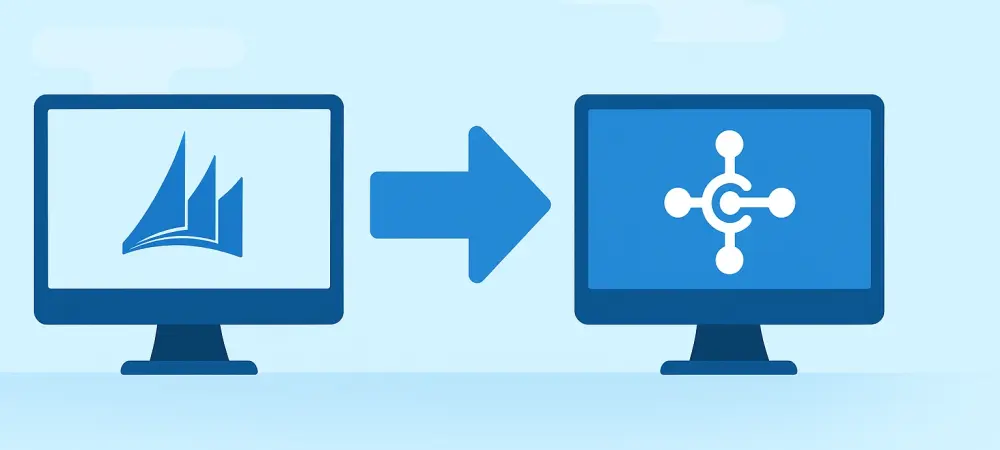
A greenfield implementation allows a business to migrate only essential master data and opening balances while adopting modern industry best practices. This methodology stands in contrast to traditional legacy maintenance, which often weighs down modern enterprises with redundant workflows and outdated database schemas. As organizations navigate the shift from Microsoft Dynamics NAV to Dynamics 365 Business Central, they are moving beyond a mere software update into a sophisticated cloud-native ecosystem. This transition necessitates a departure from the monolithic structures of the past, favoring a modular environment that supports rapid scaling and deep integration with the wider Microsoft 365 suite. For many, the journey requires unlearning decades of localized customizations that, while once revolutionary, now serve as barriers to the seamless automation and real-time data insights offered by the current platform. Success in this endeavor relies on a firm understanding of the technical intricacies involved in bridging the gap between old-world server logic and the high-performance requirements of modern cloud computing in a fast-paced market.
Navigating the Technical Upgrade Paths
Evolution: The Multi-Step Migration Framework
The technical landscape of a migration project is dictated by the current version of the software, as most organizations cannot simply leap into the cloud with a single installer. Microsoft has established a structured sequence of upgrades to preserve data integrity across different eras of the SQL database engine. For businesses currently operating on Dynamics NAV 2018 or the initial on-premises releases of Business Central, the path is relatively streamlined. These users inhabit the most advantageous position because their systems are already prepared for a bridge version, such as Business Central Version 14. This specific iteration serves as a vital intermediary, supporting both the legacy C/AL code and the modern AL extension model simultaneously. By utilizing this hybrid state, technical teams can validate data conversions and ensure that the core logic remains intact before the final push into a pure cloud environment where legacy code is no longer supported by the underlying infrastructure.
Furthermore, the migration framework requires rigorous testing at the bridge version stage to ensure that financial dimensions and historical ledgers remain balanced. This phase is not merely a technical formality but a critical checkpoint where data consistency is audited against the new universal schema. Organizations often utilize this period to run parallel systems, comparing the outputs of the legacy NAV environment with the new Business Central instance. This redundant verification process mitigates the risk of financial discrepancies that could arise from the structural differences between on-premises tables and cloud-native entities. Because Business Central utilizes a more restricted database access model to ensure security and performance, identifying potential mapping errors at the Version 14 stage is far more cost-effective than attempting to fix them after the final deployment. This structured approach provides a safety net that protects the integrity of enterprise data during the most volatile stages of the transition.
Legacy: Managing Older Versions and Classic Clients
In contrast, organizations anchored to older iterations like NAV 2013 or 2015 must navigate a more complex, multi-stage journey to modernize their environments. These systems require a preliminary technical upgrade to NAV 2018 to align their data schemas with modern requirements before any cloud transition can be initiated. The challenge becomes even more pronounced for those still utilizing NAV 2009 or even earlier versions that rely on the classic client architecture. These legacy systems are fundamentally different from the current web-based framework, requiring a move through a mid-2010s release just to transform the data into a readable format for modern engines. This process involves converting old reports, redesigning forms, and ensuring that the underlying tables can support the multi-tenant requirements of the cloud. This tiered progression ensures that the historical data remains accurate and accessible, preventing the catastrophic data loss that often occurs when skipping essential architectural steps during a major system overhaul.
Beyond the database transformation, legacy systems often suffer from a lack of documentation regarding past modifications, making the conversion of classic objects a significant hurdle. Reports and forms that were built for the classic client do not have a direct equivalent in the modern web-based interface, necessitating a complete redesign of the user experience. Technical teams must meticulously map every field and trigger from the old system to ensure that business-critical information is not discarded. This stage of the migration often reveals deep-seated inefficiencies where the system has been forced to accommodate obsolete business rules. By moving through an intermediate version like NAV 2015 or 2018, organizations can clean their data and prune unnecessary objects before they reach the final cloud destination. This cleanup is vital for maintaining high performance in Business Central, where excessive or poorly structured data can lead to latency and increased storage costs in the long-term operational phase.
Overhauling Code and Customizations
Transformation: Transitioning From C/AL to AL
Transitioning the development layer from C/AL to the AL extension model represents the most significant labor investment for technical teams during the migration process. In the legacy environment of Dynamics NAV, developers were permitted to modify the base source code directly to suit specific business needs. While this provided immense flexibility, it created a massive burden of technical debt, as every subsequent update from Microsoft would overwrite these custom modifications, leading to high maintenance costs. Business Central eliminates this friction by utilizing an extension-based architecture where the core application remains untouched and immutable. All customizations are now developed as independent layers that communicate with the central system through pre-defined events and subscribers. This paradigm shift requires developers to refactor years of custom logic into the new format, ensuring that the software remains evergreen. This structure allows Microsoft to push monthly updates to the core system without disturbing the specific business logic.
This new development model also introduces a higher standard for code quality and security, as extensions must adhere to strict validation rules before they can be published to the production environment. Developers are no longer working in a siloed database but are building components that must interact harmoniously with other third-party apps from the AppSource marketplace. This modularity fosters a more robust ecosystem where businesses can swap out specific functionalities without risking the stability of the entire ERP framework. However, the transition is not a simple automated conversion; it requires a strategic rethinking of how data flows through the system. Technical teams must identify the most efficient event triggers to replace old code injections, often discovering that the modern AL language offers more sophisticated ways to handle complex calculations and external integrations. By embracing this modern standard, organizations gain a system that is significantly more resilient to future technological shifts and is prepared for advanced automation.
Efficiency: Auditing Technical Debt and Core Logic
The migration process acts as a mandatory audit of an organization’s historical customizations, forcing a critical look at which modifications still provide genuine value. Over the years, many companies implemented complex workarounds for limitations that were inherent to older versions of NAV but have since been addressed by standard features in Business Central. Continuing to port these legacy customizations into the AL format is often a waste of resources and can lead to unnecessary system complexity. A rigorous assessment of existing modifications is required to determine which tools are truly unique to the competitive advantage of the business. Often, consultants find that a significant percentage of old code can be discarded in favor of out-of-the-box functionality, which is inherently more stable and better supported. By shedding this technical debt, organizations reduce their long-term maintenance overhead and ensure that their new cloud environment is as clean and efficient as possible, allowing for better performance.
Furthermore, this auditing phase provides an opportunity to realign the ERP system with current business goals rather than sticking to processes established decades ago. As the business landscape has evolved, many of the specialized workflows built into NAV may no longer reflect the fastest way to complete a task in a modern digital office. By evaluating each customization against the standard capabilities of Business Central, organizations can adopt streamlined workflows that utilize the latest in user interface design and mobile accessibility. This shift often results in a significant reduction in the amount of custom code that needs to be maintained, which in turn lowers the risk of bugs and system downtime. The goal is to reach a state where the ERP serves as a lean, high-performance engine that supports the core business without being weighed down by redundant logic. This strategic housecleaning is one of the most valuable aspects of the migration, providing a fresh start on a platform designed for agility and rapid growth.
Strategic Execution and Assessment
Strategy: Choosing Between Upgrade and Reimplementation
Choosing between a direct technical upgrade and a complete reimplementation is a strategic decision that fundamentally alters the project’s scope and budget. A technical upgrade is designed for organizations that possess high-quality, clean data and whose business processes have remained stable over the recent years. This path prioritizes the preservation of historical transactions and specialized custom logic, making it the preferred choice for companies on NAV 2017 or 2018. By following this route, the organization maintains a continuous record of its operations within the same database environment, which is often crucial for compliance or deep historical analysis. However, this method requires meticulous data validation at every intermediate step to ensure that the legacy tables map correctly to the new cloud schema. If the existing environment is heavily customized but the data is well-maintained, the technical upgrade path provides a way to modernize the technology stack while keeping the familiar operational logic intact.
Conversely, a greenfield reimplementation offers a path for companies burdened by years of messy data or overly complex legacy code. This approach involves setting up a brand-new Business Central environment and only bringing over the most essential data, such as customer lists, vendor details, and open balances. While this means losing access to granular historical transactions within the live system, it allows the business to walk away from decades of technical debt and inefficient workarounds. For organizations on very old versions of NAV, the cost of the multiple technical jumps required for an upgrade often exceeds the cost of a fresh start. Reimplementation allows the business to adopt modern industry standards from day one, ensuring that the system is optimized for current market demands. This choice is particularly effective for companies that have undergone significant structural changes and need an ERP that reflects their current operational reality rather than their historical past.
Diagnosis: The Vital Role of Upgrade Assessments
Before making a final commitment to either path, a comprehensive upgrade assessment is an essential diagnostic phase that mitigates risk and clarifies the total cost of ownership. This process involves a deep dive into the current database to identify object complexity, third-party solution compatibility, and the overall health of the data. Tools like the Microsoft BC Migration tool can analyze the existing NAV environment to highlight potential conflicts or deprecated features that will not function in the cloud. Furthermore, the assessment evaluates the availability of modern versions of ISV solutions, such as specialized payroll or logistics modules, within the AppSource marketplace. By identifying these variables early, organizations can avoid the common pitfall of underestimating the time required for data cleansing or code refactoring. This data-driven approach allows for the creation of a realistic project timeline, ensuring that stakeholders have a clear understanding of the resource allocation needed to move from a legacy system.
The assessment also provides a clear picture of the training requirements for the workforce, as the shift to a web-based interface represents a significant change in daily operations. By understanding the gap between the current user experience and the new Business Central environment, leadership can develop a change management strategy that ensures high adoption rates. This diagnostic phase often includes a performance review of the existing infrastructure to determine if a full move to the cloud or a hybrid cloud-edge model is more appropriate for the business’s specific connectivity needs. Ultimately, the upgrade assessment serves as the blueprint for the entire project, transforming a daunting technical challenge into a series of manageable milestones. By replacing guesswork with hard data, organizations can proceed with confidence, knowing that their migration strategy is grounded in a thorough understanding of their unique technological and operational landscape.
Establishing a Modern Foundation for Scalability
The successful migration from Dynamics NAV to Business Central eventually proved to be a defining moment for organizations seeking to eliminate the constraints of legacy infrastructure. By moving away from on-premises servers and the heavy burden of C/AL customizations, businesses secured a platform that evolved automatically with industry trends. Those who prioritized a thorough upgrade assessment discovered that the transition was less about moving data and more about refining operational efficiency for a new era of digital commerce. The shift allowed for the integration of advanced artificial intelligence tools and real-time analytics that were simply impossible within the old architectural framework. Organizations that embraced the extension-based model found themselves in a position to scale rapidly without the fear of breaking their core systems during the next update cycle. Ultimately, the transition provided a robust foundation for long-term innovation, ensuring that enterprise resource planning was no longer a static overhead but a strategic asset that drove growth.