

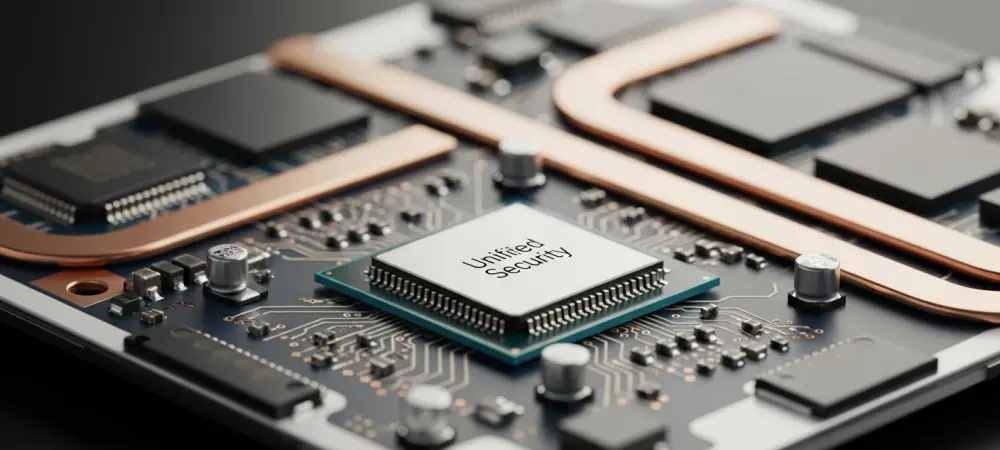
The rapid progression of quantum computing has introduced a formidable challenge to the global security infrastructure, necessitating a fundamental shift in how mobile devices protect sensitive user data. STMicroelectronics has addressed this impending paradigm shift by unveiling the ST54M, a groundbreaking platform that represents the first instance of a single-chip solution integrating Near Field Communication, a high-security element, an eSIM, and a specialized hardware accelerator for post-quantum cryptography. This architectural breakthrough is not merely a technical iteration but a complete reimagining of the mobile security stack, designed to safeguard digital identities against the theoretical power of future quantum processors. By consolidating these previously disparate components onto a single piece of silicon, the company has provided a clear roadmap for smartphone manufacturers to achieve a level of protection that was once considered impossible to implement within the tight thermal and physical constraints of a modern mobile handset. The ST54M effectively serves as an early-warning system and a shield for the digital age, ensuring that the critical functions of modern smartphones remain resilient as the landscape of global computing continues to evolve at a breakneck pace.
Defending Against the Quantum Threat
Current cryptographic standards, including widely utilized methods such as RSA and Elliptic Curve Cryptography, have served as the backbone of digital security for decades but are fundamentally vulnerable to the logic of quantum mechanics. Utilizing Shor’s algorithm, a sufficiently powerful quantum computer could potentially dismantle these traditional encryption schemes in a matter of minutes, a process that would take conventional supercomputers thousands of years to complete. The ST54M confronts this reality by incorporating Post-Quantum Cryptography, which relies on complex mathematical structures, such as lattice-based problems, that are intentionally designed to be unsolvable by both classical and quantum machines. This proactive defensive posture is essential because it addresses the “harvest now, decrypt later” strategy, where malicious actors collect encrypted data today with the intention of cracking it once quantum technology becomes widely available. By integrating these advanced mathematical defenses into the hardware level now, the semiconductor giant ensures that data encrypted on a device today will remain private for the next decade and beyond.
To ensure that these rigorous security measures do not hinder the daily operation of a mobile device, STMicroelectronics has engineered a dedicated hardware engine specifically optimized for post-quantum algorithms like ML-KEM and ML-DSA. Handling these high-level cryptographic operations solely through software would typically result in significant latency and a rapid drain on the battery, which are unacceptable outcomes for the modern consumer experience. By offloading these computationally intensive tasks to a specialized hardware accelerator within the ST54M, the platform maintains a seamless user interface while performing background security checks that are orders of magnitude more complex than those found in previous generations of chips. This hardware-centric approach allows for a “security-by-design” philosophy where the processing power required for advanced encryption is permanently available without competing for the resources needed by other applications. Consequently, the chip provides a balanced solution where the highest tier of digital protection is achieved without compromising the speed or the longevity of the mobile device.
The Benefits of Single-Die Integration: Architecture and Efficiency
The structural innovation of the ST54M lies in its ability to bring diverse functions—NFC, a secure element, and an eSIM—together on a single die, a feat that historically required multiple independent chips. This integration is a significant advantage for original equipment manufacturers who are constantly struggling with the limited physical real estate inside a modern smartphone chassis. By reducing the overall footprint of the security and connectivity subsystem, manufacturers can reallocate that saved space to include larger battery cells, more sophisticated multi-lens camera arrays, or improved thermal management systems. This consolidation also simplifies the internal wiring of the device, reducing the complexity of the printed circuit board and streamlining the entire assembly process. For the consumer, this translates into thinner, more powerful devices that do not sacrifice functionality for the sake of design, proving that high-level security can coexist with the aesthetic and ergonomic demands of the current premium smartphone market.
Beyond the physical space savings, the single-die approach provides a substantial boost to the overall security profile of the device by minimizing the external communication paths that hackers could potentially exploit. When security functions are split across different chips, the data moving between those components on the circuit board can sometimes be intercepted through sophisticated physical attacks. By keeping all sensitive operations, from payment processing to cryptographic key generation, within the physical boundaries of a single piece of silicon, the ST54M effectively closes off these external avenues of intrusion. Furthermore, this unified architecture improves energy efficiency by eliminating the power-hungry communication interfaces required to link separate chips. The reduction in the number of components also simplifies the global supply chain, allowing manufacturers to source a single part that covers multiple critical functions, which in turn reduces the risk of production delays and lowers the total cost of ownership for the device lifecycle.
Supporting a Wide Range of Secure Services
The ST54M is designed to serve as an immutable “root of trust” that can simultaneously manage a diverse array of digital services without cross-contamination of data. Its high-capacity secure element provides the necessary environment for hosting multiple financial applications, including contactless payment cards and mobile point-of-sale systems that comply with the latest global banking standards. This allows a single device to act as a comprehensive digital wallet that can store several credit and debit cards, each protected by its own secure layer. Moreover, the chip is perfectly suited for the burgeoning market of digital identity, providing a secure vault for government-issued credentials such as driver’s licenses, health cards, and national IDs. Because the security is handled at the hardware level, these sensitive documents are protected by the same post-quantum encryption that secures the rest of the device, ensuring that a user’s legal identity remains safe from both physical theft and advanced digital cloning.
In addition to financial and identity services, the platform is engineered to support the growing ecosystem of smart access and connected transit. It is fully compatible with international transit standards, enabling users to navigate subway and bus systems across different global cities with a single tap of their phone. The chip also meets the rigorous security requirements for digital car keys, which allow vehicle owners to unlock and start their cars using their smartphones. By utilizing advanced proximity sensing and encrypted handshakes, the ST54M prevents relay attacks, where a thief attempts to intercept and rebroadcast the car key signal to gain unauthorized entry. The integrated eSIM functionality adds another layer of convenience, allowing users to manage multiple cellular subscriptions and switch between network providers digitally. This eliminates the need for physical SIM cards and makes international roaming much simpler, further cementing the smartphone’s role as the central hub for every aspect of a modern user’s digital life.
Improving Connectivity and Memory Performance
A critical aspect of the ST54M development involved enhancing the radio frequency performance to ensure that NFC interactions are reliable in every environment. STMicroelectronics achieved this by optimizing the chip’s ability to communicate with various types of payment terminals and access readers, even when those devices are older or have weak signal output. This improved sensitivity allows phone designers to use smaller or more awkwardly shaped antennas without losing the ability to perform a quick tap-to-pay transaction. The chip is also designed to be resilient against interference from wireless charging systems, which can often create electromagnetic noise that disrupts NFC communication. By ensuring that the secure transmission of data remains stable even when the phone is receiving inductive power, the platform provides a more consistent and frustration-free experience for the end user, regardless of how they choose to charge or use their device.
The increasing complexity of mobile applications requires a substantial amount of memory within the secure element, a need that the ST54M meets through its expanded storage architecture. This large memory capacity allows the chip to host a vast library of secure applets, ranging from corporate access badges to loyalty programs and encrypted messaging keys. These applications are designed to run in isolated environments on the chip, meaning that a vulnerability in one applet cannot be used to gain access to the data of another. This multi-application support is vital in a world where users are increasingly centralizing their professional and personal lives on a single device. The ability to switch between a work identity and a personal bank card in a fraction of a second, with the assurance that both are protected by post-quantum cryptographic standards, represents a significant leap forward in mobile usability. This robust memory management ensures that as more services transition to a mobile-first model, the hardware will have the headroom to accommodate them.
Market Context and Future Certification
The semiconductor industry has entered a phase of intense scrutiny regarding long-term security, and STMicroelectronics has positioned itself at the forefront of this movement by targeting full production of the ST54M by July 2026. In the lead-up to this launch, the platform is undergoing a rigorous suite of evaluations to earn the most prestigious security labels in the world, including Common Criteria 2022 EUCC and EMVCo certifications. These credentials serve as a gold standard for financial institutions and government agencies, proving that the hardware can withstand the most sophisticated hacking attempts currently known to man. By securing these certifications early, the company has established a high level of trust with its global partners, ensuring that when the chip enters the market, it is already cleared for use in the most sensitive applications. This strategy has allowed the firm to maintain its leadership position in a competitive market that is increasingly defined by the ability to provide future-proof security solutions. The strategic deployment of the ST54M effectively signaled a turning point for the mobile industry, as stakeholders recognized the necessity of hardware-based post-quantum protection. Manufacturers and developers adopted this new architecture to ensure that the security lifecycle of their devices matched the longevity expected by modern consumers. This transition encouraged the development of a more robust ecosystem where digital trust was not an afterthought but a foundational component of the hardware itself. The industry moved toward a model where the risk of quantum-enabled data breaches was mitigated long before such machines reached a critical mass of computing power. Consequently, the launch of this platform provided the actionable framework needed for the next generation of secure mobile services, allowing the global digital economy to proceed with the confidence that the underlying silicon was ready for the challenges of the coming decade.