

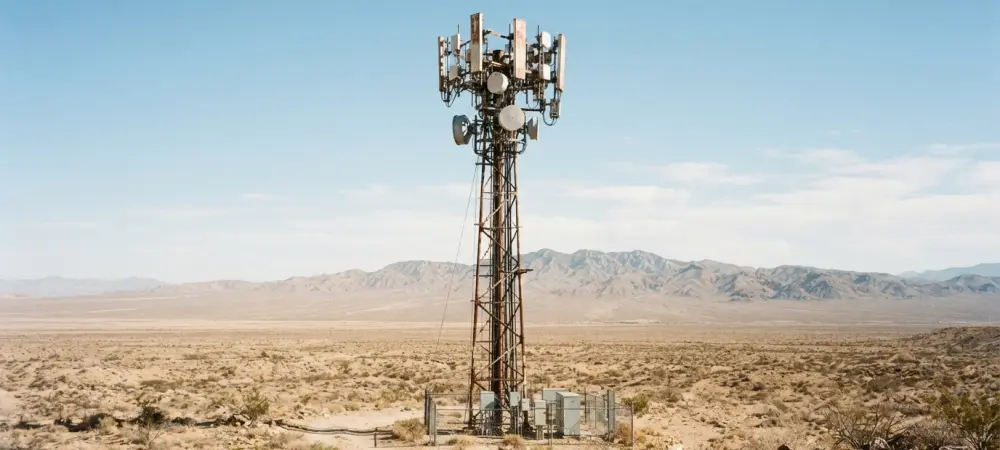
The telecommunications sector is currently witnessing a tectonic shift as satellite giants and semiconductor leaders merge their expertise to erase the final dead zones from the map. The Starlink Mobile 5G Infrastructure stands as a testament to this convergence, representing a sophisticated blend of orbital reach and localized cellular power. By bridging the gap between low-Earth orbit satellites and ground-based hardware, this initiative aims to deliver high-speed connectivity regardless of geographic isolation.
Evolution of Hybrid Non-Terrestrial and Terrestrial Networks
For decades, satellite and terrestrial networks operated in silos, with the former serving as a backup for the latter. The emergence of the Starlink-Qualcomm alliance has shifted this dynamic toward a unified hybrid architecture. This evolution is driven by the necessity for consistent connectivity that transcends the limitations of traditional cell towers, ensuring mobile users remain connected across unpopulated regions.
Technological Foundations of the Starlink-Qualcomm Partnership
Dragonwing Cellular Infrastructure Platforms
At the heart of this system lies the Dragonwing Cellular Infrastructure platform. Unlike standard consumer chips, these specialized radio silicon and digital-unit accelerators are engineered to manage the fluctuating signals of a satellite-linked network. They provide the computational power required to process data at the network’s edge, effectively turning local infrastructure into an extension of the orbital constellation.
Massive MIMO and Layer 1 Software Integration
To ensure signal reliability, the integration of Massive MIMO technology utilizes dozens of antennas to focus radio beams directly at users. This spatial multiplexing is governed by advanced Layer 1 software, which handles the granular tasks of the physical radio link. By optimizing how these signals interact, the system can support more users simultaneously while maintaining the data rates expected of 5G standards.
Emerging Trends in Telecommunications Infrastructure
A fundamental shift is occurring where hardware manufacturers like Qualcomm are evolving into full-scale infrastructure providers. This trend is a response to the saturation of the smartphone market, prompting a move toward diversified revenue streams in the automotive and industrial sectors. Providing the backbone for global 5G coverage offers a more stable and lucrative long-term path than relying solely on device sales.
Real-World Applications and Deployment Strategies
Beyond consumer convenience, this infrastructure is a lifeline for rural emergency services and highway safety. In areas where terrain makes physical cabling impossible, the hybrid network provides a resilient ecosystem. This ensures that essential communication persists even if terrestrial towers are damaged by natural disasters, effectively creating a fail-safe layer for national connectivity.
Technical Hurdles: Market Implementation Challenges
Deployment faces friction as the logistical burden of site integration and local permitting remains significant. Harmonizing the motion of Starlink satellites with stationary ground cells requires precise synchronization software. Furthermore, the industry faces long lead times, with infrastructure investments often taking years to yield substantial financial returns for stakeholders.
Future Outlook: Global Connectivity Trajectory
Looking toward the 2027 to 2028 fiscal window, the network is expected to reach full operational maturity. This timeline aligns with the refinement of non-terrestrial network (NTN) standards, which will make satellite-integrated 5G a global norm. These advancements will catalyze a new era of access, dissolving the digital divide.
Summary of the Starlink Mobile 5G Ecosystem
The collaboration between SpaceX and Qualcomm redefined the expectations for global mobility. By successfully integrating orbital capabilities with advanced silicon, the partnership proved that ubiquitous coverage was a matter of infrastructure synergy. Moving forward, the industry must prioritize the standardization of these hybrid protocols to allow diverse satellite constellations to interface with terrestrial grids seamlessly. This ecosystem provided a blueprint for future telecommunications, signaling a shift toward a world where dead zones become obsolete.