

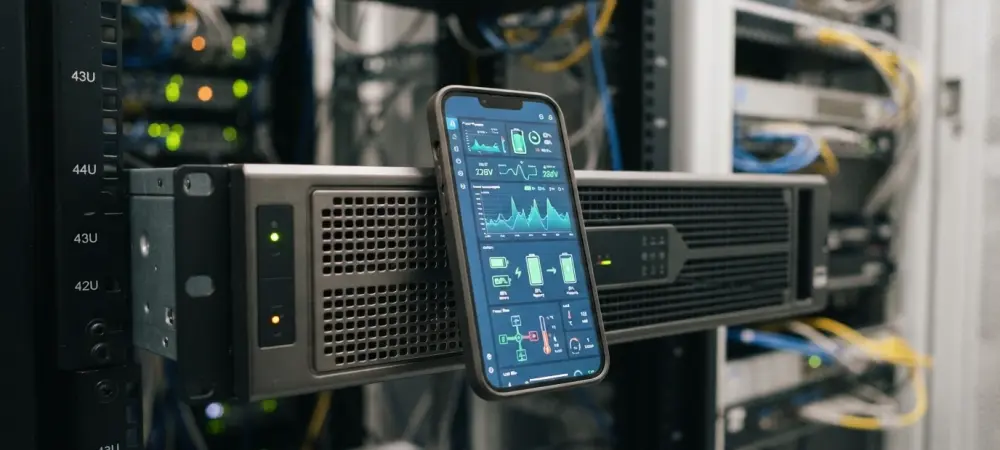
The reliability of modern data centers and office networks no longer rests solely on the ability to survive a momentary outage but on the capacity to manage power resources with precision and foresight. In the current landscape of 2026, the transition from basic batteries to sophisticated, integrated management systems defines how organizations mitigate the risks of downtime. Standard uninterruptible power supplies (UPS) provided a necessary safety net for years, yet the complexities of remote work and distributed edge computing have necessitated a move toward cloud-managed solutions. Industry leaders like CyberPower have catalyzed this shift, offering professional series hardware that bridges the gap between raw power and intelligent oversight.
Evolution of Power Infrastructure: From Basic Backup to Intelligent Management
The transition from traditional power backup to integrated management solutions reflects the modern demand for constant uptime and remote visibility in a connected economy. In earlier iterations of IT infrastructure, a UPS was a silent sentinel, often ignored until a failure occurred. Today, the CyberPower Professional Rackmount Series has redefined this role by integrating sophisticated monitoring tools directly into the hardware. This evolution ensures that small and medium-sized businesses (SMBs) and enterprise IT departments no longer operate in the dark regarding their power health.
These intelligent solutions protect critical servers, storage systems, and networking gear by providing more than just emergency electricity. The primary purpose of a modern UPS is to deliver clean power through Automatic Voltage Regulation (AVR) and pure sine wave output. This technical precision prevents hardware fatigue and data corruption by smoothing out the subtle fluctuations and noise inherent in standard utility power. By shifting from a simple battery backup to an active management tool, businesses can ensure the longevity of their most sensitive electronic investments.
Key Performance and Operational Differences
Power Efficiency and Output Capacity
Standard UPS units often present a challenge for IT managers due to the historical discrepancy between Volt-Amps (VA) and Watts. This gap frequently requires complex calculations during the procurement process to ensure the hardware load does not exceed the actual capacity of the unit. In contrast, modern cloud-managed models like the CyberPower PR1000ERT2UC and PR2000ERT2XLUC utilize a Unity Power Factor. This engineering advancement ensures that the quoted wattage is fully available for the hardware load, simplifying the scaling of power protection.
The specific output capacities in professional series range from 1000W to 3000W, allowing for precise matching with the actual requirements of a server rack. For instance, a small office might utilize the 1000W capacity of the PR1000ERT2UC, while a more robust enterprise environment would benefit from the 3000W headroom of the PR3000ERT2XLUC. This granular control over capacity ensures that businesses do not overspend on power they cannot use, nor do they risk overloading an undersized system.
Management Ecosystems and Visibility
Traditional UPS systems typically rely on local monitoring through basic serial or USB connections, which limits visibility to the immediate vicinity of the hardware. To achieve network connectivity, these older models often require expensive, optional add-on cards that must be configured individually. Cloud-managed solutions have disrupted this model by including a Remote Cloud Card as a standard feature. This approach provides visibility by default, allowing administrators to access critical data through a browser-based or mobile interface without additional hardware costs.
The dual-layered management approach, which combines built-in cloud connectivity with professional PowerPanel software, enables administrators to monitor health and operating conditions from any global location. Whether an IT manager is onsite or working remotely, they can receive real-time updates on battery status, load levels, and environmental conditions. This level of transparency is essential for Managed Service Providers (MSPs) who oversee multiple client sites and need a centralized dashboard to ensure collective uptime across varied geographic regions.
Maintenance and Physical Versatility
Standard UPS models may require scheduled downtime for battery service, which can disrupt business operations and lead to lost productivity. Professional cloud-integrated series address this by featuring hot-swappable batteries. This design choice allows technicians to replace internal power cells while the UPS continues to provide uninterrupted power to the connected equipment. This capability effectively neutralizes the risk of an outage during routine maintenance, ensuring that the critical “five nines” of uptime are maintained.
Physical design flexibility has also become a hallmark of newer systems, such as the 2U rackmount forms that can easily convert to tower configurations. This versatility is supported by rotatable color LCD screens that ensure legibility regardless of whether the unit is mounted horizontally in a rack or standing vertically on an office floor. Furthermore, the XL variants provide additional scalability, allowing businesses to buy headroom and extend runtimes by adding external battery modules as their infrastructure grows from 2026 to 2028 and beyond.
Practical Challenges and Implementation Considerations
Transitioning to cloud-managed systems requires a fundamental shift from reactive to proactive maintenance strategies. While the hardware provides the data, onsite technicians must be trained to interpret real-time status updates and act before a potential issue becomes a critical failure. This shift may involve a learning curve for teams accustomed to the “set it and forget it” mentality of older hardware. However, the long-term benefits of preventing data loss far outweigh the initial investment in staff development.
Implementing remote management across a large fleet of UPS units also involves navigating the complexities of firmware updates and secure connectivity. Administrators must ensure that cloud-integrated devices are properly segmented within the network to prevent unauthorized access to power controls. While the CyberPower series simplifies this through integrated tools, maintaining a secure environment remains a technical requirement that demands attention. Environmental factors in satellite locations, such as limited airflow or unconventional mounting spaces, also necessitate the use of convertible models that can adapt to non-rack environments.
Strategic Recommendations for Power Protection
The evaluation of these power solutions revealed that the choice between standard and cloud-managed systems was a deciding factor in organizational resilience. It was observed that organizations requiring maximum uptime and minimal maintenance windows found the Unity Power Factor and hot-swappable batteries of the Professional Rackmount Series to be indispensable. These features provided a level of operational continuity that standard models could not match. The integration of the Remote Cloud Card also proved to be a significant cost-saver by eliminating the need for aftermarket management accessories.
For businesses looking forward, the primary focus should be on auditing current power loads and comparing them against the three-to-five-year growth projections of the enterprise. Selecting a high-capacity model like the PR3000ERT2XLUC now prevented the need for a full infrastructure replacement as more hardware was added to the rack. Furthermore, reliability assurance through a three-year advanced replacement warranty, covering both electronics and batteries, established a necessary safety net. Implementing these intelligent systems now will allow IT departments to shift their focus from power stability to strategic innovation.