

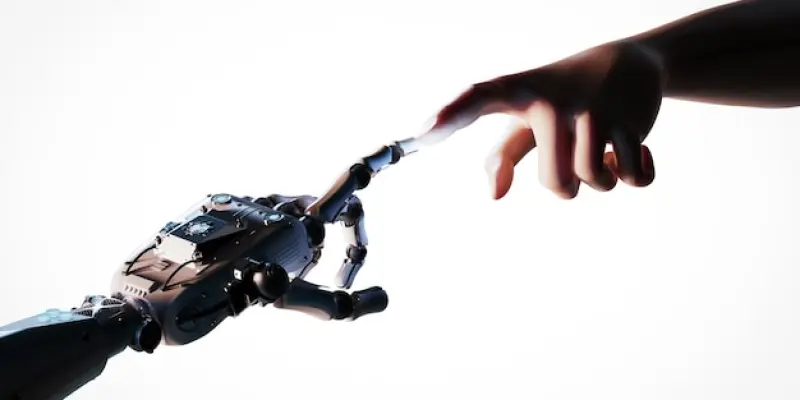
In the rapidly evolving landscape of artificial intelligence, the creation of highly realistic AI-generated images has become increasingly sophisticated. AI tools such as Midjourney, DALL·E, and Stable Diffusion have been trained on millions of real photos to mimic intricate details, from facial features to lighting. These advancements have made it challenging to distinguish between genuine and fabricated images. Despite this progress, AI-generated images often contain subtle imperfections that can betray their artificial origins. Recognizing these discrepancies is crucial as AI technology continues to shape our digital interactions.
Detecting Visual Anomalies
One of the most telling signs of an AI-generated image is the presence of unnatural hand shapes. While artificial intelligence has made strides in accurately replicating human features, it often falters when it comes to hands. Fingers may appear irregular or twisted, and hand positions may seem unnatural or uncomfortable. Another common clue lies in the eyes. AI-generated faces might exhibit mismatched or misaligned eyes, where one eye is slightly off in terms of placement or size compared to the other. This is due to the AI’s difficulty in maintaining symmetry and consistency across the generated image.
Background elements also provide substantial evidence of AI manipulation. Images crafted by AI may feature anomalies such as melting buildings, blurry crowds, or distorted objects. These imperfections result from the AI’s challenge in accurately replicating complex backgrounds while maintaining coherence. Lighting and shadows, while often accurately depicted, can sometimes reveal inconsistencies. Artificial light sources may cast unrealistic shadows or highlight areas in a manner that defies natural physics. By scrutinizing these aspects, one can often identify the telltale signs of AI involvement.
Assessing Image Quality
Beyond visual anomalies, the quality of the generated image itself can offer clues to its artificial nature. AI-generated images often present over-smooth skin that seems almost airbrushed, lacking the natural texture and pores seen in real photographs. This excessively polished appearance can be a giveaway, as it deviates from the imperfections inherent in human skin. Similarly, AI struggles with generating realistic hair textures. The hair in these images may appear too uniform, without the natural variation and flow found in genuine photographs. Text within AI-generated images poses another significant challenge for these systems. Whether it’s signs, labels, or any form of readable text, AI-generated images often contain gibberish or misspelled words. The AI’s difficulty in replicating accurate text is a clear signal of its involvement, as real-world images would correctly display textual information. Observing these errors can be instrumental in distinguishing between authentic and AI-generated images.
The Importance of Vigilance
In the dynamic landscape of artificial intelligence, the sophistication of AI-generated imagery has significantly heightened. Advanced AI tools like Midjourney, DALL·E, and Stable Diffusion are meticulously trained on vast datasets containing millions of genuine photographs. This rigorous training enables these tools to replicate intricate details, from facial expressions to the nuances of lighting and texture. As a result, distinguishing between authentic and AI-created images has become increasingly difficult. However, no matter how advanced, AI-generated images often possess subtle flaws that reveal their synthetic origins. Identifying these imperfections is essential as AI technology continues to influence our digital world profoundly. The importance of discerning real from artificial becomes more pronounced as such technologies shape our interactions online, raising questions about authenticity and trustworthiness in visual media. Staying vigilant about these nuances ensures we navigate the AI-enhanced realm with awareness and understanding.