

The traditional cloud computing model, once dominated by a few general-purpose giants, is currently undergoing a radical structural transformation as specialized AI cloud providers rewrite the rules of digital real estate. While legacy hyperscalers built their empires on diversified services like storage and web hosting, a new breed of “neoclouds” has emerged to provide the raw, unadulterated horsepower required by the most ambitious large language models. This shift represents a departure from the “jack-of-all-trades” infrastructure toward a focused, hardware-centric architecture designed solely for the relentless demands of machine learning and massive-scale inference.
The Architecture of Specialized AI Clouds
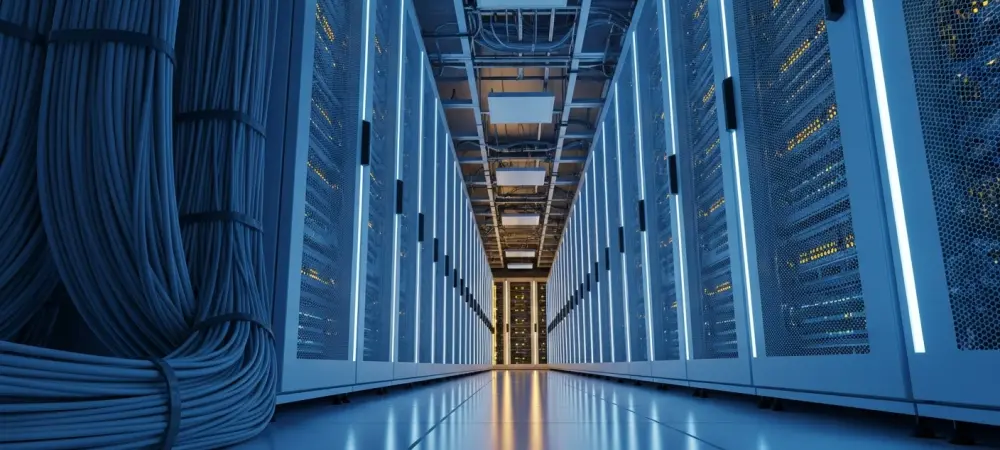
The specialized AI cloud functions on a philosophy of extreme optimization, prioritizing direct hardware access over the abstraction layers typically found in standard cloud environments. At its core, this technology replaces general-purpose CPUs with massive clusters of interconnected GPUs, creating a high-density compute environment that functions more like a single, giant supercomputer than a collection of individual servers. This architecture has emerged because the latency and overhead introduced by traditional virtualization are no longer acceptable for modern AI training cycles, where every millisecond of data transfer impacts the bottom line.
By stripping away the unnecessary software baggage of legacy systems, specialized clouds allow researchers and engineers to interact with hardware at a granular level. This relevance is amplified in the current market, where the speed of model deployment has become a primary competitive advantage. As tech giants and startups alike race to release more capable agents, the ability to bypass the “noisy neighbor” problems of shared public clouds has turned specialized infrastructure from a luxury into a strategic necessity.
Technical Components and Performance Metrics
GPU-Accelerated Bare Metal and Virtualization
The move toward GPU-accelerated bare metal is perhaps the most significant performance driver in the specialized cloud sector. Unlike traditional virtual machines that run on a hypervisor, bare metal instances provide direct access to the underlying silicon, eliminating the “virtualization tax” that can degrade performance by as much as ten percent in high-throughput scenarios. For developers working on massive inference tasks, this means more predictable latencies and a significant reduction in the jitter that often plagues multi-tenant environments.
Moreover, these systems are built with specialized memory architectures that allow for lightning-fast data movement between the processor and storage. In a specialized AI cloud, the significance of this setup lies in its ability to maintain high utilization rates; the hardware is rarely waiting for data to arrive. This efficiency ensures that expensive GPU assets are working at peak capacity, which is essential when the capital expenditure for such hardware reaches into the billions.
High-Performance Interconnects and Networking
Networking in a specialized AI cloud is not just about moving data; it is about creating a unified fabric that allows thousands of GPUs to act in perfect synchronization. High-performance interconnects, such as InfiniBand or proprietary low-latency fabrics, serve as the nervous system of these data centers. These components provide the massive bandwidth and ultra-low latency required for “all-reduce” operations, where model parameters must be updated across a distributed cluster simultaneously.
In real-world usage, this networking capability determines whether a cluster can scale linearly. Without these specialized interconnects, adding more GPUs eventually yields diminishing returns as the communication overhead begins to bottleneck the compute power. Specialized providers differentiate themselves by architecting their data centers from the ground up to support these massive non-blocking topologies, allowing for the seamless execution of the world’s largest training runs without the congestion issues found in traditional Ethernet-based networks.
Current Industry Innovations and Market Shifts
The most prominent trend in the current landscape is the “build-versus-buy” paradox, where even the largest technology firms are outsourcing their compute needs to specialized providers. Despite having the capital to build their own facilities, companies like Meta and Anthropic are increasingly signing multi-billion-dollar agreements with neoclouds to secure immediate capacity. This shift indicates that the limiting factor in the AI race is no longer just money, but the physical time required to secure power, cooling, and hardware in a constrained global supply chain.
Furthermore, the industry is witnessing a transition from a training-centric market to one dominated by inference. As AI models move from the laboratory to the production environment, the infrastructure must adapt to support consistent, low-latency responses for millions of concurrent users. This has led to the emergence of “inference-as-a-service” models, where specialized clouds optimize their hardware specifically for the token-generation phase of AI, offering a more cost-effective alternative to general-purpose instances.
Real-World Implementations and Industrial Use Cases
In the enterprise sector, specialized AI clouds are being deployed to power real-time industrial digital twins and complex pharmaceutical simulations. For instance, the social media industry uses this infrastructure to run recommendation engines that process trillions of data points in real-time, ensuring that content delivery remains personalized and engaging. The ability to rent massive clusters of Nvidia’s latest hardware allows these companies to maintain their edge without the long-term risk of hardware obsolescence.
Another unique use case is found in the development of frontier models by labs like Anthropic. By utilizing a hybrid infrastructure that spans across legacy hyperscalers and specialized neoclouds, these organizations ensure redundancy and scale. This multi-sourcing strategy allows them to diversify their risk, ensuring that a localized outage or hardware shortage at one provider does not derail the development of their next-generation Claude models.
Technical Constraints and Economic Challenges
Despite the explosive growth, specialized AI clouds face a daunting economic reality characterized by immense capital intensity and high debt levels. The “growth-at-all-costs” strategy employed by many providers requires spending billions on hardware before a single dollar of revenue is realized. This financial leverage creates a precarious situation; if the demand for AI compute were to plateau, these providers would be left with massive debt and depreciating hardware assets that have little utility outside of the AI sector.
Technical hurdles also persist, particularly regarding power density and cooling. Modern AI clusters generate an unprecedented amount of heat, requiring advanced liquid cooling systems that are expensive to install and maintain. Additionally, the heavy concentration of revenue in a few “hyperscale” clients poses a systemic risk. If a major customer decides to pivot toward internal silicon or reduces its AI spending, the specialized providers could face a sudden and catastrophic loss of income.
The Future of AI Infrastructure Development
The trajectory of AI infrastructure points toward a future defined by custom silicon and localized data centers. While Nvidia currently dominates the market, the rise of custom AI accelerators like AWS’s Trainium and Google’s TPUs suggests that the industry is seeking to break the hardware monopoly. These proprietary chips are designed to offer better performance-per-watt for specific workloads, potentially eroding the premium pricing currently commanded by general-purpose GPU clouds.
Long-term, we may see a shift toward decentralized or “edge” AI infrastructure, where smaller, specialized clusters are distributed geographically to reduce latency for end-users. Breakthroughs in optical interconnects and photonic computing could also revolutionize how these clusters communicate, potentially allowing for even larger and more efficient models. The societal impact will be profound, as the cost of “intelligence” continues to drop, making advanced AI tools accessible to a broader range of industries and developers.
Assessment and Final Outlook
The rise of specialized AI cloud infrastructure was a necessary response to the unprecedented compute requirements of the modern era. These platforms proved that a hardware-first, highly optimized approach could outperform general-purpose clouds in the specific domain of machine learning. The strategic value of these neoclouds was cemented by their ability to provide immediate scale to the world’s most influential AI labs, effectively becoming the landlords of the new digital economy. However, the reliance on high leverage and a few massive clients introduced a level of risk that remains a central concern for the industry’s stability.
Ultimately, the market matured into a hybrid ecosystem where specialized providers and legacy hyperscalers coexisted to meet different needs. While neoclouds offered the speed and performance required for cutting-edge research, the established giants integrated AI capabilities into their broader service suites. This evolution suggested that while specialized infrastructure was vital for the initial “gold rush,” the long-term winners were those who could balance extreme performance with economic sustainability and hardware diversification. The sector transitioned from a speculative frontier into a foundational layer of global technology.