

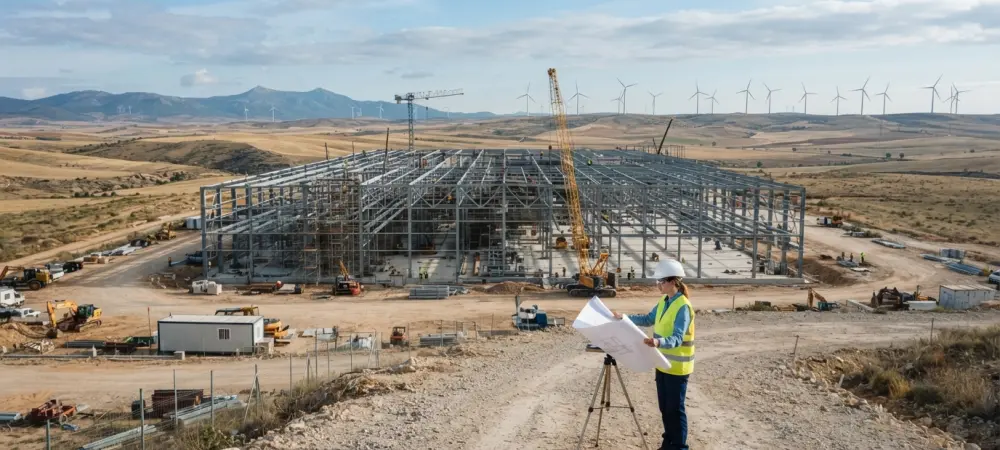
The rapid expansion of high-capacity digital infrastructure across the Iberian Peninsula has forced a legislative confrontation between economic modernization and the preservation of national energy security. By enacting Royal Decree 1032/2026, the Spanish government has officially established a comprehensive regulatory framework designed to manage the sudden influx of data center power requests. This move follows months of internal debate regarding the sustainability of the national electricity grid as it faces an unprecedented load from cloud service providers and artificial intelligence hardware. Authorities expressed significant concern that allowing unregulated demand to proceed could inadvertently inflate annual electricity system costs by as much as €5 billion, a burden that would ultimately fall on residential and commercial consumers. The final legislation aims to mitigate these systemic risks while ensuring that Spain remains a competitive destination for international technology firms seeking to leverage the country’s robust renewable energy portfolio.
Sustainability Standards: Integrating Renewables Into the Grid
The new regulations specifically target facilities with a grid-access capacity exceeding 10 megawatts, placing them under strict operational requirements to ensure alignment with national climate goals. Unlike previous iterations of energy policy that allowed for monthly or annual offsets, this decree introduces a rigorous standard requiring operators to match 80% of their hourly electricity consumption with renewable energy sources. This shift to hourly matching represents a technical challenge for the industry, as it necessitates a highly synchronized approach to energy procurement and consumption patterns. To meet these benchmarks, data center operators are encouraged to utilize a combination of on-site self-generation and sophisticated energy storage systems that can bridge the gaps in solar and wind production. These strategies are essential for maintaining the operational uptime required by high-tier facilities while strictly adhering to the new environmental mandates enforced across the distribution network.
Flexibility remains a component of the framework to prevent an immediate shock to the digital economy, particularly through the introduction of a five-year grace period for certain eligible participants. This transition window is available to facility operators who choose to enroll in the Service for Automatic Power Reduction, a program that allows the national grid operator to intervene during system emergencies. By granting the grid operator the authority to temporarily disconnect high-load facilities when the stability of the power system is at risk, the government provides a safety valve for the entire electrical network. This mechanism essentially transforms data centers from passive energy consumers into active participants in grid balancing, rewarding those who can adjust their loads in real-time. The integration of these digital hubs into the emergency response architecture signifies a fundamental change in how large-scale industrial consumers are viewed within the broader Spanish energy market ecosystem.
Regulatory Enforcement: Balancing Penalties and Industrial Growth
Throughout the drafting process, the initial threat of permanent grid-access revocation and exorbitant surcharges served as a point of high tension between the public and private sectors. However, the final version of the decree opted for a more moderated system of capped compensation and temporary suspensions to avoid stifling innovation while still penalizing non-compliance. Under the current rules, specific breaches of the renewable matching requirements or power usage limits result in compensation charges ranging from €6 to €41 per megawatt-hour. While these financial penalties are more manageable than the originally proposed fines, the risk of severe administrative action remains present for repeat offenders or significant violations. Infringements categorized as serious or very serious can lead to massive fines between €600,000 and €60 million, ensuring that large corporations maintain strict adherence to grid safety standards while navigating the complex Spanish regulatory environment.
The legislative process sparked friction as the industry association SpainDC criticized the sanctions as disproportionate, yet the implementation ultimately finalized a critical chapter in Spain’s digital infrastructure. Organizations shifted their focus toward integrating advanced cooling technologies and hydrogen-based backup systems to reduce their dependence on the primary transmission network and avoid future penalties. By prioritizing locations with excess renewable capacity and investing in private microgrids, developers began to shield themselves from the volatility of national grid regulations. Strategic planning sessions increasingly revolved around the use of artificial intelligence to optimize energy demand in alignment with the availability of local wind and solar resources. Ultimately, the new regulatory environment fostered a collaborative model where data centers functioned as modular nodes of resilience.