

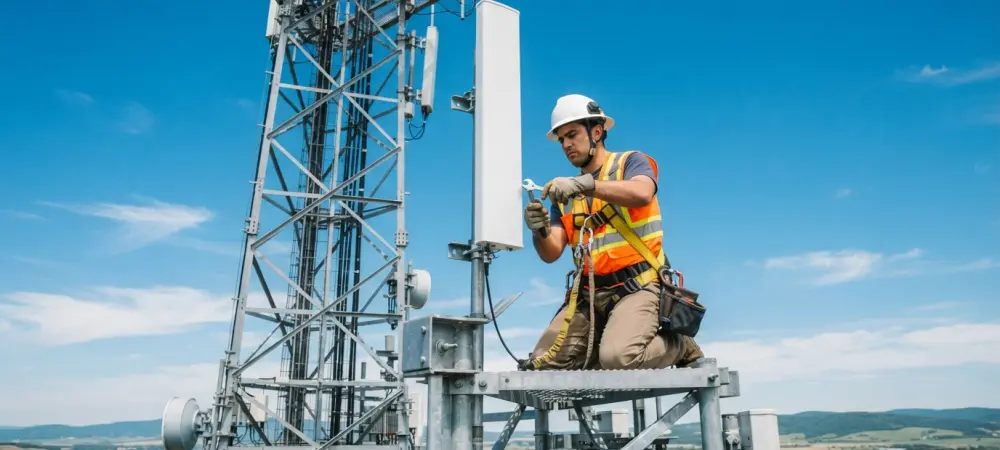
SpaceX is initiating a bold strategic pivot that moves the company beyond its origins in orbital satellite technology and directly into the heart of the American telecommunications infrastructure. Led by Elon Musk, the company is reportedly in preliminary negotiations to deploy a massive network of approximately 80,000 ground-based stations across the continental United States. This transition signifies an escalation from being a niche satellite internet provider to becoming a full-scale wireless carrier, aiming to dismantle the long-standing dominance held by industry giants like AT&T, Verizon, and T-Mobile. By integrating the existing Starlink satellite constellation with a dense terrestrial backbone, SpaceX intends to create a hybrid connectivity model that bridges the gap between space-based coverage and high-density urban performance.
Overcoming the Physical Limits: Addressing Satellite Communications Challenges
While Starlink has proven successful in providing internet to rural and underserved regions, SpaceX acknowledges that space-based signals face inherent physical hurdles in urban environments. The primary issue is a capacity gap; satellite bandwidth is a finite resource that can be easily overwhelmed in densely populated areas like New York or Los Angeles. By deploying 80,000 ground stations, SpaceX can offload high-frequency data traffic, ensuring that users in crowded markets receive the high-definition streaming and data speeds expected of modern 5G services. This terrestrial layer acts as a safety valve, absorbing the immense demand generated by millions of concurrent mobile devices that would otherwise choke a purely satellite-based architecture. As the roll-out progresses from 2026 to 2028, the company expects to demonstrate that orbital constellations are best utilized as a wide-area backup rather than the primary delivery mechanism for congested metropolitan centers globally.
Another critical factor driving the need for ground-level hardware is signal penetration. Satellite signals often struggle to pierce physical barriers such as concrete walls, metal roofs, and thick glass, which limits current direct-to-cell services to basic messaging or emergency alerts. To provide reliable indoor voice calls and high-speed data, SpaceX must have hardware in close proximity to the end user. This dual-layer approach combines the broad reach of satellites for “blind zones” like oceans and mountains with the localized power of terrestrial towers for indoor reliability. By ensuring that signals only have to travel a few hundred meters from a ground station rather than hundreds of miles from orbit, the network can maintain the low-latency response times required for high-stakes gaming and professional teleconferencing. This infrastructure shift fundamentally changes how mobile devices interact with the sky, allowing for a seamless handover between orbital and terrestrial nodes.
Disrupting the Traditional Model: Competitive Pressure on Global Carriers
The entry of SpaceX into the terrestrial market places immense competitive pressure on the “Big Three” carriers by leveraging unique vertical integration. Traditional operators are often bogged down by the massive costs of land acquisition, fiber installation, and purchasing hardware from external vendors. SpaceX, however, controls its entire supply chain—from the rockets that launch its satellites to the proprietary software-defined networking tech used in its stations—allowing for a level of cost efficiency and deployment speed that legacy companies find difficult to match. This internal control allows for rapid iteration of hardware, meaning that as 5G and future 6G standards evolve, SpaceX can update its terrestrial nodes without waiting for third-party manufacturers to catch up. By eliminating the middleman in both hardware production and launch logistics, the company can reinvest these savings into aggressive pricing models that could trigger a significant price war across the mobile industry.
Beyond cost, SpaceX possesses a unique advantage through ecosystem bundling across Musk’s various enterprises. The company could offer a single subscription that integrates home Starlink Wi-Fi, mobile data, and specialized connectivity for Tesla’s fleet of connected vehicles. This “no-roaming” value proposition creates a powerful incentive for existing Tesla owners and Starlink users to switch providers. Such a unified ecosystem offers a level of convenience and cross-platform integration that traditional telecommunications firms, restricted by terrestrial roaming agreements, cannot easily replicate. By creating a single point of billing and service for a customer’s home, car, and phone, SpaceX builds high switching costs that protect its market share. This strategy effectively turns a mobile phone service into a gateway for a much broader suite of technological tools, making the network an indispensable part of the user’s digital life. As this strategy unfolds through the end of 2028, the consolidation of services will likely set a new industry benchmark.
Impacts on the Supply Chain: Identifying Industry Winners and Losers
The shift toward a terrestrial network creates a clear divide between winners and losers in the industrial supply chain. Communications tower companies, such as Crown Castle, stand to benefit significantly as they transition from being simple service providers to vital partners for SpaceX. After years of stagnant growth due to reduced spending by traditional carriers, these infrastructure giants view SpaceX as a massive new tenant capable of providing stable, long-term rental income for thousands of tower sites. The partnership provides a symbiotic relationship where SpaceX gains access to pre-cleared real estate, while tower owners secure a high-credit tenant with a multi-decade roadmap. This influx of capital into the tower industry is expected to stimulate further infrastructure development across North America, as the demand for ground station density forces companies to revitalize older macro sites and small-cell locations to accommodate the new hybrid hardware requirements.
Conversely, traditional equipment vendors like Ericsson and Nokia face a potential decline in market share. SpaceX’s corporate culture famously prioritizes internal development over external procurement, meaning the company is likely to build its own base station hardware rather than purchasing from established giants. This move toward a proprietary, closed-loop industrial chain could disrupt the global market for telecommunications equipment, forcing traditional vendors to rethink their business models as SpaceX bypasses the conventional procurement process. By utilizing software-defined networking and commodity silicon, SpaceX can bypass the expensive, specialized hardware modules that have traditionally defined carrier infrastructure. This democratization of hardware could lead to a broader industry shift where other emerging carriers attempt to build their own equipment, further eroding the profit margins of legacy vendors who have long enjoyed a captive market of traditional national telecommunications providers.
The Technological Nervous System: Supporting AI and Autonomous Robotics
Looking beyond mobile phones, the 80,000 base stations represent the essential “nervous system” for a future defined by artificial intelligence and autonomous robotics. For technologies like Tesla’s Full Self-Driving (FSD) and the Optimus humanoid robot to operate effectively at scale, they require ultra-low-latency communication with centralized cloud systems. A proprietary network ensures that these high-tech devices remain functional and secure without relying on the infrastructure of competitors who might prioritize different data traffic. In a world where sub-millisecond response times can be the difference between a safe stop and a collision, having a dedicated terrestrial frequency is a critical requirement for autonomous transport. This network acts as the connective tissue that allows robots to share real-time environmental data, creating a collective intelligence that improves with every mile driven or task performed, ensuring that the fleet remains interconnected at all times.
This connectivity vision extends to other ventures such as xAI and Neuralink, which require high-speed, high-stability connections to process massive datasets and brain-computer interface signals. By building its own terrestrial network, SpaceX is effectively creating a “walled garden” of connectivity where every aspect of the user experience—from transportation and space exploration to AI and healthcare—is managed under a single umbrella. This ensures that the lifeblood of Musk’s technological empire remains entirely under his strategic control. Such a closed system prevents external outages or security breaches from affecting the core functionality of critical implants or advanced AI models. It also allows for the implementation of proprietary security protocols that are optimized for the unique data packets used by brain-computer interfaces, providing a level of reliability that public networks cannot guarantee. This vertical control over the data layer solidifies the company’s position as a dominant force in the digital age.
Navigating the Regulatory Landscape: Logistical and Legal Hurdles
Despite the ambitious scope of the project, SpaceX faces significant challenges in moving from high-concept technology to ground-level construction. Building 80,000 physical sites is a logistical nightmare that involves navigating a complex labyrinth of local zoning laws, environmental impact assessments, and property rights. Each municipality has its own set of rules, and the sheer scale of the rollout will likely attract scrutiny from regulators concerned about market competition and the environmental footprint of such a dense network. The process of obtaining permits for thousands of small-cell sites requires a massive administrative effort that can often stall even the most well-funded projects. Furthermore, the physical installation of antennas and fiber backhaul in dense urban corridors often meets resistance from local communities concerned about aesthetic impacts and radiofrequency exposure, potentially leading to lengthy legal battles that could delay the network’s activation in key markets.
The initial phases of the terrestrial expansion required SpaceX to adapt its rapid-prototyping culture to the slower pace of municipal bureaucracy and national regulatory standards. Decision-makers within the telecommunications sector recognized that the true challenge laid not in the orbital physics, but in the ground-level logistics of site management and local compliance. As the project moved forward, it became clear that the successful integration of satellite and ground nodes provided a template for the next generation of global connectivity. Observers noted that traditional carriers needed to pivot toward more flexible, software-centric architectures to remain competitive. Future considerations indicated that the real value of the network rested in its ability to support an autonomous economy, suggesting that spectrum management and localized data processing were the new frontiers of dominance. These actions established a blueprint for how a unified communications platform could fundamentally reshape the relationship between users, machines, and the physical world.