

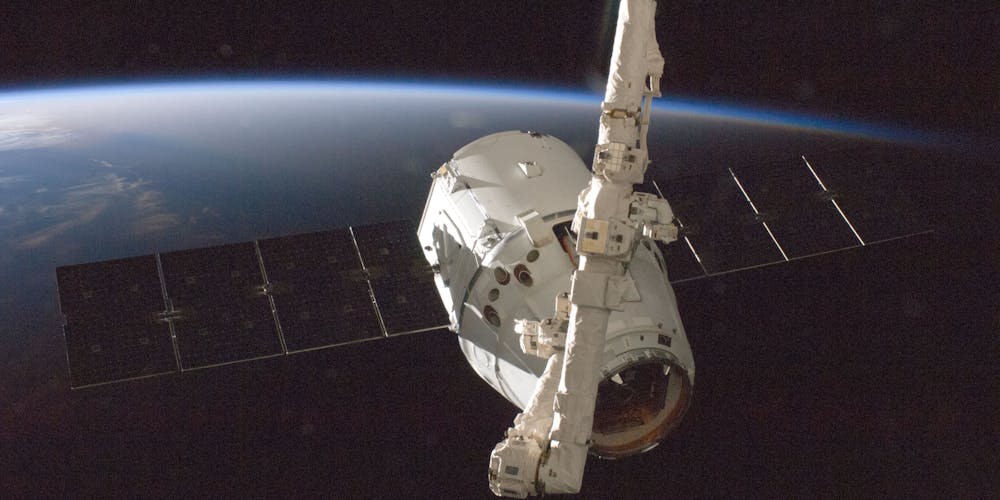
The transformative ingress of space technology into the arena of modern business is not just profound—it’s revolutionizing the way small enterprises operate and compete. What was once the domain of astronauts and space agencies is now empowering entrepreneurs with tools and applications that were unimaginable a mere decade ago. As we dive into the ways space-derived technologies are significantly impacting the business landscape, we uncover how they are enhancing digital marketing, global connectivity, and overall operational efficiency. From precise data analytics to global positioning systems, and from virtual reality to advanced materials, the magnitude of space technology’s contribution to modern commerce is as expansive as the universe itself.
Digital Marketing Precision through Stellar Data Analysis
The adoption of celestial algorithms and data analysis tools initially destined for space exploration has equipped companies to sculpt their marketing strategies with incredible precision. This capability allows businesses to target their ideal customer demographics effectively, cutting through the digital noise and ensuring that marketing budgets yield substantial returns. Space technology has essentially democratized data analytics, making high-end resources accessible to small businesses and leveling the marketing playing field against larger competitors.
Small businesses are tapping into the power of advanced algorithmic analysis, harnessing this space-bred technology to gain insights into customer behavior and market trends. The result is a tailored marketing approach where each campaign is fine-tuned to resonate with the intended audience. The data utilized in these strategies can now forecast consumer needs with startling accuracy, giving small companies the opportunity to respond proactively and secure their place in a competitive digital marketplace.
Virtual Reality: An Industry-Crossing Marvel
Virtual reality, born from the ingenious minds of NASA engineers, has evolved beyond its space simulation roots to influence an array of industries. Small businesses, in particular, are harnessing this space technology to create immersive experiences that extend far beyond mere entertainment. Real estate agents now offer virtual home tours, educators craft engaging learning environments, and retailers showcase their products in a whole new dimension—making VR a utilitarian staple in business arsenals.
The applications of VR in modern business are virtually limitless. With VR, medical professionals can simulate surgeries before stepping into the operating room, architects visualize buildings before the first brick is laid, and travel agencies offer a taste of destinations to would-be adventurers. What was initially envisioned to prepare astronauts for the demands of space has seamlessly transitioned into a tool that enhances customer service, training, and product development for small businesses everywhere.
The Satellite Backbone: Global Connectivity Redefined
The very satellites that were once the lifeline of communication for space exploration now form the backbone of global connectivity for businesses. Small enterprises are leveraging this technology to expand their reach to new markets, manage teams scattered across the globe, and ensure that geographic barriers do not impede business growth. Satellites have made it possible for even the most remote businesses to engage with the world, facilitating a new era of inclusivity and market potential.
Satellites are also delivering high-speed internet to the farthest corners of the world, bridging the digital divide that previously isolated many regions. This has empowered businesses in remote areas by giving them the means to compete on an international scale. Customers and clients, no matter their location, can now connect with services and products offered by small businesses, epitomizing the vast democratizing power of satellite technology.
GPS: Redefining Logistics and Transportation
The Global Positioning System, originally developed for military navigation, has become indispensable in modern logistics and transportation, fundamentally transforming these sectors. Small businesses now utilize GPS to optimize their delivery routes, track shipments with precision, and manage inventories with far greater efficiency. This not only reduces operational costs but also enhances customer satisfaction by providing reliable, timely service and location-based offerings.
Through GPS technology, businesses can more effectively oversee their logistical operations, guaranteeing that products arrive at their destinations swiftly and intact. Customers receive real-time updates on their purchases and are afforded the convenience of services tailored to their specific location. Small businesses, therefore, are not only increasing their operational productivity but are also delivering enriched customer experiences thanks to the global positioning capabilities derived from space tech advances.
Smartphones: A Nod to NASA’s Pioneering Efforts
The humble smartphone, an indispensable tool in today’s business world, owes much of its advanced capabilities to space technology. Innovations like the active pixel sensor, which have drastically enhanced smartphone imaging, can be traced back to NASA’s quest for miniaturization. Today, this technology enables small businesses to produce high-quality visual content, crucial for effective digital marketing and online presence.
Furthermore, the emergence of the Internet of Things (IoT) and mobile payment systems has created new horizons for business operations and customer interactions. Rooted in space tech, these advancements have empowered small enterprises with the ability to connect and automate various aspects of their businesses while facilitating seamless transactions. The confluence of connectivity and convenience brought about by smartphone innovations propels small businesses into new realms of efficiency and engagement.
The Cordless Revolution and Operational Efficiency
The shift to cordless tools—a significant leap in versatility and convenience—originated from NASA’s partnership with industry to create equipment for space missions. Nowadays, this cordless revolution is granting small businesses newfound agility within various sectors. The freedom from cumbersome cables translates to improved workflows, productivity, and even expansion into environments where corded tools would be impractical.
In the realms of construction, cleaning services, and beyond, small businesses reap the benefits of these innovative, battery-operated devices daily, showcasing how space technology has permeated even the most hands-on aspects of industry. Small enterprises are thus able to operate with greater efficiency and a reduced dependency on fixed power sources, optimizing their output and service delivery in the process.
The Mylar Effect: Packaging and Insulation Reimagined
The incursion of space tech into today’s business is not only deep—it’s a game-changer for small companies. Space exploration tech now hands entrepreneurs previously unimaginable capabilities. Tools once exclusive to the final frontier are shaping up new competitive edges by boosting digital marketing and global reach, and by streamlining operations.
Thanks to space tech, fine-tuned data analysis and GPS have become standard business tools. Virtual reality, an offshoot of space developments, is another realm small businesses are rapidly conquering. And let’s not overlook advanced materials designed for space that are now fortifying products on Earth. Space technology is indeed a growth catalyst for commerce, pushing boundaries as limitless as space itself. The influence of this technology on small-scale businesses is monumental, offering a competitive leverage unheard of just ten years ago.