

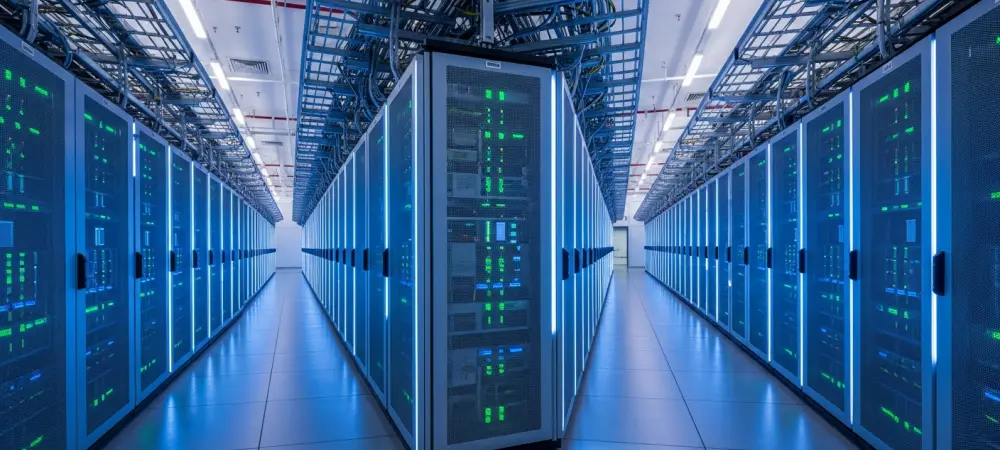
The rapid metamorphosis of South Korea’s telecommunications giants into global artificial intelligence powerhouse providers marks one of the most significant industrial shifts in East Asian history. This evolution represents a strategic departure from the legacy business of providing mobile and internet connectivity toward a future defined by hyperscale infrastructure and specialized computing capabilities. As the domestic market for traditional services reached a plateau, major players like SK Telecom, KT, and LG Uplus sought new horizons by aligning with national ambitions to secure a top-three spot in the global AI hierarchy. This exploration examines how these corporations transitioned into foundational architects of the digital age, answering vital questions about their multi-billion dollar investments and the technical breakthroughs driving this national movement.
Key Questions or Key Topics Section
Why Are South Korean Carriers Moving Away From Traditional Telecommunications Models?
The saturation of the mobile phone and broadband markets created a ceiling for revenue growth that prompted a search for more dynamic industrial engines. For decades, the industry relied on increasing subscriber bases, but the emergence of generative AI shifted the value proposition from connectivity to the compute power required for massive models. Consequently, leadership realized that staying the course would result in becoming mere providers of access rather than active participants in the high-margin AI economy.
By pivoting toward the AI infrastructure stack, these firms transformed into specialized operators. This transition addressed the need for diversification, allowing them to capture value from the entire data lifecycle. The strategy leverages their existing real estate and power access to provide the high-performance computing environments that modern enterprises demand. This move ensures long-term relevance in a world where data processing is becoming as essential as basic electricity.
What Makes SK Telecom’s Infrastructure Strategy Uniquely Ambitious? The scale of SK Telecom’s roadmap is unprecedented, focusing on a target capacity of 15 gigawatts by the middle of the next decade. This rollout integrates proprietary semiconductor innovations from within the SK Group to create a vertically integrated ecosystem. Such a massive undertaking requires sophisticated energy management solutions to handle the intense power draws associated with large regional clusters in cities like Ulsan.
Furthermore, the strategic alliance with Nvidia serves as a critical catalyst, enabling the deployment of advanced architectures for global clients. By launching gigawatt-scale cloud services, the company moved beyond domestic utility provision to become a critical node in the global supply chain for AI training. This ensures they remain indispensable to the international tech landscape while securing long-term contracts that are less volatile than consumer-facing subscription models.
How Does KT Plan to Balance Connectivity With Massive Compute Power?
KT recognized that the brain of AI is only as effective as the nerves connecting it to the world. Their massive financial commitment explicitly allocated capital to upgrade the high-speed networking required to link data centers with minimal latency. Without this robust backbone, the immense data generated by AI workloads would struggle to move efficiently between processing units and end-users, rendering even the fastest servers less effective.
Additionally, expanding submarine cable capacity and Data Center Interconnection addressed the international nature of modern data flows. By investing heavily into undersea links, the firm ensured that South Korean AI clusters could interact seamlessly with global markets. This holistic approach recognized that the value of a data center is multiplied when it is part of a low-latency global network, making the firm a vital partner for multinational corporations.
What Specific Technical Hurdles Is LG Uplus Addressing in Its AI Factory Model?
Transitioning to AI computing brought immediate physical challenges, specifically the extreme thermal output of modern hardware. LG Uplus focused on solving these efficiencies by designing facilities that handle much higher energy densities than traditional server farms. Their Paju campus became a testing ground for integrated cooling systems, combining advanced air circulation with liquid cooling technologies to prevent equipment failure and reduce energy waste.
The market response was swift, with significant capacity contracted before construction reached completion. This shift from consumer services to infrastructure solutions allowed for a more stable revenue stream, signaling a fundamental change in how the company perceives its role in the modern digital economy.
Summary or Recap
The collective movement of South Korean firms signals a definitive departure from the legacy identity that defined the previous decades. Key themes emerge from these strategies, most notably the recognition of energy management and advanced cooling as primary strategic assets. The focus on connectivity highlights that the next phase of growth depends on the speed at which facilities communicate. This nationwide pivot demonstrates a sophisticated integration of hardware and networking, designed to meet the extreme demands of artificial intelligence. These investments are meticulously aligned with national policy goals, ensuring the private sector and government move in lockstep to secure technological sovereignty. The shift toward AI compute orders represents a more resilient business model compared to saturated consumer markets. For those seeking a deeper understanding of these shifts, reviewing the engineering specifications of liquid cooling systems or the government’s strategic roadmaps provides essential context into this ongoing industrial revolution.
Conclusion or Final Thoughts
The massive capital expenditures proved that the survival of telecommunications firms depended on their ability to adapt to a hardware-intensive reality. These companies successfully pivoted to become the foundational backbone of the global digital economy. The foresight to invest in gigawatt-scale facilities and undersea networks allowed South Korea to maintain its technological leadership during a period of intense international competition.
Readers should consider how these shifts in digital infrastructure will eventually trickle down to local AI applications and daily digital interactions. The move toward specialized AI factories suggested that the future of technology was not just in software, but in the massive, power-intensive physical campuses that enabled it. Observing these developments encouraged a broader understanding of how corporate strategy and industrial policy combined to reshape a nation’s economic destiny.