

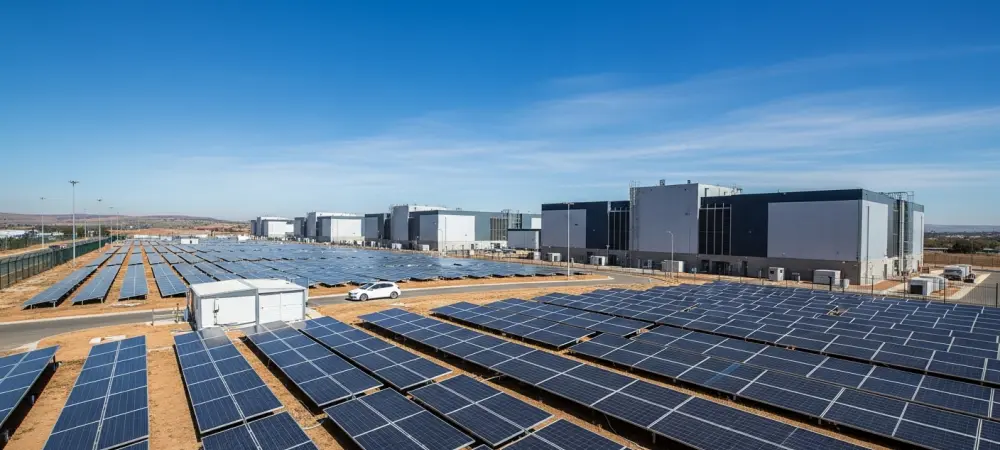
South Africa’s digital landscape is currently navigating a pivotal transformation where the exponential demand for high-speed connectivity and cloud computing services is colliding with the harsh realities of a constrained national power grid. As multinational tech giants and local enterprises continue to establish massive server farms across the region, the reliance on a single electricity source has proven to be a significant liability for business continuity and long-term sustainability goals. To mitigate these risks, industry leaders are aggressively moving toward a diversified energy architecture that integrates renewable sources, advanced storage solutions, and localized generation capabilities. This strategic evolution is driven not only by the need to bypass persistent load-shedding cycles but also by the necessity to align with global environmental standards that demand lower carbon footprints from intensive energy users. By adopting these flexible models, operators are securing their operational future in a volatile market while setting a new standard for infrastructure resilience in the broader African continent.
Implementing a Multi-Layered Energy Portfolio
Data center developers in the region are currently pioneering a sophisticated portfolio approach that effectively marries traditional grid connections with redundant, multi-layered power systems. While the state utility remains the foundational provider for many facilities, the constant threat of interruptions has turned backup systems from emergency measures into integrated components of daily operations. Modern facilities are now designed with complex configurations that distinguish between short-term diesel generation and sustainable, long-term battery storage systems charged by solar arrays. This tiered infrastructure allows for seamless transitions between power sources, ensuring that critical servers never lose power even during prolonged periods of grid instability. The focus has shifted from merely having a backup plan to creating a dynamic energy ecosystem that can respond in real-time to external fluctuations. Such designs are essential for maintaining the five-nines uptime required for international service level agreements in a global economy. Onsite generation has become a critical pillar for lowering direct electricity costs, although its physical implementation often depends on the specific constraints of the facility’s location and architectural design. For centers with expansive rooftop areas or access to adjacent land, the deployment of high-efficiency solar panels and wind turbines provides a direct mechanism to offset the volume of power purchased from the open market. Many operators are now favoring structured Power Purchase Agreements with independent producers to manage these complex onsite systems rather than owning the equipment outright. This financial model allows data centers to transfer the operational and maintenance risks to specialized energy providers while simultaneously locking in long-term price stability. Such agreements provide a predictable cost structure that is shielded from the frequent tariff hikes seen in traditional utility billing. This strategic decoupling represents a fundamental shift in how digital infrastructure is financed and operated.
Navigating Regulatory Shifts and Strategic Market Evolution
The emergence of energy wheeling and a liberalized market has provided a vital pathway for data centers to access large-scale renewable power even from remote sites. Through wheeling, a facility can procure electricity from an independent power producer and have that energy delivered across the existing national grid infrastructure. While this process does not solve the physical reliability issues of the grid, it offers a powerful mechanism for data centers to obtain wholesale electricity credits and reduce their overall carbon footprint. This transition is further supported by the rise of specialized energy traders and the introduction of trading platforms that allow for day-ahead energy purchases. As the market becomes increasingly decentralized, the focus is shifting toward supporting bankable renewable projects that offer geographical flexibility. By participating in this emerging marketplace, data centers can optimize their procurement strategies based on real-time pricing and availability across various nodes. The successful evolution of the South African data economy ultimately hinged on the transition from passive energy consumption to a model of proactive, active management of all power resources. Leading investors recognized early on that they had to balance the immediate need for grid access with a permanent commitment to integrating diverse and sustainable energy sources. Those who moved to leverage the liberalization of the market and adjusted their operational strategies in line with new legislative frameworks gained a distinct competitive advantage over their slower peers. Integrating varied supply sources was the only viable path to satisfying the massive electricity requirements of modern digital infrastructure while building a sustainable future. Moving forward, the focus shifted to developing smart grid interfaces and exploring green hydrogen storage to further decouple facility operations from traditional fuel sources. This shift ensured that the region remained a primary technology hub for global investors.