
Sony Xperia 1 VII Leaks Reveal Enhanced Audio and Camera

Article Highlights
Off On

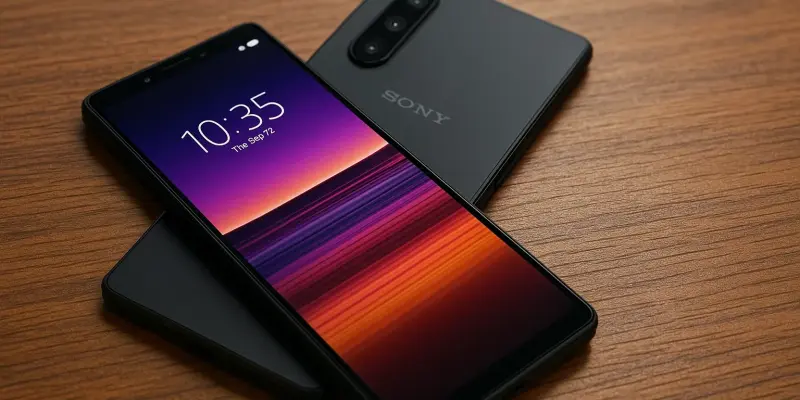
The anticipation surrounding Sony’s forthcoming Xperia 1 VII is gaining momentum as leaked marketing images hint at exciting developments in design, specifications, and features. The Xperia 1 VII is expected to follow its predecessor, the Xperia 1 VI, with several notable enhancements. Set to be available in black, green, and purple, the smartphone retains a familiar design reminiscent of the previous generation, characterized by its flat display, thicker bezels, and the reintroduction of the audio jack. These modifications reflect Sony’s commitment to maintaining user-friendly, durable designs while incorporating technologically advanced features. The highlight of this edition appears to be the significant improvements in audio quality, courtesy of upgraded stereo speakers that promise a 10% enhancement in mids. Beyond aesthetics, the device is poised to deliver enhanced camera capabilities, drawing from Sony’s esteemed Alpha camera series and incorporating a Zeiss-collaborated larger sensor.

Features and Durability

The Xperia 1 VII exemplifies Sony’s dedication to merging cutting-edge technology with user demands for longevity and performance. It’s set to receive four OS updates and six years of security updates, reflecting Sony’s intent to extend the lifespan of its flagship products. This approach enhances its appeal among tech-savvy consumers valuing durability. The phone retains the 5,000 mAh battery of its predecessor, the Xperia 1 VI, ensuring long-lasting power, and continues to support Hi-Res Audio in both wired and wireless forms. Features like LDAC and DSEE Ultimate reinforce Sony’s commitment to superior sound quality, a nod to its audio legacy. The design stays consistent, with power, volume, and camera buttons on the right side, showcasing Sony’s focus on user-friendly enhancements. Collaborations, like with Zeiss for ultrawide camera improvements, emphasize a holistic approach to quality. Anticipation builds as the launch nears, illustrating Sony’s strategy for blending innovation with reliability in the competitive premium smartphone market.

Explore more

ARPA-H Invests $32M in Autonomous Robotic Stroke Treatment

Redefining the Race: The Clock in Stroke Intervention When a blood clot suddenly lodges in a cerebral artery, the human brain begins to lose roughly two million neurons every single minute that the obstruction remains in place. This reality defines the urgency behind a $32 million investment from the Advanced Research Projects Agency for Health (ARPA-H). The funding targets Magnendo,

Guide Ranks the Best Small Business Payroll Software for 2026

The moment an entrepreneur realizes that a simple decimal error in a payroll run could trigger a massive federal audit is usually the exact second they stop viewing their software as a luxury and start seeing it as an essential protective shield. In the current landscape, the margin for error has narrowed significantly, as state and federal tax authorities have

Can AI Ever Replace Human Intuition in Modern Hiring?

A seasoned hiring manager tosses a candidate’s profile aside while claiming the person simply did not have the right energy, leaving a nearby data analyst completely baffled. To an advanced artificial intelligence, this feedback is a dead end—a vague data point that offers no actionable insight for a machine-learning model. To a veteran recruiter, however, this phrase is a coded

AI Hiring Tools Are Now a Major Security Risk for CIOs

The unassuming PDF file sitting in a digital stack of applications has quietly evolved from a static career summary into a sophisticated piece of executable code capable of hijacking enterprise logic. For decades, recruitment software lived in the relative safety of the back office, primarily serving as a repository for record-keeping and workflow automation. However, the rapid integration of artificial

AI and Remote Work Fuel a Costly Crisis in Hiring Integrity

The polished professional currently answering technical questions on a high-definition video call might actually be an elaborate digital facade powered by a sophisticated network of hidden AI agents. Recruitment processes that once relied on physical cues and verified histories have been subverted by a wave of technological deception that threatens the very core of corporate integrity. As organizations expanded their