

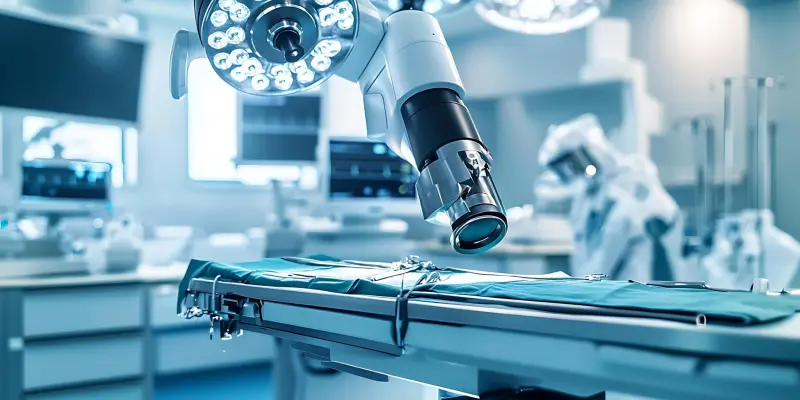
As technology continues to reshape the medical landscape, medical robotics has emerged as a game-changer, particularly in the realms of surgery and diagnostics. The precision and reliability offered by robots have the potential to revolutionize patient care. Among the frontrunners in this field is Somashekharayya Hiremath, whose significant contributions have driven many of the latest advancements in medical robotics. With a robust background in engineering, innovation, and research and development (R&D), Hiremath has been pivotal in developing cutting-edge robotic-assisted surgical systems that improve clinical outcomes.
Improving Surgical Precision and Procedural Outcomes
Integrating Advanced Control Mechanisms and Real-Time Navigation
One of the most impactful strides made by Somashekharayya Hiremath in the field of medical robotics has been the integration of advanced control mechanisms and real-time navigation features into robotic-assisted systems. This melding of sophisticated technologies has considerably enhanced surgical precision, making procedures less invasive and significantly reducing recovery times for patients. Hiremath’s experience spans both corporate and startup environments, which has enabled him to innovate and implement efficient solutions in device control mechanisms and minimally invasive surgical interventions. By merging state-of-the-art components and communication protocols into the robots, Hiremath has successfully reduced both the costs and timelines associated with the development of these systems by nearly 25%. His contributions focus on optimizing device accuracy and targeting capabilities, which directly translate to improved procedural outcomes. Key projects spearheaded by Hiremath include the creation of a versatile robotic platform capable of real-time navigation and precision-targeting, which can be employed across various surgical indications. Through these innovations, Somashekharayya has not only maintained stringent regulatory compliance but also achieved significant production cost savings.
Pioneering Lesion-Targeting Tools for Minimally Invasive Surgeries
Another cornerstone of Hiremath’s work is the development of specialized lesion-targeting tools designed for minimally invasive surgeries. These advancements have enabled surgeons to perform highly accurate, patient-specific interventions with minimal tissue disruption. Real-time feedback mechanisms, incorporated into robotic systems under Hiremath’s guidance, have introduced a new level of responsiveness and stability, ensuring that surgical tools can adjust dynamically during procedures.
The success of these tools can be attributed to iterative development and rigorous testing, ensuring that all components meet high standards of performance and reliability. The integration of live navigation and feedback not only enhances the surgeon’s control but also improves patient outcomes by reducing complications and accelerating healing processes. Hiremath’s pioneering work in this area has set new benchmarks for what is achievable in surgical precision, heralding a new era of smarter, more responsive robotic assistance in operating rooms around the world.
Enhancing Robotic Dexterity for Complex Interventions
Real-Time Feedback and Advanced Control Systems
The practical applications of real-time feedback mechanisms in robotic systems have extended their utility far beyond basic operations. Somashekharayya’s vision of incorporating real-time feedback into robotic systems was a significant departure from conventional methodologies and has drastically improved system responsiveness and stability. These modifications have allowed for greater flexibility and dexterity in executing complex surgical tasks that were previously untenable with older technologies.
Practical implementation of real-time feedback has equipped robotic systems with the ability to adapt in real time to the nuances of a surgical environment. This adaptability not only enhances the precision and efficiency of surgical interventions but also minimizes the risk of errors. Advanced control systems designed by Hiremath have been crucial in implementing these feedback loops, ensuring that surgeries can be conducted with unmatched accuracy. These innovations have brought forth a paradigm shift in how surgical procedures are approached, facilitating more consistent and favorable patient outcomes.
Leveraging Advanced Diagnostics and AI-Assisted Guidance
Beyond enhancing robotic dexterity in executing surgical procedures, Hiremath has also focused on integrating advanced diagnostic tools and artificial intelligence (AI)-assisted procedural guidance. These technologies ensure that surgical plans are tailor-made for individual patients, taking a personalized approach to treatment. Sensor fusion and AI integration allow for the constant monitoring and adjustment of the robotic systems, ensuring real-time data analytics guide each step of the procedure.
Hiremath’s work envisions the seamless inclusion of these intelligent systems within the surgical workflow, which will result in highly accurate, patient-specific interventions. By enabling haptic feedback, multi-modality imaging, and other advanced sensors, these robotic systems can provide surgeons with a comprehensive, real-time understanding of the surgical field. This technology not only improves the precision of interventions but also reduces the cognitive load on surgeons, making surgeries faster, safer, and more efficient.
The Future of Medical Robotics
Miniaturization and Expanded Capabilities
Somashekharayya Hiremath’s forward-looking approach also emphasizes the miniaturization of medical robotic systems. Smaller, more agile robots will be capable of accessing and treating areas within the human body that were previously unreachable. This miniaturization would allow robotic systems to perform with greater flexibility while maintaining or even improving the precision and effectiveness of larger systems. Moreover, these compact tools could revolutionize the way certain surgeries are performed, potentially allowing for non-invasive procedures that were once highly complex or impossible.
As these systems continue to evolve, Hiremath’s influence ensures that such devices will not only remain within the high standards of clinical efficacy but also become more accessible and user-friendly for practitioners across the globe. The fusion of miniaturization and advanced functionalities is expected to lead to the development of more versatile platforms, enabling a broader range of applications from diagnostics to therapeutic interventions.
Integrating Imaging Systems and Sensor Fusion
A significant aspect of future developments in medical robotics, as envisioned by Hiremath, lies in the seamless integration of imaging systems and sensor fusion technologies. This combined approach is anticipated to bring about a new level of precision in patient care and diagnosis. Robotic systems integrated with multiple imaging modalities, such as MRI and CT, will allow for real-time, detailed visualization of the surgical site, providing unparalleled accuracy in targeting and treatment.
Sensor fusion, coupled with advanced AI algorithms, will enable these robots to analyze and interpret vast amounts of data during procedures, offering surgeons actionable insights and guidance. Techniques such as haptic feedback will further enhance the surgeon’s capability to feel and respond to the nuances of tissue interactions during the surgery. This holistic integration is poised to revolutionize surgical practices, making interventions more precise, less invasive, and ultimately more successful.
As technology continues to reshape the medical field, medical robotics has emerged as a transformative force, notably in surgery and diagnostics. The exceptional precision and dependability provided by robotic systems have the potential to greatly enhance patient care. A notable leader in this area is Somashekharayya Hiremath. His remarkable contributions have spurred many of the recent advancements in medical robotics. With a solid background in engineering, innovation, and research and development (R&D), Hiremath has played a crucial role in creating advanced robotic-assisted surgical systems. These systems are designed to enhance clinical outcomes significantly, making procedures safer and more effective. Under Hiremath’s guidance, new technologies have been developed that assist surgeons with tasks requiring extreme precision, thereby reducing human error and improving recovery times for patients. His work has not only pushed boundaries in medical robotics but also set new standards for future innovations in the industry.