

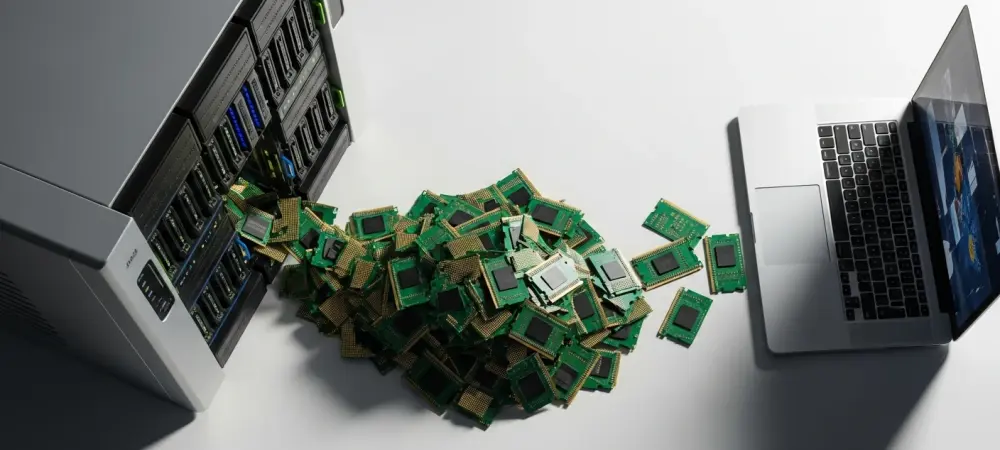
The Sticker Shock Is Just the Beginning
If you’ve been in the market for a new laptop, you may be bracing for a shock because the price of high-performance personal computing is on an upward trajectory, and the reasons go far beyond typical inflation. A prime example is the soon-to-be-released Samsung Galaxy Book 6 Pro, which serves as a canary in the coal mine for a much broader industry trend. This article will dissect the forces driving this price surge, focusing on the voracious appetite of the AI industry for a critical component: memory. We will explore the market dynamics squeezing supply chains, examine the difficult choices facing manufacturers, and provide a look at what consumers can expect in the coming years as the battle for RAM intensifies.
A History of Cycles, a New Market Reality
The memory industry has always been cyclical, with prices historically swinging between periods of oversupply and shortage. For years, PC buyers benefited from these cycles, as Moore’s Law and manufacturing advancements consistently delivered more RAM and storage for less money. This predictable deflation made each new generation of laptops and desktops a better value proposition. However, the current landscape is being reshaped by a new, dominant force. The explosive growth of artificial intelligence and the massive data centers required to power it have created an unprecedented and sustained demand for memory, disrupting the old cycle and fundamentally altering the supply chain for consumer electronics. This isn’t just another temporary price bump; it’s a structural shift in market priorities.
Unpacking the Components of a Higher Price Tag
The Galaxy Book 6 Pro: A Case Study in Inflation
The most compelling evidence of this trend comes from the pre-release pricing of the Samsung Galaxy Book 6 Pro. Listed at approximately $2,381, it represents a staggering $477 increase over its predecessor, the Galaxy Book 5 Pro, which launched at $1,904. An analysis of the specifications reveals that this hike cannot be justified by the upgrades alone. Key components like the 32GB of LPDDR5X memory, the 1TB SSD, and the display panel are identical to the previous generation. The only significant changes are the new Intel Panther Lake CPU and its 3rd-generation Arc Graphics. While a new processor commands a premium, it doesn’t account for such a steep jump, pointing directly to a dramatic rise in the underlying cost of unchanged components—most notably, the system memory.
The AI Data Center’s Insatiable Appetite for RAM
The consensus among industry analysts is clear: the global RAM shortage is the primary driver of this cost inflation. This isn’t a manufacturing problem but a demand problem. The AI sector’s need for high-performance memory to train and run complex models is siphoning supply away from the consumer market. This strategic pivot is exemplified by Micron, a major memory manufacturer, which is discontinuing its popular Crucial consumer memory line. The company is transparently redirecting its production capacity to serve the more lucrative and demanding AI data center market. Compounding this, rumors suggest that Samsung itself is planning to increase the price of its DDR5 memory modules, signaling that the supply squeeze is industry-wide and has no immediate end in sight.
The Manufacturer’s DilemmCost vs. Compromise
This new reality forces PC manufacturers into a difficult position. They face a critical choice: either absorb the rising component costs and accept lower profit margins, pass the full increase onto consumers and risk a drop in sales, or reconfigure their products to meet existing price points. The latter option often means compromising on specifications—for example, equipping a new laptop model with less RAM or a smaller SSD than its predecessor to keep the retail price stable. The hefty price increase of the Galaxy Book 6 Pro indicates that, at least for its premium devices, Samsung has chosen to pass the cost to the buyer rather than compromise on performance.
The Future Forecast: Continued Pressure Through 2026
The trend of rising memory costs is not a short-term blip; it’s an industry trajectory expected to continue until at least 2026. As AI models become more complex and their adoption becomes more widespread, the demand for memory will only accelerate. This will keep sustained pressure on the supply chain, ensuring that RAM remains a premium component. While manufacturers will eventually ramp up production, building new fabrication plants is a multi-year, multi-billion-dollar endeavor. In the interim, consumers should expect the price of laptops, desktops, and even individual memory upgrade kits to remain elevated or climb even higher.
Navigating the New High-Cost PC Market
The primary takeaway is that the Samsung Galaxy Book 6 Pro is not an outlier but a clear harbinger of what’s to come across the entire PC industry. The fundamental competition for memory between consumer electronics and AI data centers is tilting the scales toward higher prices for everyone. For consumers, this necessitates a more strategic approach to purchasing. If you are in urgent need of a new machine, buying sooner rather than later may be wise to get ahead of future price hikes. Alternatively, exploring the previous generation’s models or the refurbished market could offer significant value. For those building their own PCs, securing memory modules during temporary price dips will be more critical than ever.
A Paradigm Shift for Personal Computing
In conclusion, the era of predictably more affordable and powerful PCs is facing a significant challenge. The sticker shock from Samsung’s latest laptop is a direct consequence of a global scramble for memory, a resource now being consumed at an incredible rate by the AI industry. This market dynamic is forcing manufacturers’ hands and recalibrating consumer expectations for what a high-performance computer should cost. As we move forward, the price tag on your next PC will be a direct reflection of the technological priorities of our time, where the invisible demand from data centers has a very visible impact on your wallet.